

Send to a friend
The details you provide on this page will not be used to send unsolicited email, and will not be sold to a 3rd party. See privacy policy.
Aquaculture — the farming of marine species for human consumption — has spread rapidly in recent decades, with mixed results. Although profitable for some, it has led to the exclusion of poor people living in coastal settlements, as well as environmental degradation.
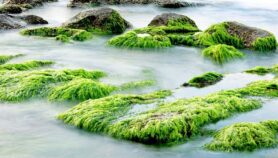
Scientists in the Philippines are trying to find another way: sustainable aquaculture using an innovative system of farming mud crabs in enclosures among live mangroves, coastal trees whose lower portions are submerged at high tides.
Researchers at the Aquaculture Department of the Southeast Asian Fisheries Development Centre (SEAFDEC) devised the initiative, which is being tested by villagers on the southern island of Mindanao.
In the system, low dykes, canals and a judicious use of netting mean the tides can flow in and out freely – an essential for conserving mangroves. The programme also brings financial rewards: during selective harvests of mature crabs in 2004, both yield and income rose by 20 per cent.
One of SEAFDEC’s other innovations — feeding the crabs with meal pellets instead of fish — has eaten into profits. But as local fish stocks are depleted, the organisation sees this too as a necessary step to making the operation sustainable.
Link to full New Agriculturist On-line articleMore on Food security