


By: Maghene Deba
Send to a friend
The details you provide on this page will not be used to send unsolicited email, and will not be sold to a 3rd party. See privacy policy.
[KINSHASA, SciDev.Net] As the number of Bundibugyo Ebola cases in the Democratic Republic of Congo (DRC) pushes past 1,000, doctors continue to fight the disease without a vaccine or cure. But the country’s top Ebola scientist tells SciDev.Net “there is still hope for this epidemic”.
The outbreak detected in early May has spread rapidly across the provinces of Ituri, North Kivu and South Kivu in Eastern DRC, and into neighbouring Uganda, with fears that it could cross to South Sudan.
Unlike the Zaire strain, for which a vaccine and treatment already exist, no licensed vaccine or curative treatment is currently available for the Bundibugyo species of Ebola identified in the current outbreak. The development of a new vaccine is expected to take several months.
As of 25 June, the toll in the DRC stood at more than 1,200 confirmed cases and 321 deaths, while in Uganda there have been 20 confirmed cases and two deaths.
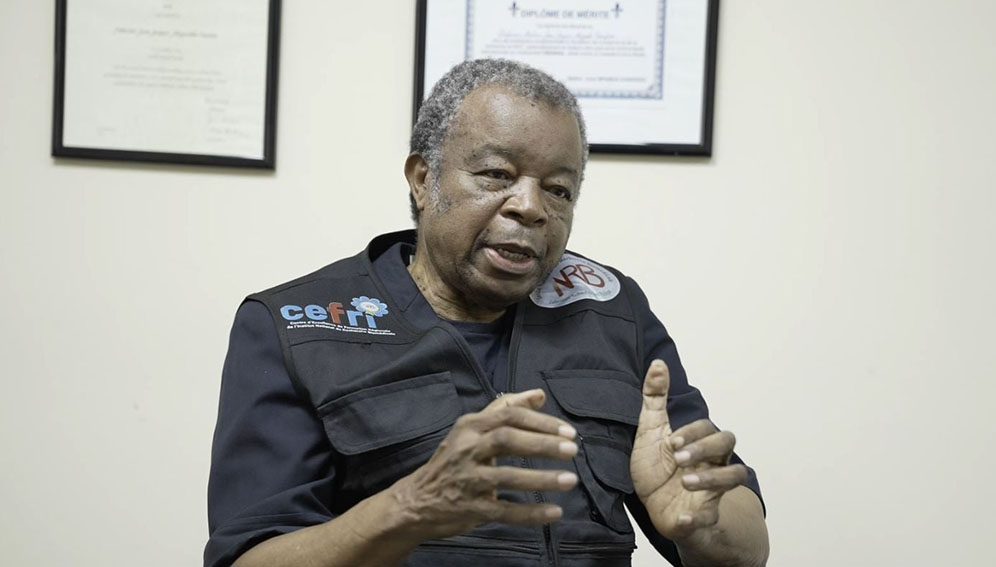
SciDev.Net spoke with Jean-Jacques Muyembe, director general of the DRC’s National Institute of Biomedical Research (INRB) and co-discoverer of the Ebola virus in 1976, to find out what is known about the virus and the progress being made towards a workable treatment.
What do we know to date about the Bundibugyo strain of the Ebola virus?
This is a strain that was first discovered in 2007 in Uganda and caused a major outbreak in the DRC in 2012 in Isiro. So, it’s a virus we know; perhaps not very well, but we know it and we have to deal with it now.
So, the key characteristic of the Bundibugyo virus is that it causes a less severe illness than the Zaire strain of Ebola. Consequently, healthcare workers had considerable difficulty identifying this disease as haemorrhagic fever because the bleeding symptoms were subtle. This led to a significant delay in detecting the epidemic.
The other characteristic is that this strain is not as virulent as Zaire Ebola. The fatality rate is around 30 to 40 per cent. This is less lethal than the Ebola Zaire virus.
Also, this virus currently has neither a vaccine nor a cure. We are therefore without measures that can help us quickly end this epidemic.

What is the current status of research into a vaccine and a curative treatment against this variant of the virus?
There is hope for this epidemic. There are molecules that already exist. Now, the WHO has formed a group that will study and see how these existing molecules can be tested in the field. And if they work, this could be the treatment.
This is what we will do in the coming days with the help of the WHO and other partners. We at the INRB have a team that had already participated in the production of our molecule, which we call Ebanga, the monoclonal antibody 114.
This molecule has proven really effective in treating patients with the Zaire strain of Ebola and we will work mainly with the American team to try to develop a monoclonal antibody against the Bundibugyo virus.
Perhaps it won’t be for this epidemic, but at least it will be for future epidemics. What we want is for our scientific staff to always take advantage of this epidemic to plan for the future.
Without a vaccine or treatment, what does the current response on the ground consist of?
In several of our epidemics, you will recall that the vaccine and curative treatment came late. It was only during the 2018 epidemic in North Kivu, South Kivu, and Ituri that we used the vaccine and antiviral drugs, and also during the recent Bulape epidemic in 2025.
Otherwise, all previous epidemics were treated and defeated solely through public health interventions. We developed strategies to combat Ebola: first, identify the disease as quickly as possible and then isolate all those who are sick and keep them away from others.
Then, you need to actively identify those who are ill within the communities. Whenever you find someone who is ill, you must quickly isolate them, because contamination occurs within the hospital and in the community, especially around funerals.
Within the hospital, doctors and nurses must be put in maximum safety conditions, meaning they must be given gloves, protective clothing… And in the community, what is important is to ensure a dignified and safe burial. This means that all patients who die from Ebola will be buried by healthcare providers, public health providers who will work to bury the bodies.
You have to take a few family members, dress them, and protect them so they can participate in the funeral. That way, you gain the public’s trust. That’s what we did.
This allows us to break the chain of transmission and the epidemic will stop. This is the strategy we are now applying on the ground to fight this epidemic caused by the Bundibugyo virus.
The Mongbwalu health zone, which was the first affected, complained from the outset of this epidemic about a delayed deployment of equipment and personnel. Has this been rectified?
For me, the biggest problem is first and foremost security. If there is no security in this province, there will always be a weakening of the healthcare system. So, the first thing is to restore peace to this province.
And then, during an Ebola epidemic, the biggest challenge is logistics. It’s like in a war. You’re on the ground, and if you don’t have helicopters, planes, or vehicles, it’s very difficult to win a war. So, to fight Ebola, we really need very strong logistics, especially if these epidemics occur in remote areas, in rural areas.
Experts have to travel from Kinshasa to the provinces; it’s extremely difficult. Once you’re there, the cases are located in villages, in mountainous areas, and so on. Resources are needed to reach these patients.
During an epidemic, we spend a lot. For example, in 2018 during the epidemic in North and South Kivu…We used armoured vehicles for personnel protection…We also had to house all the service providers who were there, and we had to rent vehicles – the WHO rented over 500 vehicles. And all of this was extremely expensive.
The current response is taking place in a context marked by reduced international funding. How can we address this situation?
What I do know is that this time the government has opened its wallet and has already provided significant sums to launch the response. Now we also have partners; we are counting first and foremost on the WHO.
Unfortunately, US funding was cut. But the WHO did everything it could to be at the forefront. Then there’s the Africa CDC [Africa Centres for Disease Control and Prevention], which is also making a significant impact on the ground, and other organisations like [the UN children’s agency] UNICEF, MSF [Médecins Sans Frontières/Doctors Without Borders]. and ALIMA [The Alliance for International Medical Action], which are our usual partners in the event of an Ebola virus disease outbreak.
For us, the most important thing is to make good use of these funds and all the equipment that our partners make available to us, and to properly organise the response so that the epidemic cannot last for months and months on the ground.
How can this response be transformed into an opportunity to sustainably strengthen the country’s health system?
We are in an emergency situation. The resources being deployed are specifically to respond to the epidemic. However, this epidemic has occurred in a very fragile environment, meaning that our healthcare system is not very strong.
We must draw conclusions to say that after this epidemic we should think about strengthening our health system, our surveillance system with our partners. So that if a new epidemic occurs, it is detected very quickly and the Ministry of Health responds to ensure that the number of cases does exceed what we are seeing now.
Fifty years after the discovery of Ebola, what notable advances have transformed the understanding of the disease?
During the first outbreak, we tried to determine the origin. We worked to identify the cause of the disease… We did everything we could locally, and then we also thought to send the sample to Belgium. There, we identified the virus.
The 1995 epidemic in Kikwit [in southwestern DRC] was where we really perfected our knowledge of this disease by putting in place control strategies: isolating the sick, carrying out safe burials, monitoring contacts, examining rumours…
We developed this strategy during the Kikwit outbreak with the WHO… and it’s the strategy we’ve used ever since in all outbreaks. We may change the name, but it’s the same principle. So, we laid the foundations of our knowledge about the outbreak, the transmission of the virus, the clinical aspects, and so on.
During the Kikwit outbreak, the team also treated patients with the blood of convalescents. This involved taking blood from someone who had recovered from Ebola and then transfusing it to someone with an acute form of the disease. Eight patients were treated this way and seven survived.
And what became of this approach?
Unfortunately, our European partners did not accept that experiment. They said, “No, the number of cases treated was small, and it happened at the end of the epidemic, so the virus had lost its virulence.” We did not accept the results of this experiment.
But I still believed there was some truth to it. Six or seven years later, I revived the idea, discussed it with the Americans, and we worked together to discover the Ebanga molecule from a convalescent patient in Kikwit. We took his blood, studied it, and that’s how we found the Ebanga molecule.
Then, during the 2018 epidemic, we also tested the Merck vaccine and statistically proved its effectiveness. In fact, this is the same vaccine we now use to prevent Ebola virus disease. Unfortunately, it’s only for Ebola Zaire; we don’t know if it’s effective against Ebola Bundibugyo.