


25/08/26
El Niño exposes need to back pastoralist climate action
By: Guyo Roba
Send to a friend
The details you provide on this page will not be used to send unsolicited email, and will not be sold to a 3rd party. See privacy policy.
[NAIROBI, SciDev.Net] As the UN COP17 land summit convenes in Mongolia, the more consequential meeting may already have taken place.
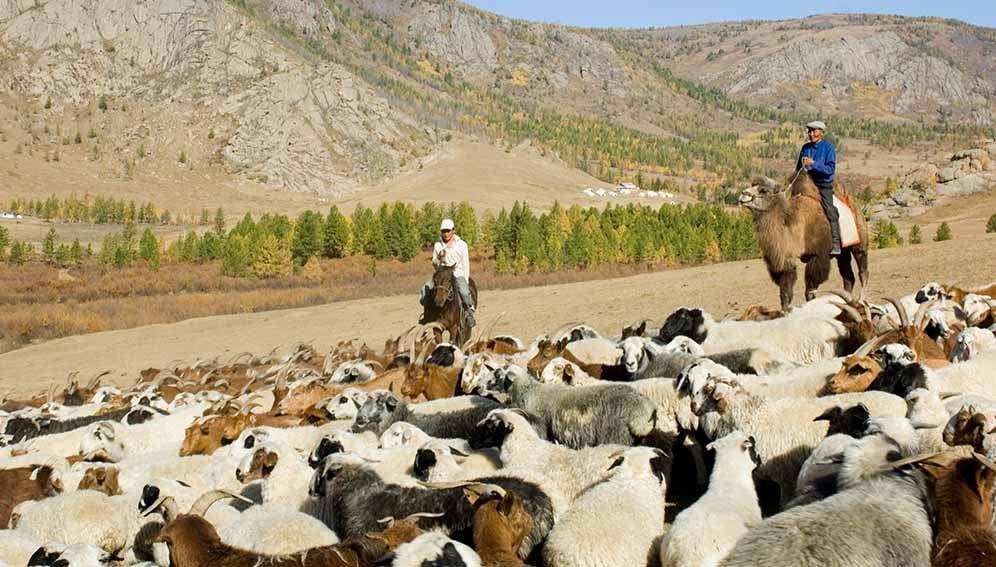
Earlier this month, around 300 representatives of nomadic and pastoralist peoples from 102 countries gathered in Ulaanbaatar, Mongolia, to draw up a joint declaration on the policies needed to make rangelands and pastoral livelihoods sustainable.
Rangelands cover over half of the world’s terrestrial surface, and play a crucial role in regulating water, sequestering carbon, and sustaining the livelihoods of 500 million pastoralists globally. Billions globally depend on rangeland products–from animal source foods to hides and textiles, water, minerals, fuel and timber.
The timing of these events could hardly be more important.
El Niño is strengthening rapidly. The latest forecasts give more than a 90 per cent chance of a very strong El Niño during the Northern Hemisphere autumn and winter of 2026–27, with a significant chance that the event will rank among the strongest recorded since 1950.
El Niño will alter rainfall and temperature patterns around the world, increasing drought risk in some regions and bringing excessive rainfall to others.
For pastoralists, these are not abstract climate forecasts. They determine whether there is grass for livestock, water for herds and a viable route to move when one pasture fails.

And El Niño is arriving at a time when climate change is already making heat extremes, drought and rainfall variability harder to manage. Research from eastern Africa shows that pastoralists are already adapting to these changes by adjusting mobility routes, herd mixes and fodder cultivation on the rangeland they inhabit.
Having been raised in the Borana pastoralist community of Northern Kenya, I have a special appreciation for the value of this land, and for the intricate work by the communities represented at the Global Pastoral Gathering that helps to conserve it.
However, I also know firsthand the challenges that they face, and the condition of their land. For generations, state policies have restricted pastoralists’ seasonal movement and privatised communal rangelands in the pursuit of profits. Governments have frequently marginalised us, viewing nomadic lifestyles as backward and favouring settled farming or commercial land use instead.
The result is that today up to half of all rangelands globally are degraded. These lands generate 16 per cent of global food production and are estimated to contain up to 30 per cent of the planet’s stored carbon.
But all is not lost. With the right legal, financial, and technological support, pastoralists can bring these lands back to life.
Pastoralists hold generations of knowledge about this land: we know when to move herds, which pastures need rest, and how to read a landscape under stress. Our seasonal movements, “mobility”, is not a relic of the past. It helps vegetation recover faster, maintains soil health and stabilises the carbon locked in the ground.
The COP17 land summit hosts, Mongolia, learned this the hard way. Decades of ignoring pastoralists, overgrazing damaged fragile steppes and licensing unfettered mineral mining and expanding unpaved road networks exacerbated topsoil erosion resulting in degradation.
Yet, when the government abandoned its top-down regulation and handed control back to local herding groups, giving them long-term contracts to manage their own pasture so they could collectively enforce seasonal mobility and balance herd sizes with what the land could sustain, the result was staggering.
While Mongolia’s first rangeland health report in May 2015 found 65 per cent of rangelands were degraded, the next report in 2018 showed the degraded rangelands had already decreased to 57 per cent. A third report in 2022 showed the percentage of heavily degraded rangelands has declined by almost half from 10.2 per cent to 6.6 per cent.
So, if participatory rangeland management is so effective at restoring rangelands, then why does it not receive more funding and support? The answer lies in a lack of awareness and understanding.
The UN’s Food and Agriculture Organization has tracked global forest cover since the 1940s, and Global Forest Watch has offered near-real-time monitoring of forest change since 2014. These transparent data tools have helped unlock billions in climate and conservation funding by giving donors measurable proof of impact.
A tool to do the same for rangelands already exists: the Rangelands Atlas. But no similar movement has taken hold around it, and rangelands’ true value remains invisible to the investors and policymakers who could fund its protection.
The COP17 summit should be the moment the world commits to closing this gap by scaling the tools that already exist and backing the kind of participatory mapping that puts pastoralists at the centre.
Closing the gap between commitment and delivery begins with connecting global pledges with local action.
Pledges rarely reach the ground without funding, political will and long-term monitoring to prove impact. The Riyadh Global Drought Resilience Partnership, launched at COP16, was a genuinely ambitious commitment, attracting over US$12 billion in pledges. But ambition alone doesn’t move money to the ground, and it’s still hard to see how much of that funding is reaching the communities it was meant for.
COP17 offers a chance to learn from the past and do better. The Global Pastoralist Gathering’s joint declaration is being presented directly to COP17’s negotiators. Whether that declaration shapes real commitments, or is simply filed away, will tell us whether this COP treats pastoralists as partners, or as an afterthought.
Grazing livestock and nomadic pastoralism shouldn’t be seen as problems to solve, but as one of the few opportunities to deliver on multiple goals at once–restoring land, reducing poverty and securing supply chains together.
Delivering on that potential starts with two things: strengthen pastoralists’ own institutions and legal standing and fund local action directly rather than through layers that dilute it before it arrives.
COP17 should mark the point where the world finally equips pastoralists properly, so investment finally matches what they can deliver.
Guyo Roba, Head of Dryland Development Unit, IGAD Centre for Pastoral Areas and Livestock Development (ICPALD).
This piece was produced by SciDev.Net’s Global desk.