


07/05/26
Iran war hits ‘centres of hope’, halts science research

By: Mohammed El-Said
Send to a friend
The details you provide on this page will not be used to send unsolicited email, and will not be sold to a 3rd party. See privacy policy.
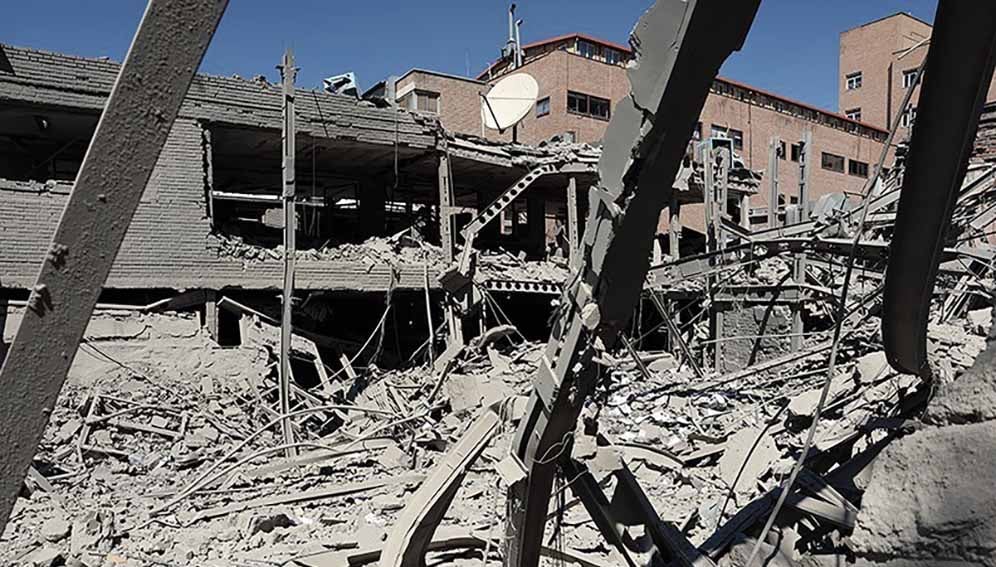
[CAIRO, SciDev.Net] Universities and research institutions across Iran have been severely disrupted by months of airstrikes, with officials reporting damage to dozens of campuses and laboratories and warning of long-term consequences for the country’s scientific future.
Iranian authorities say more than 30 universities have been hit since the start of the US-Israeli offensive in late February, forcing the suspension of in-person teaching in many regions and a widespread shift to online learning.
The closures have raised concerns among scientists and international organisations about the impact on research, innovation and the next generation of Iranian scholars.
The United Nations Educational, Scientific and Cultural Organization (UNESCO) condemned the attacks on universities and educational facilities, saying it “rejects in the strongest terms any threats or the deliberate targeting of such institutions as means of retaliation”.
In comments to SciDev.Net, UNESCO warned that damage to universities and research centres disrupts teaching and research, weakens research ecosystems and limits international scientific cooperation.

The organisation said that while remote learning can help maintain theoretical teaching, it cannot replace laboratory-based training and practical education. It also warned that prolonged disruption could increase the risk of “brain drain” and deepen the isolation of Iranian researchers from global scientific networks.
‘Centres of hope’
Iranian scientist Kaveh Madani warned that the most serious damage may not be physical destruction alone.
“Universities are centres of hope,” Madani told SciDev.Net.
“So, the biggest damage is the damage to the ambition of the young people who are supposed to think about the future and build a career.”
Madani said the destruction of classrooms, laboratories, digital infrastructure and scientific equipment disrupts the research process and creates a climate of fear. In Iran’s case, he added, the effects are intensified by international sanctions that already made it difficult and expensive to import advanced technologies and specialised laboratory materials.
“In many cases, it is hard to replace things. It’s very costly or sometimes even impossible under sanctions,” he added.
He noted that some institutions may be forced to rebuild technologies domestically or attempt to reverse-engineer damaged systems, processes that can take years. In other cases, researchers may simply have to wait long periods before alternative technologies become available.
Madani also highlighted the risks posed by damage to digital infrastructure and research databases. The destruction of accumulated scientific data, he said, can have consequences that go far beyond repairing buildings or purchasing replacement equipment.
Despite the scale of disruption, Madani does not believe Iran’s scientific system will collapse entirely.
“The country has many, many good world-class scientists who would continue to and produce knowledge,” he said.
However, he warned that war, sanctions and economic pressures together could significantly slow scientific progress and hold back the next generation of scientists.
“If people are running for their survival, their biggest priority is not their university homework or assignment, or paper, or dissertation,” he said.
Researchers inside Iran also describe a scientific sector struggling to function under increasingly difficult conditions.
Asadollah Hosseini-Chegeni, a researcher in the faculty of agriculture at Lorestan University, in western Iran, said universities had shifted much of their teaching online, including some laboratory courses, to maintain continuity.
But he acknowledged that virtual learning cannot replace direct practical training.
He said many laboratories remained only “semi-active”, with limited work continuing mainly for postgraduate students. Experimental research has slowed because of rising costs for molecular reagents and specialised laboratory supplies, compounded by broader economic pressures.
He added that researchers can still access international scientific resources through university networks, although technical limitations existed even before the current conflict.
Economic costs
Delays to research, interruptions to scientific training and reduced efficiency in funding use could create cumulative long-term effects, even at institutions that have not been directly damaged, the researcher warned.
UNESCO similarly stressed that recovery would require sustained investment and stability.
Rebuilding infrastructure may prove easier than rebuilding human capital, the organisation noted, particularly if the crisis accelerates the emigration of researchers and academics.
For Madani, the impacts of such a wave of emigration would be severe.
“The economic cost of it would be huge in the long term and in the short term,” he said.
There would be major consequences for the training of students and for the research output “that would be halted and impacted for some period”, he added.