


Send to a friend
The details you provide on this page will not be used to send unsolicited email, and will not be sold to a 3rd party. See privacy policy.
This story was supported by the Pulitzer Center.
[NIMBA COUNTY, LIBERIA, SciDev.Net] By midday, the wooden benches in the hallway of Younlay Community Clinic are full. Pregnant women wait with clinic cards in their hands, while children rest against their legs.
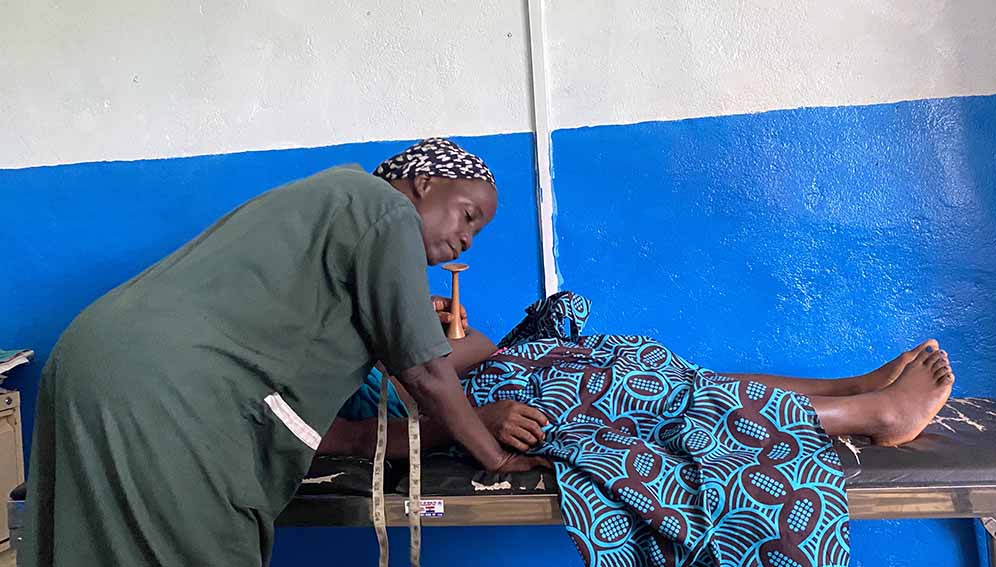
Inside a narrow consultation room, Kpannah Gbeadeh, the only midwife assigned to the clinic, moves between an examination bed and a table crowded with registers. She checks blood pressure, weighs patients, measures their bellies to track their babies’ growth and listens to fetal heartbeats.
Gbeadeh sees up to ten pregnant women a day. Her responsibilities include identifying complications during pregnancy and childbirth that require urgent care, including heavy bleeding, high blood pressure and reduced or absent fetal movement.
Yet Gbeadeh, who works in a hard-to-reach area of Liberia’s Nimba County, has received no specific training in obstetric fistula, a childbirth injury commonly associated with prolonged, obstructed labour and limited access to timely emergency obstetric care.
The World Health Organization defines obstetric fistula as an abnormal opening between a woman’s genital tract and her urinary tract or rectum, usually caused by prolonged, obstructed labour. Pressure from the baby’s head can damage surrounding tissue by cutting off its blood supply, leaving an opening through which urine or faeces leak uncontrollably.
Some women affected by fistula may also lose their babies and face stigma, isolation and rejection by their families and communities.
“I heard about it,” says Gbeadeh, explaining that she loosely understands fistula. “But I have never received any training,” she tells SciDev.Net.
Younlay Clinic, like many rural health facilities with inadequate staff and equipment, relies on frontline health workers to provide maternal care, sometimes in difficult conditions, including at night when there is no electricity. The clinic also serves people from nearby towns and villages in neighbouring Ivory Coast.
Experts say regular training in obstetric care is essential to help these health workers recognise complications and refer patients for timely treatment.
“If our health providers do not have the skills, then it becomes very unfortunate, and the access that these survivors should have will be lacking,” said Philderald Pratt, former assistant country representative of the United Nations Population Fund (UNFPA) and now secretary-general of the Liberia College of Physicians and Surgeons.
Gbeadeh says she relies on patients’ accounts of their symptoms to recognise possible cases of fistula. “When they come, you will know. They will explain their problem to you,” she said.
At Younlay Clinic, nurses, midwives and doctors receive periodic clinical training in pregnancy and childbirth, but fistula is rarely covered. Staff also lack a simple screening guide or referral directory to help them identify suspected cases and direct patients to appropriate care.
A hidden injury
Obstetric fistula remains a serious health problem in parts of Africa and South Asia, which account for the majority of the 500,000 cases that occur globally each year. Women with limited access to quality maternal healthcare are most commonly affected.
In Liberia, the Ministry of Health estimates that more than 100 new cases occur annually, mostly among younger women. The problem is worsened by a shortage of specialised surgeons and limited awareness of the injury among some nurses and midwives.
A 2024 gender policy brief based on Liberia’s 2022 census found that only 8.4 per cent of women had heard of fistula, while 0.9 per cent of women aged 15 and older had experienced it, rising to 1.9 per cent in rural areas.
The brief doesn’t say how many of those women work in health care. But reporting for this story suggests the knowledge gap reaches the frontline. The reporter’s visit to five clinics in Nimba County, including Gwagwatuo, Younlay, and Garplay showed that nurses, officers in charge, and midwives showed varying levels of understanding of fistula. Some were unable to explain its causes, while others said they had received no specific training in managing the condition.
Training for early diagnosis
Pratt stressed that training frontline health workers would not make them fistula surgeons. However, it would help them recognise warning signs, particularly those associated with obstructed labour, and refer suspected cases for confirmation and treatment.
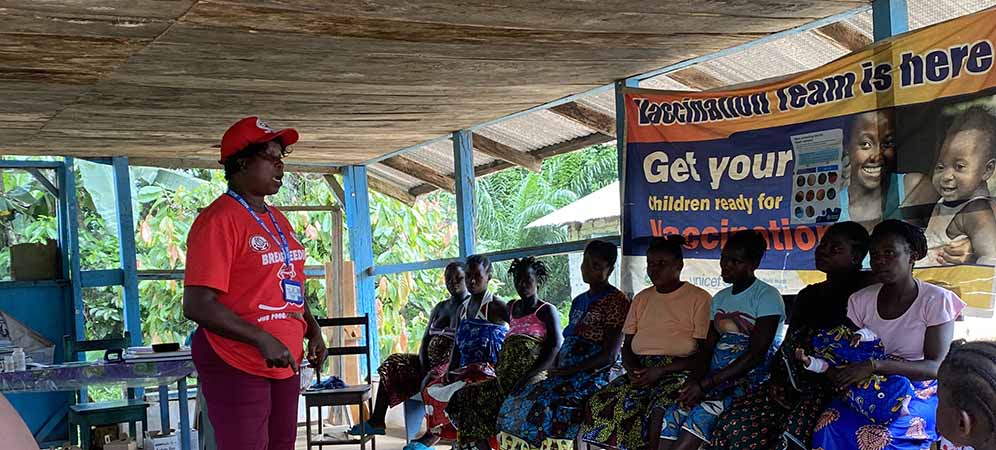
Morning health talks at Garplay Clinic, in Nimba County, Liberia. Photo credit: Tina S. Mehnpaine
According to him, early recognition can reduce the risk of severe injury and help women who develop fistula receive timely treatment. Many cases recorded by the government are already advanced by the time women seek care, partly because of late diagnosis and the limited availability of specialised surgeons.
“The first clinic is where the path to treatment either begins or ends, so instruction should be included in nursing and midwifery schools, while workers already serving in clinics need refresher courses, screening guides, and referral directories. Community health assistants and traditional birth attendants should also be trained, he said.
The Liberian Ministry of Health did not respond to questions about frontline workers’ knowledge of fistula care and management.
Rebuilding fistula care
The gaps in frontline training come despite earlier efforts to strengthen fistula services in Liberia.
During his tenure as UNFPA’s assistant representative, Pratt headed the country’s post-war fistula project, a US$3.5 million initiative funded by women’s rights charity Zonta International. The project trained four practitioners, including John Mulbah, a prominent fistula surgeon in West Africa who has since retired. It combined prevention efforts with free treatment, rehabilitation and social reintegration.
By 2017, UNFPA reported that the project had treated more than 1,500 fistula survivors and provided rehabilitation support to more than 400. Four residents, five nurses and three certified midwives were trained in the clinical management of obstetric fistula and post-operative care. More than 350,000 women, girls and community members also benefited from advocacy on prevention and access to reproductive health services, according to Zonta.
At the Fistula Rehabilitation and Reintegration Centre in Phebe, Bong County, survivors received counselling, life-skills education and training in income-generating activities. More recently, UNFPA’s support has focused on incorporating fistula care into national policy and routine health services.
Pratt said the current shortage of fistula specialists and limited knowledge among frontline health workers were disappointing given the resources invested in rebuilding services after Liberia’s civil war.
“It’s kind of disappointing because we put a whole lot into the obstetric fistula programme,” he told SciDev.Net. “Almost like nothing has been done.”
The Liberian government, the Economic Community of West African States and UNFPA have supported efforts to train more specialists. Three obstetrician-gynaecologists have been sent to St Paul’s Hospital Millennium Medical College in Addis Ababa, Ethiopia, for two years of advanced fellowship training in urogynaecology and pelvic floor reconstruction.
Their training is intended to help reduce Liberia’s dependence on visiting surgeons, whose services can be costly and difficult to secure.
Early detection
Ayun Cassell, president of the Liberia College of Surgeons, said training more surgeons must be accompanied by efforts to make treatment affordable for women who cannot pay for care.
He told SciDev,Net: “If a nurse identifies the injury within hours of delivery, conservative management can help the tissue heal. We can dramatically reduce the number of women who end up needing complex surgical interventions months or years later.”
UNFPA’s clinical manual on fistula also stresses early detection. It says a clinical examination is essential after the baby and placenta are born and that a woman’s ability to pass urine should be assessed within two hours of birth. If she cannot, the manual says she should be catheterised and referred to a facility that conducts urogenital assessments if she still cannot pass urine within the next four hours.
For women found with a fresh fistula within roughly six to 12 weeks of labour, it says an indwelling catheter should be placed as they are referred to a fistula centre. The manual says some small, fresh fistulae have been reported to close spontaneously, but that evidence for the approach is inconclusive.
Gaps in rural clinics
Unlike Gbeadeh, Ophelia Buu, the officer in charge at Garplay Clinic, also in Nimba County, said she had gained some experience with fistula care while working as a nurse aide at GW Harley Hospital in the county’s capital, Sanniquellie. She was sometimes assigned to assist Mulbah and his team during free fistula repair outreach under the former national project.
However, Buu said she had received no further training since being assigned to Garplay in 2023.
The limited knowledge among frontline workers is mirrored by a lack of awareness among many pregnant women.
Mevina Luah, who is pregnant with her second child and lives in Garplay, said she had never heard of obstetric fistula.
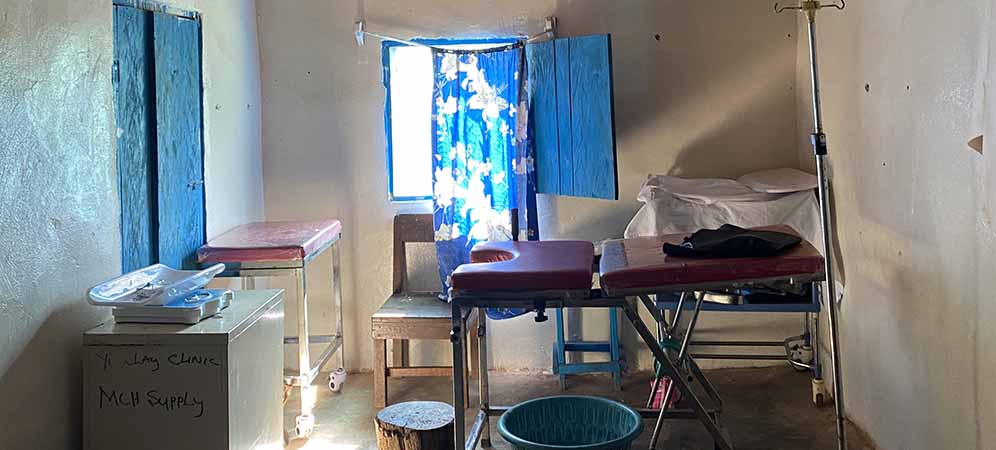
The bed in the labour room at Younlay clinic, in Liberia’s Nimba County. Photo credit: Tina S. Mehnpaine
Theresa Mlangbeah, the officer in charge at Younlay Clinic, said access to training was also depends on where a person lives. Most of Liberia’s few trained fistula specialists are concentrated in Monrovia, leaving rural facilities with limited access to expertise.
She said improvements in surgical capacity would have limited impact if nurses in rural areas could not recognise complications and refer women for care.
“The government has recently done a lot to improve obstetric care, but many nurses across the country must be trained to identify the early warning signs of prolonged labour and post-delivery incontinence so that we, too, can help prevent the injury,” she said.
Mlangbeah, who has been posted to the clinic since 2016, said she had not received specific training in obstetric fistula management, although the subject had been covered during her nursing education. She said she understood the need to refer patients and provide treatment when appropriate.
Recalling a case involving a girl who developed leakage after giving birth in 2017, Theresa told SciDev.Net: “She had a deep laceration [and started] peeing on herself. So my certified midwife that was [there told us to place her] on antibiotics, and the peeing stopped. She is well now [and] she has another baby.”
However, Pratt questioned whether the case involved fistula. “It may not necessarily be a fistula. It could be a tear of the cervix. It can be repaired with prophylactic antibiotics.” antibiotics”, he explained.
The distinction is important because urinary leakage after childbirth does not, on its own, confirm a fistula diagnosis. Clinical assessment is needed to establish the cause.
Mlangbeah, Buu and Gbeadeh are calling on the Ministry of Health to provide more training in obstetric fistula for frontline health workers.
“We share borders with Ivory Coast, and we receive major cases from the Ivory Coast, so if we are trained on fistula, it will help us,” Mlangbeah added.
This piece was produced by SciDev.Net’s Sub-Saharan Africa English desk.