


08/09/26
The long wait for fistula surgery in Liberia
Send to a friend
The details you provide on this page will not be used to send unsolicited email, and will not be sold to a 3rd party. See privacy policy.
This story was supported by the Pulitzer Center.
[MONROVIA, SciDev.Net] For more than three years, Lorpu* has lived with the constant leakage of urine and faeces caused by obstetric fistula, a debilitating childbirth injury.
The condition, where a hole forms between the birth canal and the bladder or rectum. can result from prolonged, obstructed labour, often when timely medical care is unavailable.
It afflicts almost 500,000 women and girls a year worldwide, with half of those in Sub-Saharan Africa, according to the United Nations Population Fund (UNFPA).
Lorpu developed obstetric fistula after a lengthy labour in Sinoe County, southeastern Liberia, in June 2020, aged 17.
She endured hours of painful contractions with the baby trapped in her birth canal.

“I kept hearing the midwife say, ‘Push, push!’ until I couldn’t breathe,” Lorpu told SciDev.Net, struggling to hold back her tears.
“The midwife kept telling me to wait, that the baby was coming. But the baby never came. The pain was like fire, and then everything turned dark.”
Eventually the baby was delivered stillborn.
Three days later, Lorpu was discharged with no explanation that she had developed an obstetric fistula.
Struggling with incontinence, as well as the pain of losing her baby, Lorpu began to suffer from postnatal depression and insomnia. At one point, she could not even recognise her mother or boyfriend.
Costly ‘cures’
Three weeks later, Lorpu and her mother began searching for answers. They visited a local herbalist, who told them that the leakage was caused by a bruise on Lorpu’s womb. They paid 3,000 Liberian dollars (US$17), along with three kilograms of rice, three chickens and a gallon of red palm oil, for a month’s treatment. It did not work.

‘Jenet’ was told her injury was too severe for surgery after being diagnosed with obstetric fistula. Photo credit: Tina S. Mehnpaine.
Another herbalist was recommended, but again, there was no cure. Lorpu’s aunt then gave her US$300 to travel to Monrovia for further treatment. There, she visited two hospitals in Paynesville, outside the Liberian capital.
“Some doctors said it was an infection that was around my womb,” Lorpu said.
She eventually found help through a family friend in Monrovia, who told her about a free fistula treatment campaign organised by St. Joseph Catholic Hospital, in the Liberian capital. Doctors here finally diagnosed her condition, but she did not receive surgery.
By the time she arrived, the campaign had ended. She was instead referred to Phebe Hospital in Suacoco, Bong County, where the Liberian government and its partners funded another fistula campaign.
Lorpu estimates that she has spent more than 160,000 Liberian dollars (US$914) searching for treatment.
“I lost all my business money. My farm went down. Even my mother’s red palm oil business went down too,” she said.
Young women afflicted
Women from rural communities in Grand Bassa, Sinoe, Maryland and Grand Gedeh counties interviewed for this story similarly recalled visiting several health facilities before anyone recognised that they had developed a fistula.
According to Tarmay Yekeh-Saa, deputy director of the Family Health Unit at Liberia’s Ministry of Health, about 100 women are affected by obstetric fistula in Liberia each year.
But she stressed that this is only a rough estimate based largely on the number of women who come forward during treatment campaigns.
“There is no clear record of reported fistula cases,” Yekeh-Saa said.
“When we want to take a quick survey and see what is the age range, what kind of women are affected, you often see that they are young people. Close to two-thirds of them are […] not more than 25 years old.”
Surgeon shortage
Ayun Cassell, a urological surgeon and chairman of the Liberia Medical and Dental Council, says while cost of treatment is a problem, shortage of specialists trained to repair obstetric fistula is also a major obstacle.
“We need a system that enhances affordability,” he said. “One of the biggest barriers has been cost. The next thing is that you need trained surgeons on the ground to perform the surgery.”
Yekeh-Saa agrees with this, noting that “for the last five to seven years in Liberia, we really don’t have the surgeons that can be able to correct these injuries”.
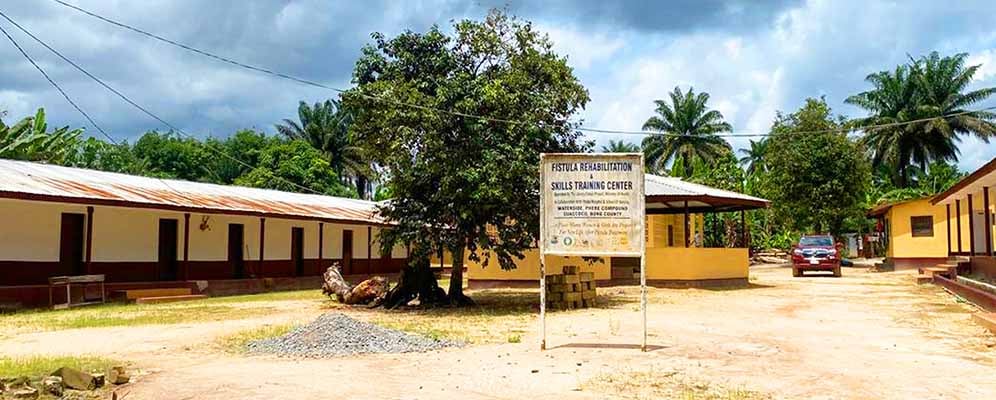
The Phebe Hospital Rehabilitation Center in Suacoco, Bong County, Liberia. A local consultant says that while cost of treatment is a problem, shortage of specialists trained to repair obstetric fistula is also a major obstacle. Photo credit: Tina S. Mehnpaine
According to the UNFPA, obstetric fistula is preventable when women receive timely emergency obstetric care, including Caesarean sections when necessary.
Cassell, who is also a consultant urologist at the John F. Kennedy Medical Center, said the challenge of early detection and managing complications is particularly acute in rural clinics which may struggle to handle complex obstetric emergencies.
“By the time the patient reaches a facility that can intervene, the window for preventing permanent injury may already be gone,” he said. “By that time, they are so physically and mentally tormented that it breaks my heart.”
Lorpu’s case, he said, illustrates the consequences of prolonged labour without timely intervention.
“A woman should not have to remain in labour [unnecessarily] for many hours before someone decides that the delivery is not progressing.”
The WHO Labour Care Guide recommends monitoring of labour progression to identify complications that need quick interventions.
Treatment campaigns
Nowiah Gorpudolo- Dennis, Liberia’s fistula focal person, says the Ministry of Health is trying to move away from periodic treatment campaigns.
In an email, Dennis told SciDev.Net that Liberia is shifting towards “integrating fistula prevention and treatment into the broader maternal health protocol”.
The plans include training specialists, establishing Liberia’s first fistula treatment unit, developing a national fistula strategy and tracking cases through the country’s Health Management Information System.
She said “patients will not have to wait for yearly or quarterly campaigns” which are “expensive and organised only when funding and specialist surgeons become available”.
At the same time, Dennis said previous campaigns had helped inform the ministry’s decision to integrate obstetric fistula prevention and treatment into routine maternal healthcare.
For now, however, Liberia remains dependent on periodic outreach to reduce its backlog of untreated cases.
The dependence is further complicated by the shrinking funding landscape. On 31 August, Sweden ended nearly two decades of bilateral aid to Liberia, putting a stop to a partnership that made it the second largest donor and backer of sexual and reproductive health.
The withdrawal comes after the United States shut down USAID, which funded much of Liberia’s health system. Clinics have since reported shortages of essential supplies.
‘Too severe to treat’
In December 2025, the government conducted a nationwide obstetric fistula campaign, the first in nearly eight years.
According to Dennis, the initiative was led by Health Minister Louise Mapleh Kpoto to reduce the number of women waiting for treatment. Two Ethiopian doctors carried out surgeries at Phebe Hospital and Bomi Hospital.
For Lorpu the campaign offered the possibility of finally ending years of isolation. She attended Phebe Hospital in Suacoco, hopeful that her life might change.
Here, she was joined by others, like Jenet*, who had travelled from different parts of Liberia. Some had spent more than two days on the road.
Lorpu and Jenet waited as other women were examined one-by-one, admitted and taken into surgery. Each time a name was called, she hoped theirs would be next.
For Jenet, that call never came. “I thought when they registered me, my problem was going to end,” she said.
“When I saw the other women going for surgery, I believed my own time was coming. But I was told that my injury was too severe and that I should wait for the next surgical outreach.
“That broke me down. After three years of living with this shame, I still could not get treatment.”
More than 100 people were recruited for the December campaign, but only 33 received treatment.
“We have recruited more than 100 persons, and of those, some could not be repaired,” Yekeh-Saa said, speaking at this year’s International Day to End Obstetric Fistula.
“We were able to treat about 33 persons […] we do not have trained surgeons in the country.”
Lorpu also left the hospital without surgery. The Phebe hospital team told her that another surgery would be arranged, but no date was set.
According to Cassell, the length of time a woman lives with the injury can make treatment more complicated.
“The more the injury stays, the more difficult it becomes for surgery,” he said.
While the government’s plans could eventually bring treatment closer to women like Lorpu and Jenet, they remain uncertain promises for women who have already spent years waiting.
Social exclusion
Lorpu, now aged 20, has suffered years of social exclusion, anxiety, and stigma.
Some in her community accused her of being a witch. Others said her condition was punishment for infidelity.
“This sickness is bad […] you can’t go among your friends,” she said through tears, brushing away flies gathering around her.

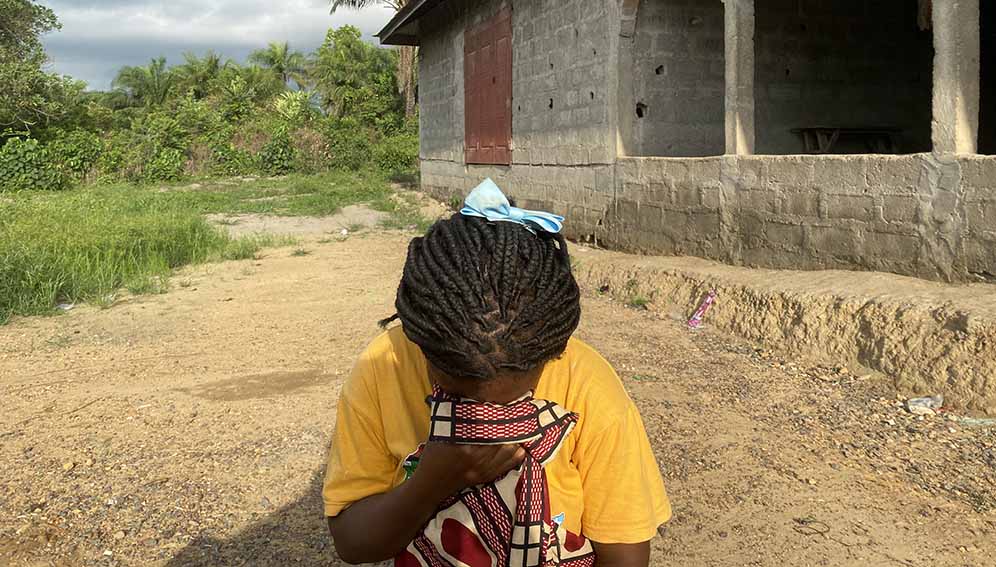
A Liberian woman speaks to SciDev.Net about her experience with obstetric fistula. Women afflicted by the condition often suffer social exclusion and stigma. (Photo has been edited to protect the woman’s identity). Photo credit: Tina S. Mehnpaine.
Cassell said the uncontrolled leakage of urine, faeces or both can push women with fistula into isolation even before they are openly rejected by others. Many begin to see themselves as unclean or inferior and withdraw from social life because they fear humiliation, he explained.
“They become afraid of being embarrassed, so they remove themselves from social life,” Cassell said.
“A woman may stop going to church, stop selling in the market, and stop visiting friends because she does not want anyone to tell her that she smells.”
For Lorpu, the loss of her baby has compounded that struggle. “If my baby were alive today, maybe this pain would be easier,” she said.
“When I see other women holding their children, I think about the child I lost, and the pain comes back again.”
“I lost my baby and, at the same time, I was left to live with this shameful condition. Sometimes I ask myself why both things had to happen to me. Why me?”
Soapmaking but no surgery
When obstetric fistulas are not diagnosed early, not only can it mean that “multiple surgeries” are needed, but also rehabilitation services, which require significant investment, says Cassell. As part of such rehabilitation programmes, patients are taught how to sew and embroider and even given a sewing machine upon discharge, he says, “so that they can become participating members of society”.
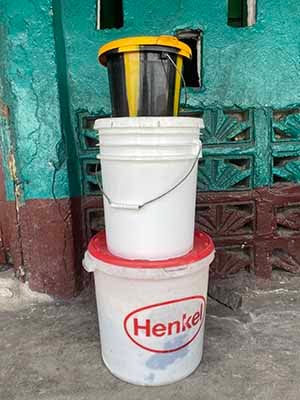
Start-up kit for fistula rehabilitation.
At Phebe Hospital, Lorpu and Jenet did not receive surgery, but they were able to take part in a rehabilitation programme.
After spending less than a month at the Phebe Fistula Rehabilitation Center, an 11-bedroom dormitory, they joined more than 50 fistula survivors who received training in soap-making and pastry production, according to Liberia’s Ministry of Gender.
The training was backed by US$245,000 in funding from the Economic Community of West African States (ECOWAS), which resulted from a 2024 SciDev.Net article that exposed the healthcare gaps for women suffering from fistula in Liberia.
The funding is also supporting two of three Liberian doctors currently undertaking a two-year course in Ethiopia in urogynecology and pelvic floor reconstruction—training that could help reduce the country’s dependence on foreign specialists and periodic surgical campaigns.
Lorpu and Jenet received US$75 each for transportation back to Sinoe and Maryland, along with start-up kits for their soap-making businesses.
Both women now make and sell soap in their communities. They are rebuilding what they can while waiting for the call that has still not come. There is no date yet for their surgeries.
*Real names have been withheld to protect anonymity.
This piece was produced by SciDev.Net’s Sub-Saharan Africa English desk.