

Send to a friend
The details you provide on this page will not be used to send unsolicited email, and will not be sold to a 3rd party. See privacy policy.
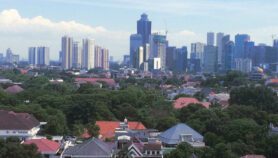
Egypt’s rice growers have been blamed for the eighth consecutive year as thick smog — the ‘black cloud’ — descended again on Cairo in late October, causing record levels of nitrogen dioxide and carbon monoxide.
But scientists question whether the environment ministry, itself criticised for inaction, is right to blame the southern Delta’s rice growers by burning agricultural waste.
Whatever the cause of the smog, there are sound economical and environmental arguments for not burning agricultural waste. Instead, it could be used as a clean energy source, for instance by using it to make light and heavy oils.
But the government cannot ask farmers to change their practices without offering alternative methods of waste disposal, reports Hania Moheeb in Business Today.
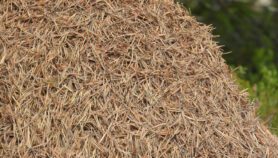
It even failed to meet its modest 2006 target of collecting 125,000 tons of rice husks from farmers.
But there are positive signs. The environment ministry has welcomed the idea to turn waste into compost, and has plans with a Chinese research centre to develop two facilities to convert rice husks into biogas for rural domestic use.
Link to full article in Business TodayMore on Energy