

By: Mercy Adhiambo
Send to a friend
The details you provide on this page will not be used to send unsolicited email, and will not be sold to a 3rd party. See privacy policy.
[NAIROBI] A WHO recommendation to supply all iron-deficient children with micronutrient supplements has been called into question by a study that has found this may increase the risk of malaria.
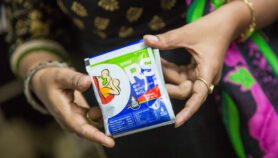
Giving supplements containing iron, folic acid, copper and vitamins to more than 600 Tanzanian children — aged between six months and five years — with iron deficiency increased their likelihood of contracting malaria by 41 per cent, researchers found.
Supported by another study conducted in 2006 — which found that iron and folic acid supplements increased malaria-related hospitalisation and deaths by 12 per cent — the authors have concluded that, although more research is needed, iron could be responsible for the increased risk.
Although the overall incidence of malaria across the whole study was not affected, children given micronutrients contracted the disease for the first time earlier in their lives. Micronutrient supplementation was also linked with a greater number of malaria parasites in the blood of babies less than 18 months with severe malaria — but this effect reduced with age.
The results, published in PLoS Medicine last month (22 November), add to growing concerns that providing micronutrients — which the WHO recommends for young children and pregnant women — may be doing more harm than good in malaria-endemic areas.
"For many parts of Africa, we caution against supplementation with vitamins and minerals other than zinc as there is considerable evidence that this can increase the risk of malaria," Hans Verhoef, a researcher at Wageningen University, Netherlands, and the London School of Hygiene and Tropical Medicine, United Kingdom, and an author of the study, told SciDev.Net.
"This is a dilemma, because children and women are often deficient in these micronutrients," he added.
The study also showed that zinc supplements have no effect on malaria rates, dashing hopes that it could provide an extra tool for fighting malaria.
Although the study calls into question the validity of the WHO’s recommendation, Verhoef agreed that a small amount of iron (less than is contained in the supplements) added to fortified foods may improve the health of women and children.
He added that women in malaria-prone areas should continue to take iron supplements during pregnancy but should also ensure that they receive antimalarials in accordance with guidelines issued by their governments.
But Elizabeth Juma, an epidemiologist for the Kenya Medical Research Institute, said that iron supplements should continue to be provided as they are important for combatting the anaemia that malaria often causes.
By only providing patients with iron supplements after the malarial symptoms have been treated, the reduction of the drugs’ effects could be avoided, she said.
References
PLoS Medicine doi:10.1371/journal.pmed.1001125 (2011)
More on Disease