

Send to a friend
The details you provide on this page will not be used to send unsolicited email, and will not be sold to a 3rd party. See privacy policy.
Solar-powered irrigation systems can boost food and income levels in rural Sub-Saharan Africa, researchers have found.
Irrigation is known to reduce poverty in Asia, they wrote in Proceedings of the National Academy of Sciences this week (5 January), but the success of the technique is not well-documented in Sub-Saharan Africa.
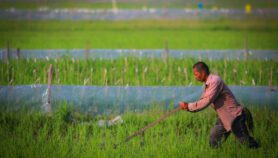
The team, from Stanford University, United States, installed and analysed solar-powered drip irrigation systems — which use photovoltaic pumps to deliver groundwater to the surface — in arid Benin, where most farmers rely on a 3–6 month rainy season and irrigate by hand.
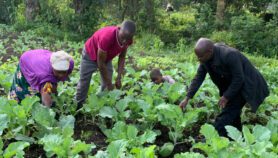
The researchers installed the solar pumps in two villages. Compared with villages using hand irrigation, the pumps led to more vegetables being produced and farmers earning more money.
Vegetable intake increased by 500–750 grams per person per day — equivalent to 3–5 servings of vegetables — during the rainy season in villages with solar systems, and people in control villages ate 150 grams more, suggesting that extra vegetables grown in the two villages were being sold in local markets.
"This study thus indicates that solar-powered drip irrigation can provide substantial economic, nutritional and environmental benefits," wrote the authors.
More on Farming