


15/06/26
Treating elephantiasis cuts HIV risk in Tanzania
By: Syriacus Buguzi
Send to a friend
The details you provide on this page will not be used to send unsolicited email, and will not be sold to a 3rd party. See privacy policy.
This article is supported by SIDA
[DAR ES SALAAM, SciDev.Net] A mass drug campaign targeting a tropical parasitic worm infection in southwest Tanzania produced an unexpected result: a decline in new HIV infections.
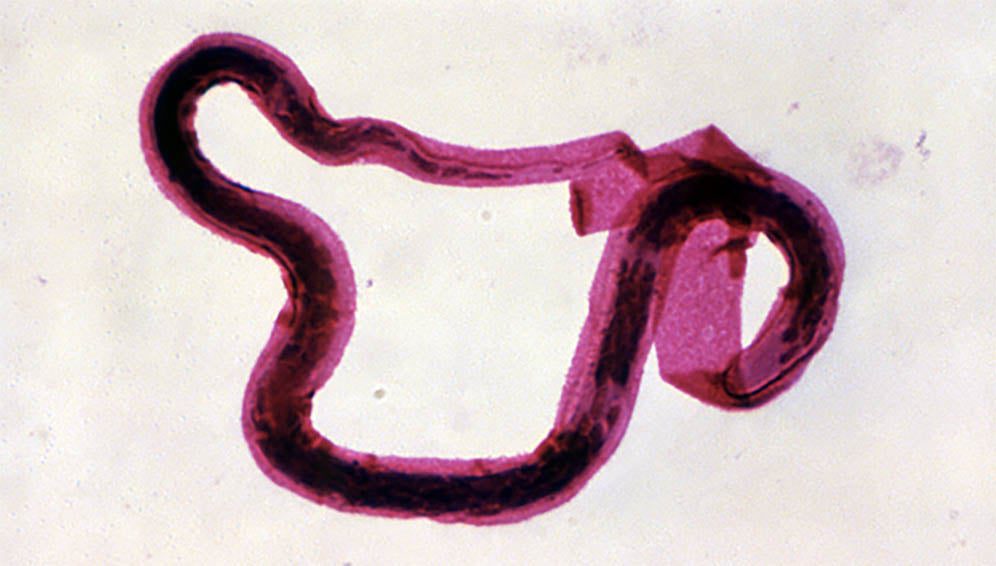
Researchers say their findings suggest that eliminating Wuchereria bancrofti, the parasitic worm responsible for lymphatic filariasis, commonly known as elephantiasis, could also reduce vulnerability to HIV.
However, a year on from publication, they say little has been done to incorporate lymphatic filariasis elimination into HIV prevention strategies.
The study, published in The Lancet HIV in May 2025, included researchers from LMU University Hospital in Munich, Germany and the National Institute for Medical Research, in Mbeya, Tanzania.
It is now raising questions about whether parasite treatment should play a bigger role in HIV prevention strategies across Sub-Saharan Africa, with some public health experts suggesting it could be added to existing HIV prevention toolkits.

“Ten years ago, when we first published data showing increased susceptibility to HIV in filarial-infected individuals, fellow researchers had a hard time believing the results,” said Inge Kroidl, a professor and unit head of a research group on helminth infections and co-infections at LMU University Hospital’s Institute of Infectious Diseases and Tropical Medicine, told SciDev.Net.
Tracking HIV risk over time
Elephantiasis is a neglected tropical disease caused by parasitic worms, spread to humans through mosquito bites. These damage the lymphatic system, leading to severe fluid retention and swelling in parts of the body.
The 12-year study (2007-2019) followed residents in the Kyela district of Tanzania’s Mbeya region, where the parasite is endemic.
During the study period, health authorities rolled out anti-parasitic drugs to treat and reduce the parasite in the community.
Researchers monitored 1,139 HIV-negative participants from four groups: those who had never been infected with the parasite; those successfully treated during mass drug campaigns; a smaller group who remained chronically infected throughout the study period, and a small number who acquired a new infection in 2019.
Among the 848 participants who never contracted the parasite, there were 0.68 HIV cases per 100 people per year. Among the 272 participants who had previously tested positive for the parasite but were later cured, HIV incidence was 0.73 cases per 100 people per year.
The 15 participants who remained chronically infected with elephantiasis recorded a substantially higher HIV incidence rate of 1.5 cases per 100 people per year.
Researchers concluded that eliminating the parasite reduced susceptibility to HIV infection.
Understanding the biological link
The scientists say the findings build on a 2016 study by the same research group, published in The Lancet, which found that infection with the parasite Wuchereria bancrofti increased susceptibility to HIV by two- to three times.
“Everyone suspected it might be a side effect of other factors,” said Kroidl. “We really challenged our data by including known risk factors for HIV and other infections, but the link remained.”
The data for this paper came from the Risk of HIV Infections through Nematode Organism (RHINO) study, an ongoing research programme led by Kroidl and her team to better understand the connection between parasitic worm infections and HIV susceptibility.
The researchers suspect that chronic immune activation caused by adult worms living in the lymphatic system may create conditions that make it easier for HIV to establish infection and replicate. Clearing the parasite appears to reverse this effect.
“It is more complicated than initially thought,” Kroidl said. She added that the impact appears particularly pronounced among adolescents who may not yet have been exposed to many traditional HIV risk factors, making the findings especially relevant for youth-focused prevention efforts in endemic areas.
Policy gap
However, despite the significance of the findings, they are yet to be translated into formal public health guidelines, says Kroidl.
Neither Tanzanian health authorities nor the World Health Organization (WHO) have integrated lymphatic filariasis elimination into standard HIV prevention strategies.
“There is no policy to include lymphatic filariasis elimination into HIV prevention strategies,” Kroidl said.
“The main reason is that initially, no one really believed the story, and the first article was rarely cited. That is why it was so important to do the follow-up measurement and show that eliminating the factor leads to a reduction in HIV susceptibility.”
Commenting independently on the study, Ibrahim Simiyu, a Tanzanian medical doctor and public health scientist with the UK National Institute for Health and Care Research, told SciDev.Net the findings challenged how public health programmes are designed.
“This study matters immensely today because it breaks down the traditional silos of public health,” he said.
“For decades, vertical programmes have treated neglected tropical diseases and HIV as entirely separate problems. Twelve months since this evidence was cemented, the progress we need to track is no longer in the lab, but in the communities.”
Simiyu said integrating worm elimination campaigns with HIV prevention efforts could help address stagnant prevention trends in parts of Sub-Saharan Africa.
“In areas where both conditions are endemic, tracking worm elimination alongside HIV testing could protect vulnerable populations, especially young people.”
‘Zero-cost’ prevention
Kroidl says the findings are attracting attention partly because mass drug administration programmes already exist across many affected countries. Global programmes targeting elephantiasis already distribute anti-parasitic drugs such as ivermectin and albendazole through established supply systems.
“As the reduction of HIV susceptibility comes as an add-on, without any additional costs, I think this is very cost-effective,” Kroidl said.
Kroidl and his team are now exploring whether similar trends can be observed in other countries where both HIV and lymphatic filariasis remain endemic, including Mozambique.
The study also exposes the limits of existing HIV interventions. HIV incidence among participants who never carried the parasite did not decline at all over the 12 years of observation, despite antiretroviral therapy distribution in the area under the US President’s Emergency Plan for AIDS Relief (PEPFAR).
“That is really disturbing, as PEPFAR and antiretroviral therapy distribution were active during that time,” Kroidl said.
He warned that the gains linked to parasite elimination during the study period are not permanent. If treatment coverage declines and infections return, the heightened vulnerability to HIV returns with them.
This piece was produced by SciDev.Net’s Sub-Saharan Africa English desk.
The article is supported by the Swedish International Development Cooperation Agency (SIDA), a Swedish government agency responsible for administering Sweden’s official development assistance.