


20/11/26
Liberia secures funding for fistula care after SciDev.Net report
Send to a friend
The details you provide on this page will not be used to send unsolicited email, and will not be sold to a 3rd party. See privacy policy.
In brief
For some women, prolonged labour without access to appropriate care can lead to a painful and debilitating childbirth injury called obstetric fistula. In Liberia, a SciDev.Net investigation found that a shortage of trained surgeons meant patients with this condition were waiting many months for treatment. The article came to the attention of the Economic Community of West African States (ECOWAS), which subsequently provided funding to support fistula surgery and the reintegration of survivors.
Why it matters
Obstetric fistula can leave women leaking urine or faeces because of damage caused by prolonged or obstructed labour. Women living with the condition, which usually requires surgery to repair, often experience infections, pain and social exclusion.
The big picture
An estimated half a million women and girls live with obstetric fistula globally, with thousands of new cases occurring each year. Most are in Asia and Sub-Saharan Africa, where access to emergency obstetric care and specialist treatment remains a challenge.
In numbers
ECOWAS allocated US$245,000 to support fistula surgeries and the reintegration of survivors in Liberia and other member states.
Background
Liberia has just one health facility equipped to handle fistula cases. The Phebe Hospital, in Suakoko, Bong County, treated about 2,000 obstetric fistula patients between 2008 and 2022. It houses a dedicated fistula centre, set up with funding from the United Nation Population Fund (UNFPA). But changes to funding led to drastic cuts to patient admissions, hospital staff told SciDev.Net.
What action did SciDev.Net take?
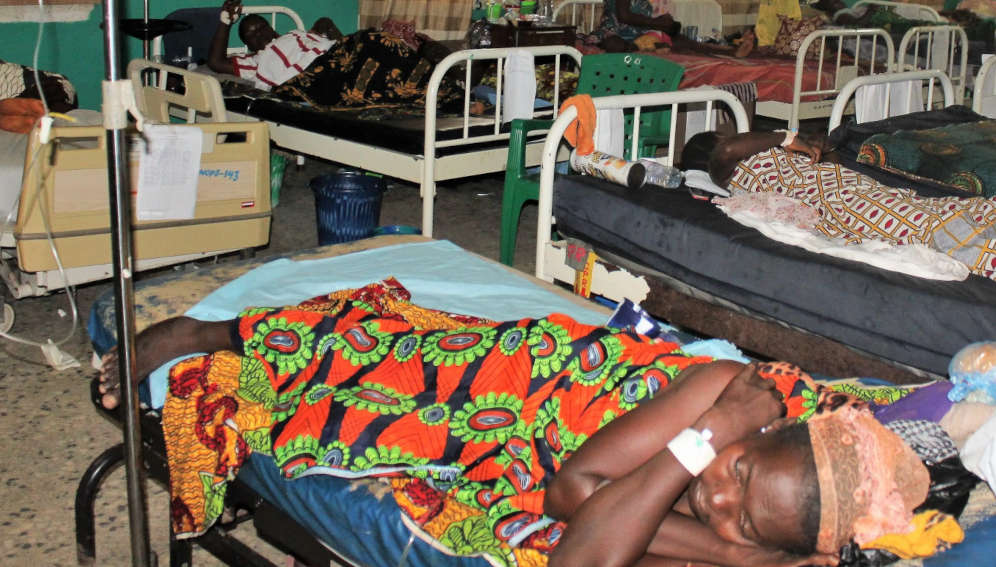
Liberian journalist Tina S.Mehnpaine spoke to women living with the condition to hear their stories, as well as to health professionals, hospital administrators, reproductive health advocates and officials. Naomi George, one of only two remaining patients at the Phebe Hospital’s fistula centre, spoke of how she lost her baby and suffered obstetric fistula after a prolonged labour. She told SciDev.Net: “Social stigma and ostracisation push you into a corner, making you hate yourself and question your existence.”
George’s story was documented in the investigative feature Fistula scars: Liberia’s forgotten women, published by SciDev.Net on 23 September, 2024. The investigation found that more than 1,200 women in Liberia needed surgery, while some faced waits of 18 months or longer. A shortage of trained surgeons meant that the country depended partly on visiting medical teams to provide specialist care. Women who could not access treatment continued to live with the physical and social effects of the condition.
What was the impact of SciDev.Net’s article?
The investigation highlighted the problems affecting access to care, including limited funding, a shortage of specialists, and gaps in government support. It drew attention to the need to train more local doctors and provide sustained funding for surgery and the reintegration of women after treatment.
Following publication of the article, ECOWAS provided US$245,000 in support of fistula surgeries and the reintegration of affected women in Liberia and other member states. A former official at the organisation said the article was a factor that prompted the funding bid. The regional body has also supported the training of three Liberian doctors in obstetrics and gynaecology in Ethiopia to strengthen local capacity to treat the condition. The support forms part of wider efforts to improve access to fistula care in Libera.