


Send to a friend
The details you provide on this page will not be used to send unsolicited email, and will not be sold to a 3rd party. See privacy policy.
[BANGUI, DAKAR, BAMAKO, SciDev.Net] “We often talk about care, medicines, medical equipment, but the issue of waste produced by these things is overlooked.”
Medza Ndoye, president of the Senegal-based non-profit Citizen Reflection and Action Club (CRAC), believes this is a problem because a health system can’t be effective if the waste it generates is not properly managed.
The issue of biomedical waste management, laments Ndoye, is seriously underestimated in Sub-Saharan Africa, where healthcare facilities generate tonnes of biomedical waste a day. This includes used syringes and infectious anatomical waste that are contaminating the environment and putting lives at risk.
At the University Hospital Center Point G in Bamako, head of hygiene Abou Traoré says the waste produced is “difficult to quantify”. But he cites a three-month study carried out by a student in 2025 that indicates annual waste production here could be almost 100 tonnes.
“I have seen syringes or vials abandoned in neighbourhoods or even near beaches. It’s very worrying, especially for children. ”
Madjiguène Ndiaye, paediatrician, Idrissa Pouye General Hospital, Dakar
“This waste constitutes a reservoir of potentially dangerous microorganisms, likely to infect hospitalised patients, their companions, visitors, health workers and the community,” Traoré warns.
SciDev.Net investigations on the ground at several hospitals in West and Central Africa found numerous shortcomings in the practices of sorting, collecting, storing and disposing of biomedical waste.
In the Central African Republic capital of Bangui, at the Saïdou Health Centre, the Community Hospital, and the Bangui National University Hospital Centre, these findings included the mixing of infectious waste with general, non-hazardous waste.

There was also evidence of failures to comply with standards for disposal of used needles, which were not systematically placed in secured boxes, as well as unsecured storage areas and makeshift incineration methods.
According to healthcare professionals, this situation is common in hospitals across Sub-Saharan Africa.
“In some cases, the sorting is not properly respected,” says Madjiguène Ndiaye, a paediatrician at Idrissa Pouye General Hospital in Dakar, Senegal. “Sometimes biomedical waste is mixed with household waste, or sharp objects end up in unsuitable bags.”
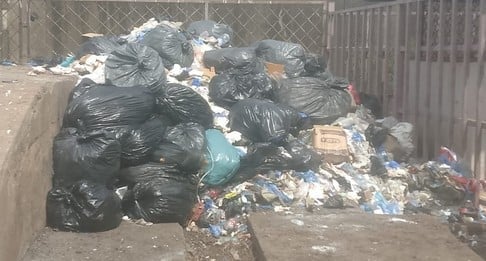
It is common to see biomedical waste mixed with household garbage, as seen here in Bangui, Central African Republic. Photo credit: SciDev.Net/AJ Mosseavo
She says storage areas are sometimes inadequately secured, exposing maintenance staff to risks.
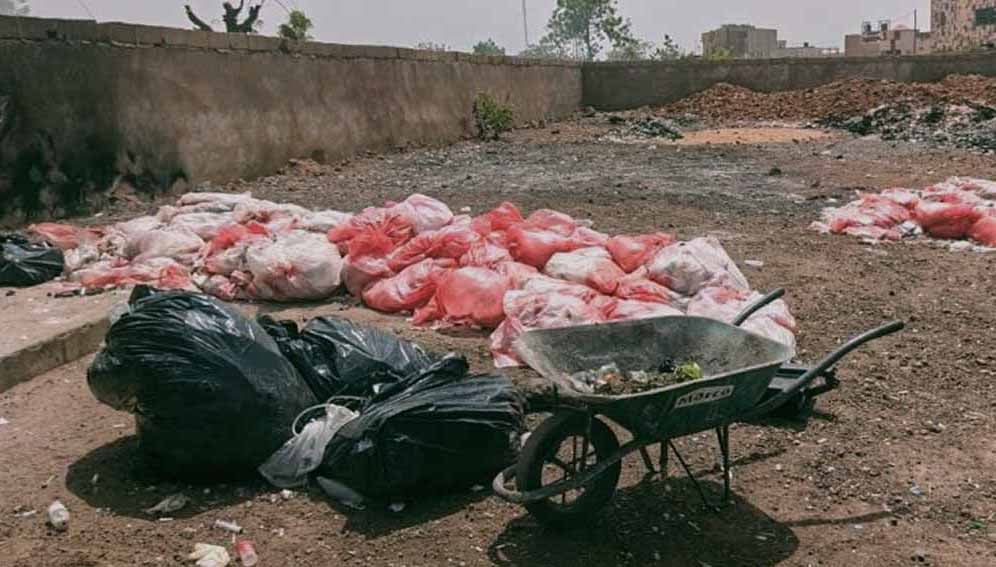
SciDev.Net found that in many facilities, used syringes, blood-soaked gauze, and anatomical waste end up mixed with food scraps and cardboard packaging. The absence of a rigorous collection system is turning streets and even riverbeds into potential biohazard zones.
‘Syringes on beaches’
Ndiaye tells SciDev.Net: “I have seen syringes or vials abandoned in neighbourhoods or even near beaches. It’s very worrying, especially for children.”
Idrissa Ndiaye, a senior official at the national hygiene service of the Ministry of Health and Public Hygiene, recalls an example in Dakar.
“There was a time when waste from Le Dantec Hospital was found on the beach,” he says. “This caused a lot of concern, because this type of waste should never end up in the environment.”
Despite regular patrols by hygiene officers, some clandestine behaviours persist, he says.
“We carry out checks on the ground, but sometimes people take advantage of the night to get rid of waste,” he laments. “They discreetly dump it on beaches or bury it without respecting health standards.”
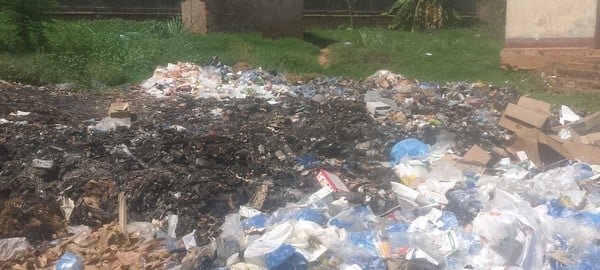
Despite controls, biomedical waste often ends up in the environment. Photo credit: SciDev.Net/AJ Mosseavo
At the National Integrated Waste Management Company of Senegal (SONAGED), which manages municipal waste, head of operations and infrastructure Mansour Diop Gaye admits practices on the ground are sometimes at odds with regulatory guidelines.
“During our waste characterisation campaigns at dump sites, we sometimes find sharp or pointed objects, IV [intravenous] bags or drug packaging mixed with household waste,” Gaye says.
Sorting at source
According to the World Health Organization (WHO), about 85 per cent of waste produced in health facilities globally is general, non-hazardous waste, while 15 per cent is considered hazardous and may be infectious, toxic, carcinogenic, or inflammable.
The WHO recommends multi-stage management, including sorting at source with colour coding, secure collection, storage in dedicated areas, regulated transport, and appropriate treatment, either by incineration or disinfection, to eliminate infection risks.
At the Fousseyni Daou hospital in the city of Kayes, western Mali, head of hygiene Oumar Diarra says that in addition to the WHO recommendations, the regional health directorate of the Ministry of Health has trained staff in biomedical waste management, including the different stages of processing, such as sorting, collection, transport and disposal.
“The most dangerous waste at the hospital is post-operative waste: organs, amputations, placenta, blood products, laboratory products such as liquids, as well as waste from the hospital’s imaging department such as X-ray films, radioactive waste,” says Diarra.
“We use the incinerator for the final disposal of certain categories of waste. However, there is also waste that cannot be incinerated and it is advisable to bury it.”
Anatomical waste disposal pits are considered necessary infrastructure in hospitals in many low-resource settings to facilitate the disposal of human tissues, organs, and placentas. But they must be strictly regulated to prevent groundwater contamination or scavenging.
“As for incineration debris, it is placed in the ash pit for complete disposal,” Diarra adds.
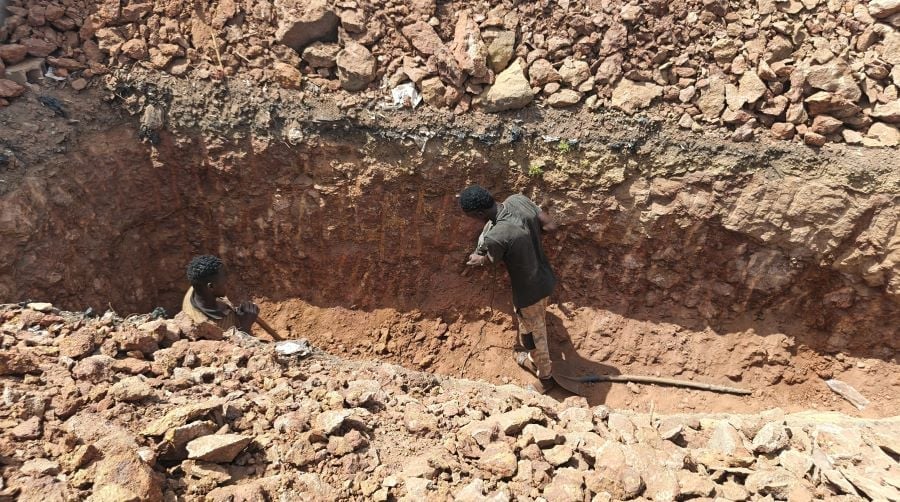
Excavation of a biomedical waste burial pit at a hospital in Mali. Photo credit: SciDev.Net/I. Bissuu
Bamako’s Point G University Hospital is a centralised treatment centre for the most sensitive waste, such as tissues and organs, and infectious waste. According to Soumaila Keita, the hospital’s director, this waste is managed through a “polarisation system” for separating and grouping waste.
Normally, says Ndiaye, waste should follow a well-defined circuit: sorting, packaging, transport and incineration. “But as soon as one link in this chain does not function properly, risks appear,” he warns.
Paediatrician Madjiguène Ndiaye from Dakar’s Idrissa Pouye hospital agrees that robust systems are vital. She says: “In paediatrics, the most frequent waste items are needles, syringes, IV sets, but also gloves, soiled compresses, and even infant diapers. All this waste requires rigorous management to avoid infectious risks.”
For her, “separation at source is essential. It is the first line of defence against infections and bloodborne pathogen exposure.”
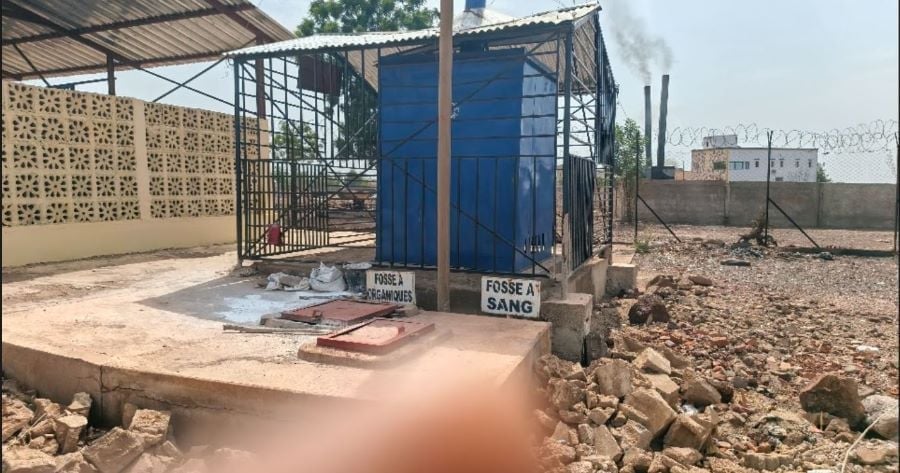
Point G University Hospital in Bamako is a benchmark for biomedical waste treatment in Mali. Photo credit: SciDev.Net/I.Bissuu
Colour-coding
In principle, Madjiguène Ndiaye says strict sorting is applied at Idrissa Pouye. Sharp objects are placed in secure containers after use, while infectious waste goes into colour-coded bags. Waste is then stored in designated areas before being transported and disposed of, by incineration or autoclave (a type of sterilisation by steaming).
Similarly, at the Saidou Health Center in Bangui, head physician Freddy Gouraye says biomedical waste is sorted using a colour-coding system before being incinerated. He says the centre is equipped with an incinerator and an outdoor pit for the disposal of biomedical waste.
However, according to Gaye, in practice, waste separation is not always respected in some healthcare facilities. Despite WHO recommendations and various national regulatory frameworks governing the management of medical waste, he says practices remain concerning.
“Lately, we’ve been having difficulties with the garbage,” says Diarra. “Certainly, most services have garbage cans, but some are in a state of disrepair and others are not sufficient. We also have problems with waste sorting.”
The sanitation worker insists that most employees know which types of waste go in which bins. However, he admits: “Most people know these codes, but they don’t follow them.”
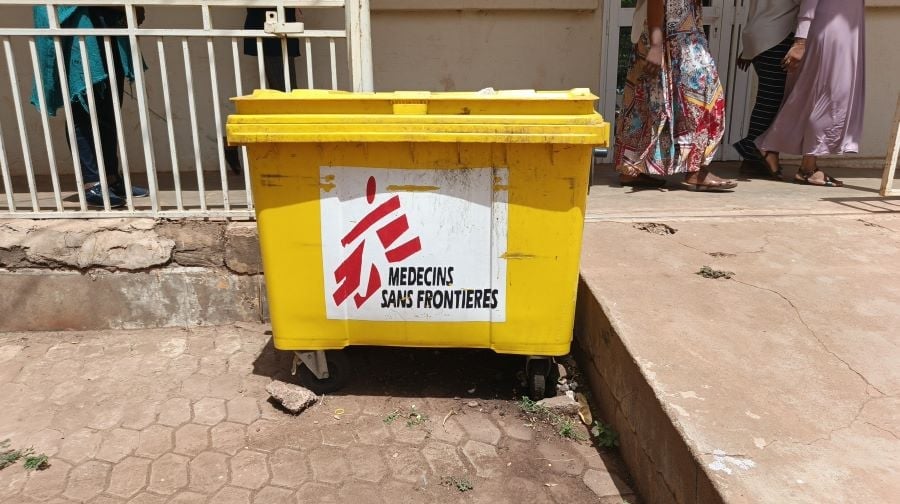
Normally, biomedical waste should be disposed of in different coloured bins depending on its type. Photo credit: SciDevNet/I.Bissuu
Hygiene official Idrissa Ndiaye also highlights the lack of adherence to standards. “Regulated bins must be closed and cleaned daily, but in many facilities, they do not comply,” he says.
Incineration units
He says the issue of final waste disposal also remains problematic. Ndiaye believes that Senegal does not yet have enough incineration units of the required standards to properly process biomedical waste.
Madjiguène Ndiaye also highlights the lack of suitable equipment, inadequate practical training, and financial constraints.
“In some facilities, sharps containers are sometimes homemade. This increases the risk of accidents,” she explains. She also reports having witnessed accidental needle injuries due to improper disposal of syringes.
Hygiene head Traoré says the Point G University Hospital in Bamako operates with only one waste collection tricycle for 28 departments. He believes five are needed for the job to be done efficiently. The hospital has two incinerators and three semi-electric incinerators. He notes that the drawback to these is that they consume too much fuel.
Such costs, along with equipment maintenance and technological limitations, can lead to healthcare facilities resorting to makeshift or low-temperature incinerators, which don’t completely destroy germs and may release harmful substances into the air.
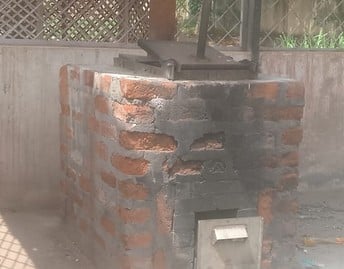
A makeshift incinerator at a hospital in Bangui, Central African Republic. Photo credit: SciDev.Net/AJ Mosseavo
Idrissa Ndiaye points to another problem: the protection of workers handling waste.
“Wearing personal protective equipment is sometimes considered a luxury,” he says, noting that some workers handle waste with their bare hands, without gloves or appropriate protection.
For him, this illustrates the flaws in the biomedical waste management chain from its production to final disposal in parts of Sub-Saharan Africa.
To make matters worse, municipal waste management infrastructure is not adapted to receive and treat biomedical waste, says Gaye.
“Controlled landfills and solid waste treatment facilities do not have the containment equipment or treatment systems necessary to manage this type of hazardous waste,” he explains.
Contamination risks
Ndoye of the non-profit CRAC, says the lack of rigorous management exposes not only patients and healthcare staff but also nearby populations to numerous risks.
These shortcomings carry health and environmental risks.
“Biomedical waste has impacts on human and animal health and on the environment,” says Kayes Hospital hygiene chief Diarra.
“When it is not treated properly, or if the management is not done properly, it can end up in nature or ordinary deposits, exposing the population and particularly children to the risks of cuts, stings, inhalation of toxic substances if the burning is done in the open air,” he explains.
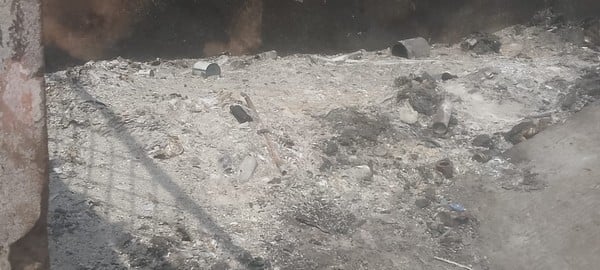
Improper handling of biomedical waste leaves toxic ash. Photo credit: SciDev.Net/AJ Mosseavo
Experts say that such improper handling of sharp or cutting objects is likely to lead to the transmission of serious infections such as hepatitis C or D, or even HIV.
This poor management of biomedical waste particularly exposes vulnerable populations, especially children and pregnant women, to risks of infection, injury and environmental pollution, stresses Madjiguène Ndiaye, adding that “safe waste management is an essential pillar of maternal and child health”.
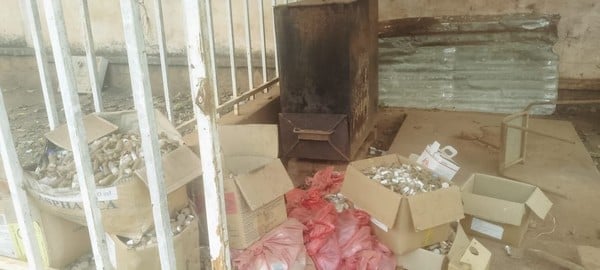
Biomedical waste includes potentially hazardous pharmaceutical residues. Photo credit: SDN/AJ Mosseavo
Idrissa Sané, an environmental researcher and professor at Cheikh Anta Diop University in Dakar, says waste from healthcare activities can contain potentially dangerous pathogens, chemicals, or pharmaceutical residues.
“When not properly treated, this waste can contaminate the soil, groundwater or the air,” he says, adding that poor waste management can lead to lasting environmental consequences, particularly in urban areas where population density is high.
Saliou Sarr, a doctoral student in medicine at Cheikh Anta Diop University in Dakar, adds that some medical waste contains substances that can have long-term toxic effects.
“Pharmaceutical residues, for example, can end up in the environment and disrupt ecosystems. These are issues that are still little studied in our context,” he warns.
Gaye stresses that to ensure secure management and prevent waste from healthcare activities from ending up in landfill and other public places, specialist infrastructure needs to be developed along with national systems for tracing biomedical waste.
Hygiene training
Mariama Ba, currently training at the MADIBA vaccine centre at the Pasteur Institute in Dakar, says training is key. She believes future healthcare professionals must be made aware of hygiene and biomedical waste management issues from a very early age.
“Best practices must be integrated from the training stage. When staff are not properly trained, mistakes are repeated in the field,” she explains.
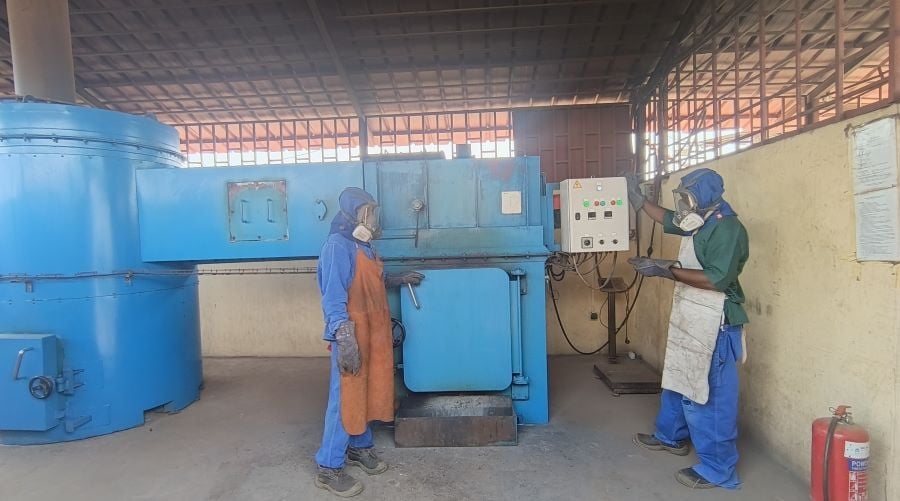
Hospitals need to urgently acquire appropriate equipment for treating biomedical waste. Photo credit: SDN/I. Bissuu
At Kayes Hospital and the University Hospital of Point G, the heads of the hygiene services insist that training of all hospital health workers and cleaning technicians in biomedical waste management is a priority.
For many years, the Central African Republic operated without a structured national system for the effective management of biomedical waste. However, thanks to the support of technical and financial partners such as the World Bank, WHO, UNICEF, and Médecins sans Frontières (Doctors Without Borders/MSF), several national plans have been developed in recent years.
The country’s National Plan for the Management of Biomedical Waste proposes measures such as the establishment of regional centres for waste treatment and the installation of modern incinerators that meet environmental standards. The plan also recommends strengthening source separation in health facilities, training and raising awareness among health personnel, and improving infrastructure for the transport and storage of waste.
But experts agree that more needs to be done. Madjiguène Ndiaye advocates for enhanced staff training, better equipment for hospitals, and increased community awareness.
“If we combine training, material resources and commitment from the authorities, we can significantly reduce the risks,” she concludes.
This piece was produced by SciDev.Net’s Sub-Saharan Africa French desk.