


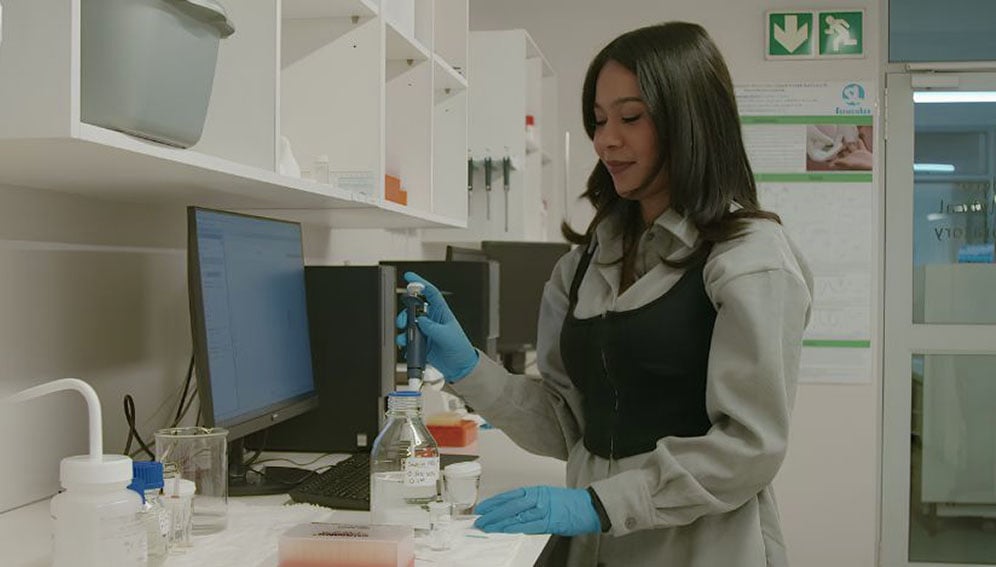
By: Claudia Caruana
Send to a friend
The details you provide on this page will not be used to send unsolicited email, and will not be sold to a 3rd party. See privacy policy.
[Lindau, Germany, SciDev.Net] Jaymi Leigh January, a young South African scientist, is developing next-generation biosensors designed to detect tiny amounts of disease biomarkers associated with tuberculosis (TB), cancer, and viral diseases.
What makes her work different from that of many other researchers working on biosensor technology is her use of nanotechnology to identify even the most minute amount of disease-related biomarkers, allowing for earlier and more sensitive diagnosis.
A biomarker is any biological indicator in the body, such as a gene, protein, or molecule, that acts as a biological clue to help detect the presence or risk of disease.
“Biosensors to diagnose diseases and other conditions have been available for a while. The problem in many cases is that they depend on large molecules,” she tells SciDev.Net.
January was one of more than 650 young researchers globally and six from South Africa invited to participate in the 75th annual Lindau Nobel Laurate Meeting in Lindau, Germany (28 June-3 July).
With an honours degree in Chemistry and an MSc in Nanoscience from the University of the Western Cape (UWC), January completed her PhD in 2025, focused on electroanalytical biosensors and nanomaterials for disease biomarker detection.
Her current research at UWC’s Sensor Laboratories integrates nanotechnology and electrochemistry to develop highly sensitive diagnostic platforms for disease biomarkers, including TB, cancer, and long COVID.
In particular, she deploys nanobodies, a kind of monoclonal antibody derived from antibodies in camelids, which are significantly smaller than conventional antibodies. They can bind target biomarkers tightly with high specificity, meaning greater accuracy.

At Lindau, the research scientist spoke to SciDev.Net about her work at the University of the Western Cape’s Sensor Laboratories and what it could mean for disease diagnostics.
“Early diagnosis has the potential to transform healthcare, yet many diseases are still detected only after symptoms become severe or irreversible damage has already occurred,” she said.
“This is particularly true in many low- and middle-income countries, where access to rapid, affordable diagnostics remains limited.
“My research aims to address this challenge by developing highly sensitive biosensors capable of detecting disease biomarkers at extremely low concentrations, often long before conventional diagnostic methods.”
‘Accurate and affordable’
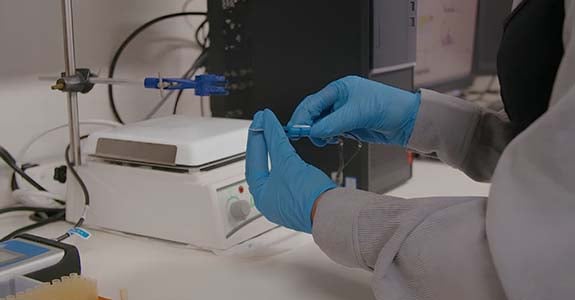
Jaymi Leigh January’s research aims to develop highly sensitive biosensors capable of detecting disease biomarkers at extremely low concentrations. Photo: Claudia Caruana / SciDev.Net
By combining nanotechnology with electrochemical sensing, January says she hopes to create diagnostic tools that are not only highly accurate but also affordable, portable, and suitable for point-of-care use.
In 2025, January was recognised as a finalist in the South African Women in Science Awards in the Natural Sciences category.
“The recognition acknowledged my research on nanotechnology-enabled electrochemical biosensors for early disease detection, particularly for tuberculosis, cancer, and viral diseases,” she said.
“For me, the award was not only a recognition of scientific excellence but also an encouragement to continue developing innovative healthcare technologies that can make a meaningful impact, especially in South Africa and across Africa.”
The motivation for doing this was altruistic, but also personal.
“Like many families, mine has been affected by chronic diseases, and I witnessed first-hand how these illnesses can impact not only the individual but everyone around them,” she explained.
“As I learned more, I realised that this extends beyond chronic diseases to infectious diseases as well; they affect nearly every family in one way or another.
That realisation, she says, gave her work a deeper sense of purpose.
“Every day, I am driven by the hope that my research can contribute, even in a small way, to reducing the burden of diseases that affect so many people, particularly in South Africa and across Africa.”
Commercial partners
Although January’s research has produced promising laboratory results, translating biosensors from the laboratory into clinical practice is far from straightforward.
It involves large-scale clinical validation, manufacturing optimisation, regulatory approval, and partnerships with industry.
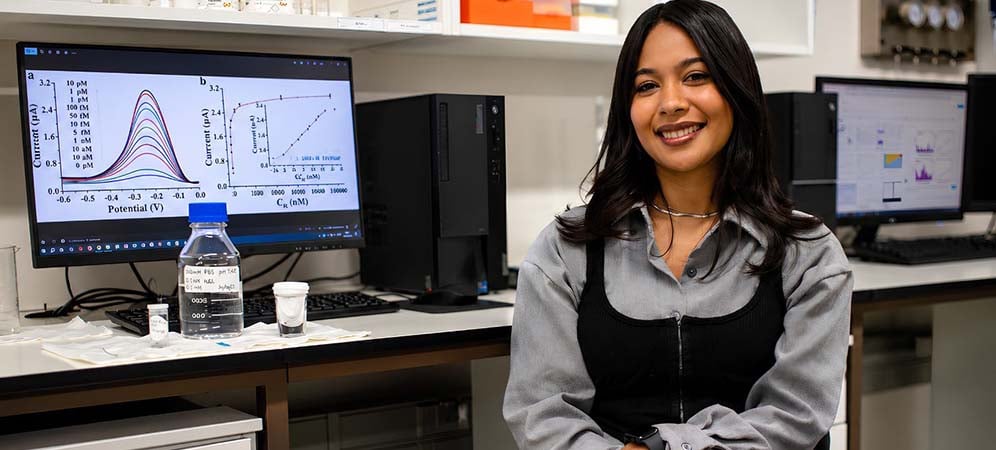
Jaymi Leigh January’s current research at University of the Western Cape (UWC) Sensor Laboratories integrates nanotechnology and electrochemistry. Photo: Claudia Caruana / SciDev.Net
But eventually January hopes the technologies will be commercialised through collaboration with industry partners, “ideally including companies within South Africa”.
“Given the disease burden across Africa, I believe these biosensors have significant potential to make an impact throughout the continent,” she said.
January’s long-term vision is to help develop technologies that are designed with local healthcare needs in mind while remaining globally relevant.
“Ultimately, my goal is not simply to develop better sensors, but to contribute towards earlier diagnosis, improved patient outcomes, and more equitable healthcare,” she added
For January, discussions at Lindau on artificial intelligence, global health and geopolitics reinforced a deeply held belief: “Scientific excellence alone is not enough. We must ensure that innovation reaches those who need it most, particularly in Africa and other underrepresented regions. Science has the greatest impact when it serves society.”
This piece was produced by SciDev.Net’s Global desk.