


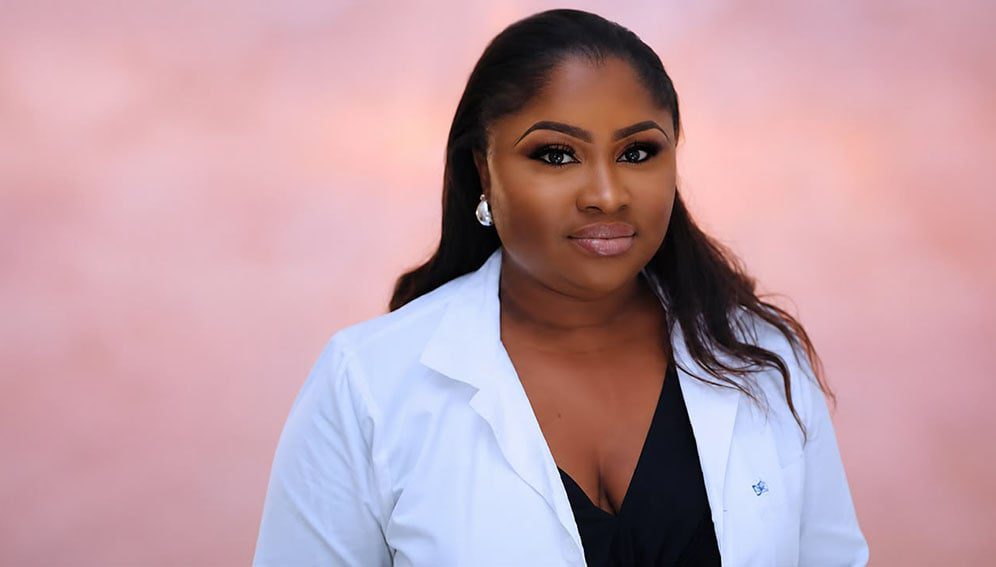
By: Titilope Fadare
Send to a friend
The details you provide on this page will not be used to send unsolicited email, and will not be sold to a 3rd party. See privacy policy.
[ABUJA, SciDev.Net] Nigerian oncologist Adedayo Joseph has seen families sell property, borrow money and shut down businesses to pay for a child’s cancer surgery, only for the patient never to return for the radiotherapy needed to finish treatment.
“They are so broken that when we call them and say you have a three-month follow-up appointment, they can’t show up,” says Joseph, director of clinical research at the Medserve-LUTH Cancer Center of Lagos University Teaching Hospital.
That gap, between finishing surgery and completing treatment, is one reason Joseph is now Nigeria’s principal investigator on HYPOAfrica, a multi-country trial of hypofractionated radiotherapy—a radiation treatment given in fewer, higher doses than standard therapy.
“We don’t need to copy and paste international data. African patients deserve African evidence.”
Adedayo Joseph, Nigerian oncologist
The trial seeks to find out whether the treatment works as safely and effectively in African patients as it has in mostly European and American ones.
“We don’t need to copy and paste international data,” Joseph, a pioneer of child radiotherapy in Nigeria, told SciDev.Net in an interview about her work.
“African patients deserve African evidence.”

Most previous studies included very few African participants, she says, so it isn’t safe to assume the results apply locally.
The trial is also testing feasibility, in the context of overstretched African health systems with insufficient machines, staff shortages, and patients often travelling hundreds of kilometres for care.
If shorter courses prove effective, Joseph says, they could expand access to radiotherapy across the continent.
Recruitment for HYPOAfrica has ended, and the trial is now in its follow-up phase, with initial results being prepared for publication.
Joseph’s hope is that hypofractionated radiotherapy becomes standard practice across African institutions, backed by government investment in the equipment and training to sustain it, freeing patients from long courses of treatment that disrupt work, income and family life.
No blueprint to follow
Nigeria, Africa’s most populous country, is home to around 238 million people according to UN estimates. But until Joseph founded it in 2020, the country had no dedicated paediatric radiation oncology programme at all.
To become competent enough to build one, Joseph had to leave the country entirely, training at the West German Proton Therapy Centre in Germany and at Vanderbilt University Medical Center in the US, because nothing comparable existed anywhere in Sub-Saharan Africa.
“If you think about the fact that Nigeria has about 200 million people and there was no paediatric radiation oncology programme anywhere in the country, it might seem very daunting,” she says.
Completing the training was only the first challenge. The harder part was building a team from nothing, and Joseph says she looked for three traits: competence, character and commitment.
“If someone is competent but has poor character, poor judgment or isn’t trustworthy, you’ll have a problem.”
Finding a core team, made up of a medical physicist, a radiation therapist and a paediatric oncologist who embodied all three, took time and patience, says Joseph.
“My work and my life are tied to my faith, so one of the things I always do is pray. In Yoruba we say that when God gives you an assignment, he equips you to do it.”
Joseph also had to convince management and the board why a programme like this was worth sustaining. “It is not a profitable programme,” she says bluntly.
The number of children needing radiation treatment is relatively small and what treatment there is tends to be discounted. But Joseph argued that the programme would add to the institution’s expertise, reach and opportunities for collaboration.
“We started with what we had and kept building. We still haven’t reached every goal we’ve set, but we’ve continued to grow.”
Treating the family, not just the child
Building the programme solved one problem. It took years of running the Dorcas Cancer Foundation, which Joseph also leads, to understand another.
In the foundation’s early years, the focus was almost entirely medical, on securing access to treatment for children. But outcomes weren’t matching the effort, and Joseph began to see why.
“If caregivers don’t understand the importance of follow-up, you won’t see that child again until the cancer has returned and is no longer curable,” she says. A caregiver who has been out of work for months and must return to earning immediately after treatment ends can’t always keep follow-up appointments.
Grandparents who don’t understand the treatment may steer a family toward alternatives in the village, Joseph explains. And children who fall behind in school, isolated from their peers, risk being lost in a different way entirely.
Many caregivers were left exhausted and traumatised, Joseph says some even told her they wanted to die. “That means everything you did to get them through the first phase was wasted, because without completing treatment, you can’t improve outcomes.”
The foundation’s response was a patient navigation programme: arranging transport, calling to keep families on schedule, and sometimes literally driving out to collect someone and bring them to hospital. The results have been dramatic.
Time from diagnosis to starting treatment has been cut from around 200 days to just over 50, and treatment abandonment is down from more than 50 per cent to under 10 per cent, according to Joseph.
“No matter how brilliant you are as an oncologist, without psychosocial support all your work is going to be wasted,” she says.
An unlikely calling
Radiation oncology wasn’t Joseph’s first choice of specialty. She was training in medical oncology in the US when she decided to return to Nigeria, only to find the country had no medical oncology programme, only clinical oncology, which combines medical and radiation into one path.
“I wasn’t particularly excited about radiation at first because I felt I had no choice,” she says. “But as I went deeper into the specialty, I became passionate about it. I always say it was destiny.”
That career has since drawn recognition well beyond the clinic. In April, Joseph chaired the scientific committee of the SIOP Africa Congress 2026, of the International Society of Paediatric Oncology, and was named in the Ascent Top 100 Career Women in Africa 2026 list.
She sees this as proof that creating institutional change matters: “The award recognised the work of building systems that will outlast me, not simply treating patients.”
Joseph’s achievements stand out in what remains a largely male-dominated field. But she insists leadership isn’t about titles.
“Leadership starts with leading yourself, being consistent, committed, disciplined, humble. Leadership begins when you take the initiative. You don’t have to become a clinical research director before you start leading research. That’s how you grow into positions of leadership.”
This piece was produced by SciDev.Net’s Sub-Saharan Africa English desk.