


27/04/26
Turning climate science into advice farmers can use
Send to a friend
The details you provide on this page will not be used to send unsolicited email, and will not be sold to a 3rd party. See privacy policy.
Listen on Apple PodcastsListen on SpotifyListen on Google PodcastsListen on StitcherListen on OvercastListen on Amazon MusicListen on CastboxListen on Podcast AddictListen on Pocket CastsListen on iHeartRadioListen on PandoraRSS Feed
Season 4, Episode 64
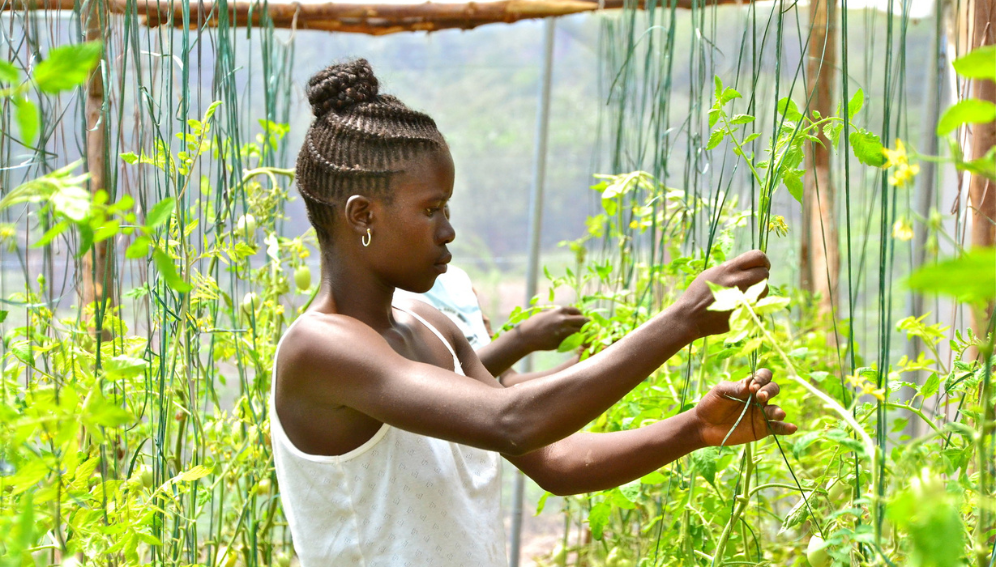
Across Sub-Saharan Africa, farmers are facing growing pressure from unpredictable rainfall, longer dry spells, and declining soil conditions, making it harder to produce food reliably.
Climate-smart agriculture has been promoted as a way to help them adapt, but despite years of research and investment, many farming systems continue to struggle.
In this episode of Africa Science Focus, our reporter Michael Kaloki, examines how agricultural science can be better translated into climate resilience in farmers’ fields.
Kaloki begins in western Kenya, where farmers describe how changing weather is disrupting their livelihoods and how advisory messages delivered to their phones are starting to guide decision-making.
Lilian Kirwa, product manager at the iShamba advisory platform, explains how the service combines weather forecasts with practical, local advice.
Much of that advice is shaped by iSPARK, a research project that is testing which agricultural practices actually build resilience in western Kenya, and for whom. Led by CGIAR’s International Center for Tropical Agriculture (CIAT) with the International Institute of Tropical Agriculture, the University of Leeds, the Kenya Agricultural and Livestock Research Organization (KALRO), and iShamba, the project aims to turn its evidence into farming advisories, policy pathways, and investment plans.
Eduardo Garcia, a data scientist at the International Institute of Tropical Agriculture, is working to find out which innovations work best for farmers.
Andy Challinor, professor of climate impacts at the University of Leeds, says intercropping, irrigation, and soil health are critical for building climate resilience.
But for solutions to scale, policy has to move too. Victor Kagot, a lecturer at Maasai Mara University, Kenya, says policymakers act when evidence shows an intervention is practical, scalable, and reduces risk.
————————————————————————————————————
Do you have any comments, questions or feedback about our podcast episodes? Let us know at podcast@scidev.net
Africa Science Focus is produced by SciDev.Net and distributed in association with your local radio station
This piece was produced by SciDev.Net’s Sub-Saharan Africa English desk.
This episode was supported by the UK-CGIAR Centre. The UK-CGIAR Centre, hosted at CABI (CAB International, the parent organization of SciDev.Net), aims to support global food security by bringing together scientists from the UK and CGIAR to form impact-focused research collaborations. This project is funded by UK International Development.