


20/05/24
Q&A: Centre of gravity shifting on data – WHO’s Farrar
By: Ogechi Ekeanyanwu and Julien Chongwang
Send to a friend
The details you provide on this page will not be used to send unsolicited email, and will not be sold to a 3rd party. See privacy policy.
[KIGALI] Data generated in the global South has given rise to two approved vaccines against malaria and could this decade lead to a new vaccine for tuberculosis, says Jeremy Farrar, chief scientist at the World Health Organization (WHO).
He believes investment in scientific systems is vital to keep this momentum going and to tackle not just infectious diseases but cancer, heart disease, and mental health – all of which are increasingly affecting low- and middle-income countries.
In an interview on the sidelines of INGSA2024 – the conference of the International Network for Governmental Science Advice – in Kigali, Rwanda, earlier this month (3 May), Farrar spoke to SciDev.Net about the need for a firm “science base” to build further evidence to take on these challenges.
How difficult has it been historically to incorporate data from low- and middle-income countries into WHO decisions?
When I started out, living in Vietnam at a time when it was a very low-income country, I think it was extremely difficult. We saw this in malaria and tuberculosis and many different things. I think that has changed.
There is much more evidence generated now in many different countries. Is it where it should be? No. And it will continue to develop.
For instance, we have two malaria vaccines now – this is all from evidence from Africa, some evidence from India. Same will be true for TB vaccines, treatment of malaria, dengue fever: all of the evidence comes from Asia, from Africa, from Central and South America.
I think that’s a reflection of the fact that governments are now investing in science. And if we look at COVID, one example of the evidence around the emergence of the Omicron variant came out of work of great scientists in South Africa that made that discovery. So we have to keep pushing, but I think the centre of gravity is shifting.
What are the challenges that you encounter in using evidence from these regions?
You always want more data … from Africa, Asia, Central and South America. You don’t just want data on malaria and tuberculosis, you want data on cancer, on diabetes, on heart disease, on stroke … it’s not just about infectious diseases.
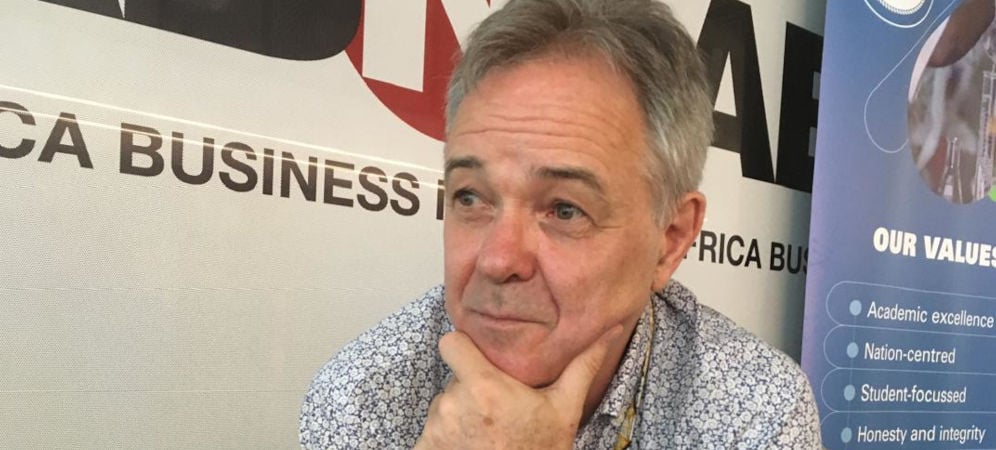
Jeremy Farrar, chief scientist at the World Health Organization (WHO).
Here in Kigali, in Lagos, in Rio de Janeiro, in Ho Chi Minh City, the so-called non-communicable diseases – mental health, cardiovascular disease, cancer – are now very common. For the countries’ own scientific future, [we need] more investment in science, as Rwanda is doing, as Nigeria is doing, as South Africa is doing, as Kenya is doing, as many countries are doing, and I think that shift is happening.
So more investment in science needs to happen for data to be utilised by the WHO?
Primarily so the data can be used by countries. The most important thing is that evidence data, science, research, clinical trials, is generated where the problems are [and] that it’s for use of the communities and people within the countries. And then sharing that with the region, neighbouring countries and WHO is really important.
A country doesn’t generate data just to share it with WHO. It generates data to drive its own decision making. And that’s critical and that comes with investment in science. And the international support for that’s very important, but it’s the domestic support in society in government, in ministries, in education that is so critical to the foundation and ownership.
Given the global reaction to South Africa’s Omicron variant announcement, how does WHO use data from Africa and elsewhere in a way that avoids discrimination?
You’re absolutely right to highlight that issue … Look at what South Africa did: because of long-term investment in science, it was able to identify Omicron. I think within hours it made that publicly available within South Africa and at the same time shared it regionally, with WHO Africa region and with WHO Geneva, and the world knew about it. It could not be more of a best practice example.
The world’s response during COVID was not as good as it could and should be. And the closing of borders, which WHO argued very strongly against … we have to learn lessons from that. If a country shares information within their country that’s of critical importance to the world, we cannot, we must not then negatively impact on those countries. Otherwise, no country will share that information. And if one shares the information, then one has to have a share in the benefits that accrue from it.
Is there any example of data from the Global South making an impact?
There are many examples of that and the number of examples are growing. I’ve mentioned the malaria vaccines. If you’d told me 20 years ago that we would have had a malaria vaccine in my professional life, I would have questioned it, but science has delivered those and the science and the evidence for that has all come from the countries that conducted those clinical trials.
In the clinical trials for a hopeful new tuberculosis vaccine, the first individual volunteers were recruited three or four weeks ago in South Africa and many countries in Africa and Asia are contributing to that absolutely critical trial.
In a time where everybody is very cynical about science and its role in society … to say that there may be this decade new vaccines for tuberculosis and malaria and coming vaccines for cancer – and treatments, not just vaccines – is a remarkable thing to say. And all of that data comes from the countries affected.
How can indigenous knowledge be effectively adopted and used as data to inform policy decisions?
One of the times where that appreciation [of local knowledge] was so important was during the horror of the Ebola crisis in West Africa in 2014. The knowledge of, not just the biology of the virus and the way it transmits, but the behaviour and social and economic circumstances that it happened in. Without understanding that, it is impossible to deal with a crisis. Whether it’s local knowledge, local beliefs, customs, cultures, language. I think that was a horrific way of learning lessons, but I think from 2014 onwards that has been built in.
We also have to make sure that that’s not just built into emergency responses, but it’s also built into every health system, every day … it’s not just in a crisis you need that, it’s all the time.
What is WHO doing to develop government science advice in Sub-Saharan Africa?
I joined WHO ten months ago and two of the areas that I have focused on with colleagues [are firstly] what options do countries have for supporting their science? I think there can be lessons that Rwanda can share with Brazil, that Brazil can share with Vietnam, that Vietnam can share with France. Many countries have chosen different paths to support their scientific systems … but I think there’s not been enough sharing of that information.
And the second thing is, how does that scientific system feed into government? Science shouldn’t make policy decisions; governments should make policy decisions. But those decisions should be informed by science. How you structure your scientific advice into government is very important. There is no one model that fits everywhere, but there are some shared experiences.
Some critics argue most data comes from the global North and in the case of monkeypox, that it became a global public health problem only after affecting Europe and the Americas…
I would counter that [the fact that most data comes from the North]. I think that has changed. Where does the data for malaria come from? Where does the data for tuberculosis come from?
I agree, [Monkeypox] had been under the radar for too long. And that goes back to enhancing and building the science base that allows that to be bought to the fore at an earlier stage – in every country.
Is the world where it needs to be? No. Could the world get to where it needs to be? Yes. The pandemic treaty [to be put to the World Health Assembly later this month] is an opportunity for the world to come together. And I just hope that the world sees that our problems are shared and the solutions are shared.
This piece was produced by SciDev.Net’s Global desk.