


06/11/26
COP31 must tackle climate policy’s water-cycle blind spot
By: Henk Ovink
Send to a friend
The details you provide on this page will not be used to send unsolicited email, and will not be sold to a 3rd party. See privacy policy.
Protecting the water cycle must be a condition of climate policy and investment, writes global water advocate Henk Ovink ahead of COP31.
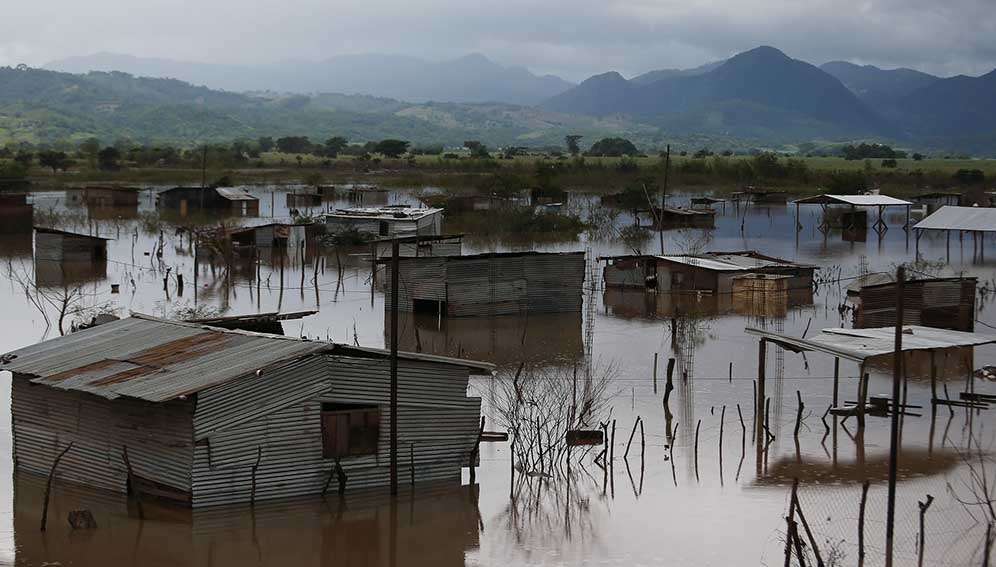
In September, floods and landslides struck Nepal. Earlier that summer, prolonged drought in Somalia forced thousands from their homes. Too much water, too quickly, or too little, for too long. Different immediate causes, but a shared policy blind spot: we respond to floods and droughts as separate emergencies while overlooking the water cycle that connects them.
As the atmosphere warms, it can hold more moisture, increasing the potential for intense rainfall, while higher temperatures accelerate evaporation and dry soils. But water is not simply a casualty of climate change.
The water cycle also regulates climate. Forests, wetlands and healthy soils store and recycle moisture, sustain rainfall, and help keep carbon out of the atmosphere. The so-called “green water” held in soils and vegetation is as essential to climate stability and food production as the “blue water” in rivers, lakes, and aquifers.
Nearly three billion people and more than half of global food production are in areas where total water storage is projected to decline. The Global Commission on the Economics of Water estimates that climate change, declining water storage and inadequate water and sanitation combined could cause GDP to drop by around 8 per cent in high-income countries and 10 to 15 per cent in lower-income countries by 2050.
This reflects a wider failure to value and govern the water cycle on which our economies depend. Cutting emissions remains essential. But climate policy must also change how we farm, use land, and invest, not merely help us cope when water runs short or rivers overflow.
Two gaps climate policy must close
The first gap lies between what we know and how we decide. Responsibility for water, agriculture, land use, and infrastructure is often divided across ministries and levels of government. Decisions that benefit one sector can increase water risks elsewhere.
Budgets and subsidies can reward activities that degrade ecosystems on which economic resilience depends. For example, agricultural price supports are estimated to drive the loss of 2.2 million hectares of forest each year, disrupting moisture recycling and rainfall patterns.
Better coordination matters, but so does changing these incentives.
The second gap is between national policymaking and a water cycle that crosses borders. Countries share rivers, aquifers and rainfall carried through the atmosphere.
The Amazon’s forests recycle moisture that sustains rainfall far beyond the land on which they stand. A recent study attributed most of an 8 to 11 per cent decline in southern Amazon rainfall over four decades to deforestation in the basin and upwind regions.
That interdependence is central to the call by the Global Commission on the Economics of Water to govern the water cycle as a global common good. Protecting it requires both action at home and cooperation across borders, as no country can secure its water future alone.
What COP31 must deliver
At COP31, leaders should turn recognition of water’s importance into three commitments.
First, governments should make water-cycle resilience a test of national climate plans and public spending. Existing data and assessment tools can reveal how agriculture, land use and infrastructure depend on–and disrupt–the wider water cycle.
In Malawi, IWMI and partners used the Water Resilience Tracker to identify gaps and strengthen water-resilience indicators in a draft national adaptation plan. Such assessments should guide investment and ministerial responsibilities, not remain technical exercises.
Farmers and communities most exposed to water insecurity must help shape decisions.
Second, governments should extend cooperation beyond national borders and shared river basins to the landscapes that sustain rainfall. COP30’s Belém Adaptation Indicators provide a framework for tracking adaptation progress.
As countries advance their use, they should draw on existing UN measures of transboundary water cooperation such as SDG indicator 6.5.2 to strengthen joint planning, while developing ways to address atmospheric moisture connections. Shared dependence should translate into shared priorities for protecting forests, soils, and water—not competing national plans.
Third, climate funds and development banks should finance water-cycle resilience, not just individual water projects. Built infrastructure must go hand in hand with protecting and restoring wetlands, floodplains, forests, and soils.
Investment appraisal should recognise their long-term benefits for rainfall, food production, carbon storage, and avoided damage. Governments should redirect subsidies encouraging water depletion towards practices that restore resilience, while protecting low-income households and vulnerable farmers. Valuing water means recognising its benefits and ensuring fair access, not simply charging more for it.
COP31 does not need another declaration that water matters. It needs decisions that make protecting the water cycle a condition of climate policy and investment. We cannot prevent every flood or drought, but we can stop financing greater vulnerability and start investing in the system that sustains us.
Henk Ovink is chair of the board of governors at the International Water Management Institute and executive director of the Global Commission on the Economics of Water at Delft University of Technology.
This article was produced by SciDev.Net’s Global edition.