


By: Ben Deighton
Send to a friend
The details you provide on this page will not be used to send unsolicited email, and will not be sold to a 3rd party. See privacy policy.
[LONDON, SciDev.Net] Global average temperature increases could pass the 1.5 degrees Celsius threshold outlined in the Paris Agreement by the end of the decade, according to the EU’s Copernicus Climate Change Service, putting the world at greater risk of never-seen-before extreme weather events.
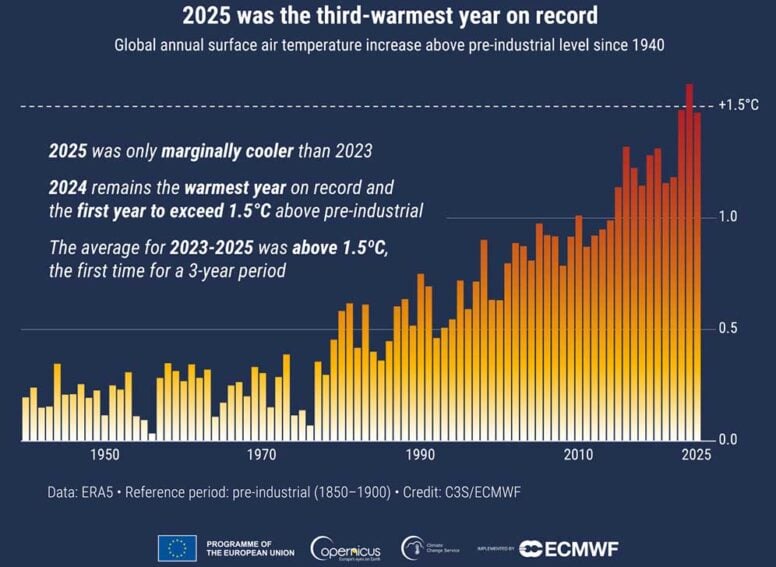
Data released today (Wednesday) by the European Centre for Medium-Range Weather Forecasts, which operates Copernicus on behalf of the EU, shows the average global surface air temperature in 2025 was 1.47 degrees Celsius above pre-industrial times.
As 2024 was the hottest year ever recorded, it means the average temperature increase over the past three years exceeded 1.5 degrees Celsius, according to the Copernicus analysis. In 2024, temperatures reached 1.6 degrees Celsius above pre-industrial levels, compared to 1.48 degrees in 2023, the European data shows.
“Passing the 1.5-degree threshold is not a symbolic failure—for people in low- and middle-income countries, it would represent a material shift in daily life. ”
Patrick Verkooijen, chief executive, Global Center on Adaptation
“These three years stand apart from those that came before,” Samantha Burgess, climate lead at the European Centre for Medium-Range Weather Forecasts and deputy director of Copernicus, told a press briefing.
The World Meteorological Organization (WMO) also confirmed today that 2025 was one of the three warmest years on record, releasing its consolidated analysis of eight datasets, including the one from Copernicus.
However, the WMO analysis put the 2025 global average surface temperature at 1.44 degrees Celsius above the 1850-1900 average, with a margin of uncertainty of 0.13 degrees. The consolidated three-year average for 2023 to 2025 was 1.48 degrees Celsius above the pre-industrial era, with the same margin of uncertainty.
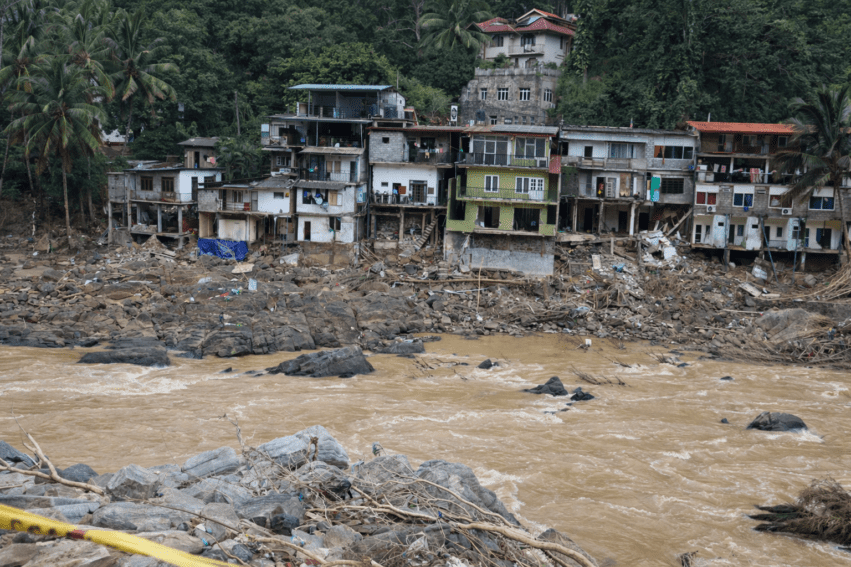
In 2025, floodwaters reached nearly 720,000 buildings, about one in every twelve buildings in Sri Lanka, according to the UNDP. Extreme climate events in 2025, such as floods, droughts, heatwaves, and wildfires, harmed human health, ecosystems and infrastructure. Copyright Aerial Vids SL Drona
The Copernicus data combines past observations, including satellite data, with computer models, while some of the other datasets are based on measurements made by weather stations, ships and buoys.
“The year 2025 started and ended with a cooling La Niña and yet it was still one of the warmest years on record globally because of the accumulation of heat-trapping greenhouse gases in our atmosphere,” said WMO secretary-general Celeste Saulo.
She said extreme weather such as heatwaves, heavy rainfall and intense tropical cyclones, underlined a “vital need for early warning systems”.

2030 forecast
Under the terms of the Paris Agreement, countries agreed to pursue efforts to limit global average temperatures to 1.5 degrees Celsius above pre-industrial levels.
At the time of the agreement, the Copernicus service predicted that the world would pass 1.5 degrees Celsius by March 2045. However, accelerating global warming means it is now forecasting that temperatures could pass this threshold as early as 2030, based on the current rate of warming.
“Overall, the globe has warmed by about 1.4 degrees Celsius above the pre-industrial level, and if warming continues at the same average rate experienced over the last 15 years, then we will reach [the] 1.5 degree level by the end this decade,” said Burgess.
“Every fraction of a degree matters, particularly for worsening extreme weather events.”
Carlo Buontempo, director of the Copernicus Climate Change Service, said it was now “inevitable” that the world would pass the 1.5 degree Celsius threshold.
“Now we are effectively entering a phase where … [it] is basically inevitable that we will pass that threshold and it is up to us to decide how we want to deal with the enhanced and increased … risk that we face as a consequence of this,” he told the press briefing.
Unprecedented
Passing the 1.5 degrees Celsius threshold will increase the chance of weather events that are “unprecedented in the observed record”, according to an assessment by the UN’s Intergovernmental Panel on Climate Change.
“There are people in the Pacific that may not see this report, but they will definitely live its catastrophic reality,” said Fenton Lutunatabua, program manager for the Pacific and Caribbean region at the climate change group 350.org.
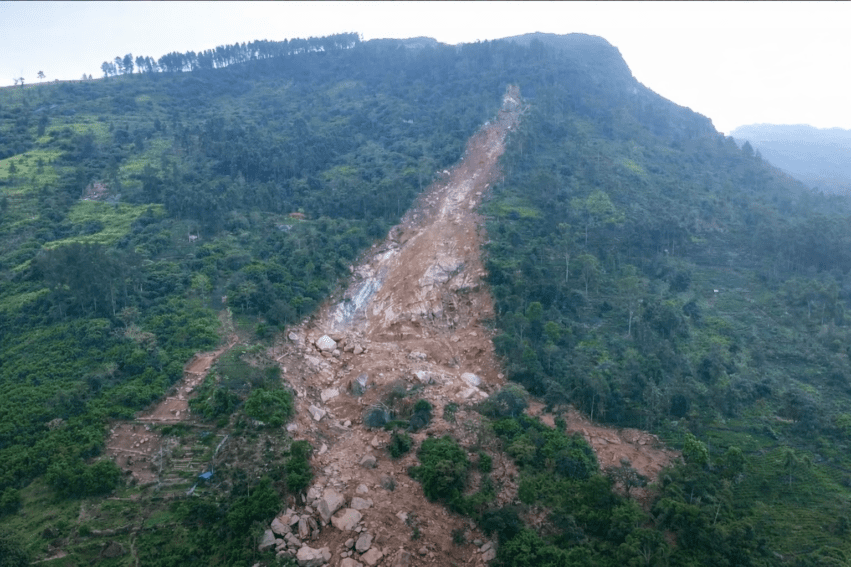
Landslides triggered by Cyclone Ditwah brought down soil and boulders, burying several villages in Sri Lanka. Copyright: Aerial Vids SL Drona
“This data proves that now, more than ever, we need to move beyond fossil fuels.”
Patrick Verkooijen, chief executive of the Netherlands-based Global Center on Adaptation, said: “Passing the 1.5-degree threshold is not a symbolic failure—for people in low- and middle-income countries, it would represent a material shift in daily life.
“It means more days of extreme heat that endanger outdoor workers, more volatile rainfall that undermines smallholder farmers, and more frequent floods and droughts that push vulnerable communities into poverty.”
Last year was marked by extreme weather events such as Hurricane Melissa in the Caribbean, drought in Brazil, and flooding in Colombia and the Democratic Republic of the Congo, according to a report by the UK-based charity Christian Aid.
During the year, SciDev.Net reported on the destruction caused by cyclone Ditwah in Sri Lanka, deadly landslides in Sudan, and tidal flooding in India, as well as ongoing impacts of climate change on agriculture and health.
Harjeet Singh, of the Satat Sampada Climate Foundation, said the latest data was “an existential warning” for low- and middle-income countries.
“We are moving from the era of mitigation and adaptation into the era of unavoidable loss and damage,” he said.
“For the Global South, passing 1.5 degrees Celsius means that heatwaves in South Asia and floods in Southeast Asia will no longer be ‘extreme events’ but structural realities that dismantle decades of development progress overnight.”
This piece was produced by SciDev.Net’s Global desk.