


20/04/26
One million defend Argentina’s glaciers after law reform
Send to a friend
The details you provide on this page will not be used to send unsolicited email, and will not be sold to a 3rd party. See privacy policy.
[BUENOS AIRES, SciDev.Net ] Almost one million people in Argentina have signed a collective legal injunction seeking to protect glaciers and surrounding waterways following national reforms that could put them at risk from mining.
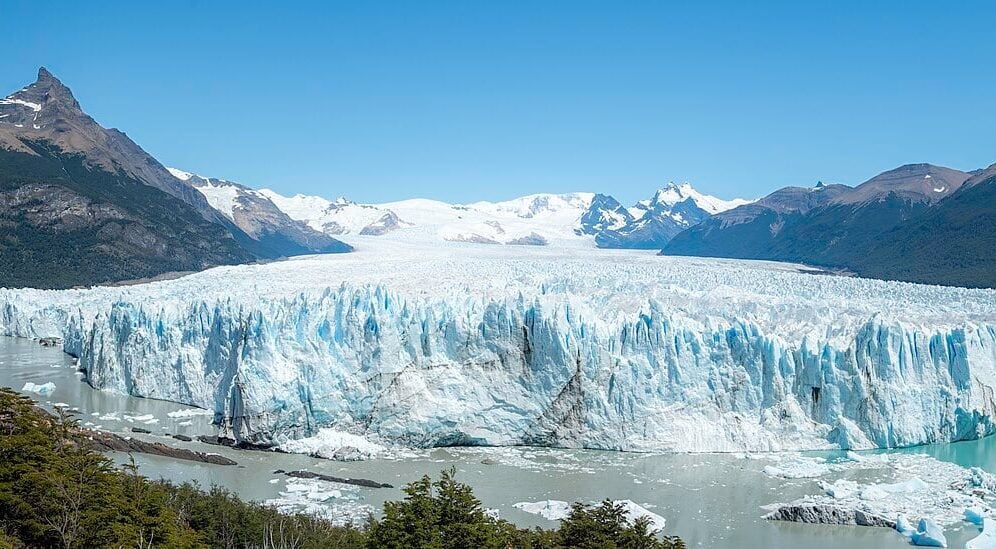
Argentina’s 2010 Glacier Protection Law (Law No. 26,639) established minimum standards to preserve glaciers as strategic freshwater reserves, prohibiting mining, industrial and construction activities in such environments.
But reforms approved by the National Congress on 8 April remove these protections and transfer decision-making powers over watercourses to provincial governments.
In response, civil society groups have mobilised a “collective amparo”— a fast-track legal mechanism used in Argentina to defend shared rights—in an effort to halt the implementation of the revised law.
The case, led by Greenpeace, the Argentine Association of Environmental Lawyers and the Environment and Natural Resources Foundation, will ask the courts to declare the reform unconstitutional and have it thrown out.
Fabián Maggi, an environmental lawyer from the National University of Rosario and a member of the legal team of the Argentine Association of Environmental Lawyers, told SciDev.Net: “The new law breaks with the existing regulatory framework and removes minimum safeguards.
“Each province will decide whether or not a water-related issue exists, based on studies that lack rigour and are susceptible to the interests of mining companies.”
According to a joint statement by the organisations, “local communities were ignored, scientific and technical contributions were disregarded, expert opinion was dismissed, and opportunities for participation were limited”, when the revised law was drawn up.
It notes that more than 100,000 people attended a record-breaking public meeting, with mass demonstrations in front of Congress denouncing the changes. But these voices went unheard.
“Fundamental rights were violated and it is up to the Judiciary to restore them,” said Maggi.
Provincial action
The national injunction is not the only legal action being taken.
The central province of La Pampa filed a similar measure in the federal courts a day after the new law was passed.
Although La Pampa has no glaciers, its water supply relies on rivers that are fed by glaciers in the Andes Mountains. Authorities argue that weakening protection of the glaciers threatens downstream ecosystems and communities, violating collective environmental rights enshrined in the national Constitution and international conventions.

“Water is a central issue for La Pampa,” Francisco Marull, dean of the Faculty of Economic and Legal Sciences at the National University of La Pampa, told SciDev.Net. He noted that water scarcity has long been a challenge in the province.
La Pampa relies heavily on the Colorado River, which supplies around 40 per cent of its drinking water. “If that river’s flow is reduced or contaminated, public health would be immediately affected,” Marull warned.
The legal action, made jointly by the provincial government, the local university and environmental groups, calls for the reform to be declared unconstitutional and nullified.
Ultimately, the case could go to the Supreme Court, which has previously made rulings on environmental protection, to decide on the matter.
‘Strategic’ protection
Researchers also warn that the reforms lack clarity.
Laura Zalazar, a researcher the Argentine Institute of Snow Science, Glaciology and Environmental Sciences at the National Scientific and Technical Research Council (CONICET) told SciDev.Net: “The previous law protected all ice bodies. Now it only protects those that are considered strategic, without even defining what that means.”
Zalazar argues that this shift opens the door to subjective and discretionary decisions by politicians at the provincial level, rather than evidence-based assessments led by scientific experts.
“There is no global precedent for glacier inventories that define what is strategic,” explained. Zalazar. “This allows for glaciers to go unprotected.”
Argentina is home to 16,000 continental glaciers, important sources of fresh water, which are now at risk from mining exploitation, at the discretion of provincial governments, as well as from climate change.
Mining investment
President Javier Milei’s government introduced the reform to encourage foreign mining investments, for which it also guarantees tax exemptions.
Some provincial leaders, particularly in mining regions in the Andes, support the changes. Raúl Jalil, governor of Catamarca province, argued that the reform strengthens provincial autonomy.
“This law brings federalism to the provinces, something that had practically failed with the so-called Glaciers Law,” he told journalists. He maintained that mining still undergoes a strict public hearing process.
SciDev.Net sought comment from mining companies, industry lawyers, and legislators who voted for the reform, but none responded.
This article was produced by SciDev.Net’s Latin America and Caribbean edition.