


09/11/26
COP31 opens with calls to honour climate finance pledges
By: Ruth Douglas
Send to a friend
The details you provide on this page will not be used to send unsolicited email, and will not be sold to a 3rd party. See privacy policy.
[SciDev.Net] This year’s UN climate summit COP31 opened in Turkey’s Antalya with a focus on turning climate pledges into action to support the most vulnerable countries, as scientists confirmed 2026 as one of the hottest years on record.
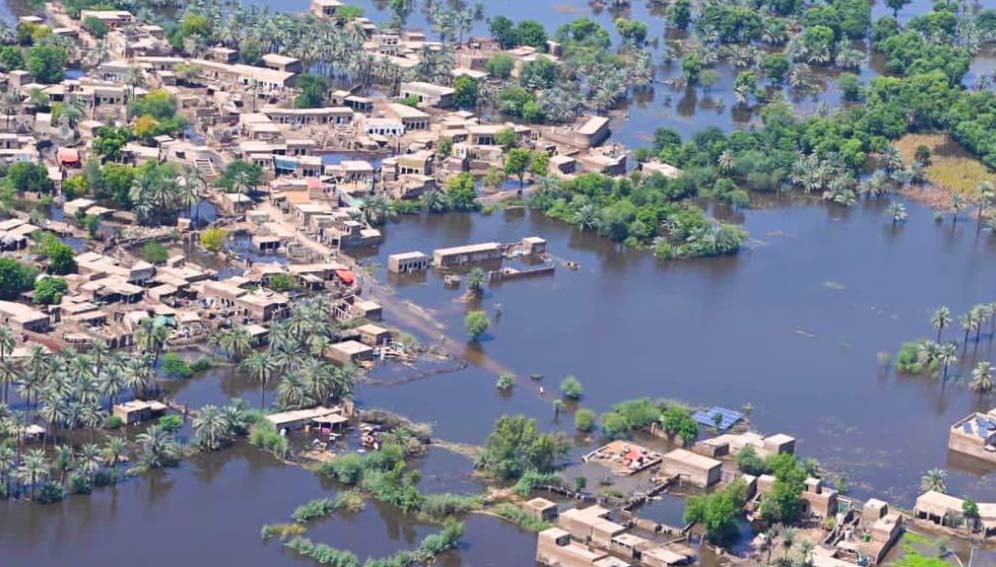
From the devastating floods in Nepal to wildfires in Indonesia and intense heatwaves in India, extreme weather events this year create a sobering backdrop for the talks, with a super strength El Niño adding to the risks facing communities.
COP31 President, Turkey’s environment minister Murat Kurum called for the summit to be an “Implementation COP”, building on the commitments made at previous negotiations to deliver tangible progress on fossil fuel reduction, expansion of clean energy, and strengthening of climate adaption.
At COP29 in Baku, Azerbaijan, countries promised at least US$300 billion a year in climate finance for lower-income countries and aimed to scale climate finance from public and private sources to at least US$1.3 trillion annually by 2035.
This was followed by pledges last year at COP30 in Belém, Brazil, to triple adaptation finance for low-income countries to between US$85 billion and US$120 billion annually by 2035.
Recalling these commitments, Kurum told COP31 at the opening sessions today (9 November): “Now our promises must be backed by capital. That capital must fund investment. And that investment must deliver results.”
Mohamed Adow, director of Nairobi-based climate and energy think tank Power Shift Africa, says climate finance will be the measure of success at this year’s COP.
“Wealthy countries have made big promises at past summits, but developing countries are still being left to face a crisis they did little to cause without the resources they need,” he said as the conference got under way, co-hosted by Australia.
“We need a credible plan to turn the trillions discussed at previous meetings into real finance that countries can access.”
Adaptation gap
The summit comes as the UN Environment Programme’s 2026 Adaptation Gap Report released last week, found that international public adaptation finance flows from wealthy to low-income countries are far below the estimated needs of US$305 billion a year by 2035.
The report noted that public adaptation finance flows rose by just US$1 billion between 2023 and 2024 and even if the goal of tripling adaptation finance to poorer countries by 2035 was achieved, less than 30 per cent of needs would be met.
“The world is not ready to adapt to current climactic conditions, never mind what overshoot of 1.5 degrees C will bring,” said Inger Andersen, executive director of UNEP.
The world is already well on the way to exceeding the limit of 1.5 degrees Celsius warming above pre-industrial levels set out in the 2015 Paris Agreement. On its current trajectory, scientists anticipate 2.8 degrees of warming by the turn of the century.
Against this reality, UN climate change executive secretary Simon Stiell told the conference COP31 must “supercharge solutions” to tackle climate change. But he cautioned: “No COP is a silver bullet. No single conference can bridge the chasm between the science and reality.”
As the talks opened with a focus on agriculture, food and health, Ismahane Elouafi, executive managing director of the agricultural research network CGIAR, told SciDev.Net: “We need to deliver on the commitment to triple adaptation finance and ensure more of it reaches the people who need it.
“With a strengthening El Niño and volatile fertiliser prices hitting farmers at the same time, we need to be better prepared for multiple shocks.”
She stressed that progress on adaptation indicators could show what measures were working and “where scarce resources can make the greatest difference”.
El Niño ‘off the charts’
Secretary-general of the World Meteorological Organization (WMO) Celeste Saulo said this year’s El Niño was “off the charts”.
“It is different from any El Niño that we have monitored,” she told a press conference on the WMO’s State of the Climate Update 2026 report in Antalya, today.
The report shows that the past 12 years have been the warmest on record, with the past four years, including 2026, ranking as the four warmest.
Saulo said the human and economic costs of rising temperatures were “unacceptably high”.
“In 2026, millions of people were exposed to unbearable heat, leading to tens of thousands of excess deaths in Europe alone,” she added.
“India and Pakistan and large parts of Asia and North America suffered dangerous heatwaves. And, as we head into the southern hemisphere summer, we will see more.”
She said COP31 would assess progress towards the goal of delivering life-saving early warning systems for all, cautioning that “early warnings are only as good as the observations and data that underpin them”.
This article was produced by SciDev.Net’s Global desk.