


22/12/25
2025 in review: resilience tested as aid cuts run deep

By: Dann Okoth
Send to a friend
The details you provide on this page will not be used to send unsolicited email, and will not be sold to a 3rd party. See privacy policy.
[NAIROBI, SciDev.Net] Searing international aid cuts led by the United States marked a tumultuous 2025 for global development, heavily impacting health and humanitarian work in low- and middle-income countries and leading to mounting calls for greater self-reliance.
On 20 January, US President Donald Trump ordered the suspension of almost all foreign aid contracts for 90 days pending a review, resulting in mass layoffs and an instant halt to US-funded services worldwide.
The sector was thrown into disarray after the move, that would ultimately lead to the closure of the US Agency for International Development (USAID), a pillar of international development and US soft power since 1961.
As well as halting grassroots projects, the US also withdrew from the World Health Organization, where it had been the largest donor.
In February, the UK government announced that it was also slashing its spending on overseas aid from 0.5 to 0.3 per cent of its gross domestic product to fund an increase in defence spending. France, Germany, and the Netherlands made significant cuts too.
Together, this left 26 low- and middle-income countries, with a combined population of almost 1.4 billion, highly vulnerable, according to analysts.
The impacts of the US aid freeze were immediate. SciDev.Net’s investigation into the human costs of the aid cuts revealed health systems struggling to cope and humanitarian assistance in vulnerable countries close to collapse.
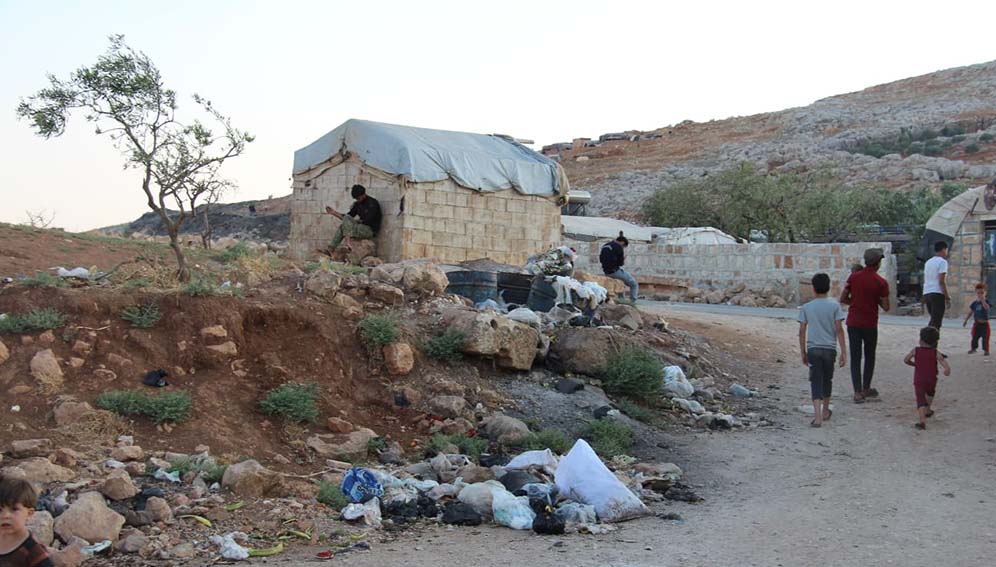
Rubbish piles up at a makeshift camp for displaced people in Idlib, northern Syria after a USAID-funded charity stopped collecting waste. Copyright: Sonia el-Ali / SciDev.Net
In a Syrian refugee camp in northern Idlib, water, waste and sanitation services delivered by the USAID-supported Green Hands Project, dried up, leaving communities struggling for drinking water amid the stench of uncollected garbage.
In the same region, hospitals that provided free healthcare and emergency services were shuttered. Around 200 humanitarian organisations in the country had to down tools.

In Africa, patients such as Milicent Muyoma in Nairobi’s Mathare settlement were left without life-saving HIV drugs as facilities faced stock-outs, a SciDev.Net investigation reported. In Uganda, where 1.5 million people are living with HIV/AIDS, programmes supporting affected communities were on the brink of collapse.
Malaria insecticide operations were halted in several countries, impacting millions of people, while malaria gene research was also at risk.
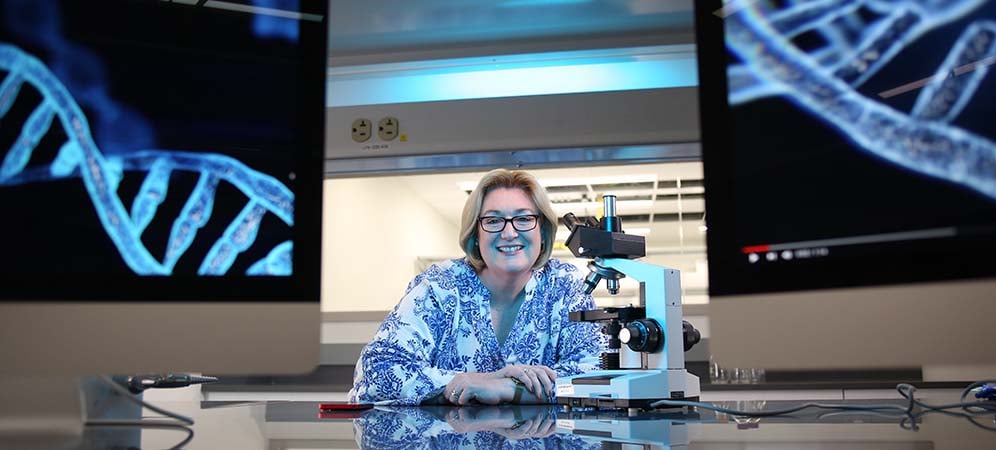
Jane Carlton, director of the Johns Hopkins Malaria Research Institute said funding cuts spell disaster for malaria prevention and threaten genomic research.
A 2025 UNAIDS report, found that 1.3 million people were newly infected with HIV globally in 2024, and said the US funding withdrawal could lead to an additional 6 million new infections and 4 million HIV related deaths by 2029.
The US has invested over US$110 billion in the global HIV/AIDS response through the President’s Emergency Plan for AIDS Relief (PEPFAR), since its launch in 2003. Overall it has been the world’s biggest global health funder, spending US$12.4 billion in 2024.
Philanthropists stepped into the breach, with Bill Gates pledging most of his foundation’s US$200 billion wealth over the next two decades to Africa. But health advocates warned this must support independence in vaccine production, data governance, and AI development.
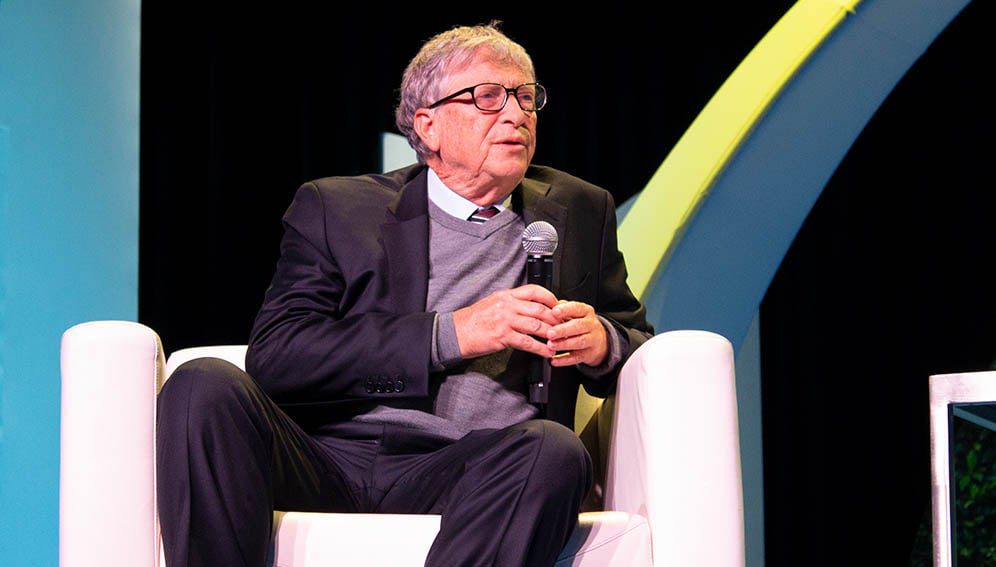
Bill Gates pledged to commit the majority of his foundation’s US$200 billion wealth over the next two decades to Africa.
African leaders urged the continent’s health community meeting in South Africa in October to turn crisis into opportunity, highlighting a pan-African plan for vaccine and drugs manufacturing that would see the continent meet 60 per cent of its vaccine needs domestically by 2040.
Sparks of resilience
Despite the turmoil, there were major advances in drug development during the year, including an affordable twice-yearly HIV drug, a promising new malaria treatment, and a world-first single-dose dengue vaccine made in Brazil.
Around the world, there were similar sparks of resilience.
In the Middle East, despite two years of war that crushed Gaza beyond recognition, SciDev.Net documented powerful accounts of resilience and scientific innovation.

Ruins of Beit Lahia, in the Gaza Strip on 23 February, 2025. Photo by Jaber Jehad Badwan (CC BY-SA 4.0).

Since October 2023, the Arabic edition of SciDev.Net closely followed the impacts of the war on Gaza, highlighting how science can act as a bridge between pain and recovery.
In a series of podcasts, we documented how Gazans had adapted to life without electricity, repurposing bombed out solar panels and recycling spent batteries to power appliances and charge mobile phones.
We spotlighted scientists working on sustainable water solutions, such as Gazan engineer Adi Al-Daghma, who helped implement small-scale desalination projects to provide clean water in the harshest conditions as his city struggled with thirst.
Climate action
Amid the geopolitical uncertainty, the UN climate summit COP30 went ahead in Brazil, despite the absence of the US, ending in a deal to mobilise US$1.3 trillion annually by 2035 to support global climate action.
The package included pledges to double adaptation finance for vulnerable countries by 2025, triple it by 2035, and operationalise the loss and damage fund. But climate advocates warned of a dangerous disconnect due to a lack of progress on curbing fossil fuels.
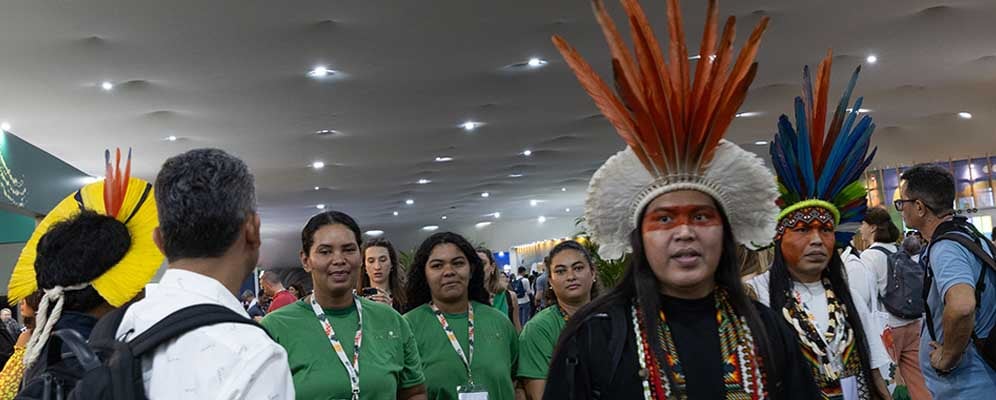
Indigenous groups at COP30 in Brazil. Advocates called for practical mechanisms to ensure direct access to climate finance for indigenous communities. Copyright: Kiara Worth/UN Climate Change (CC BY-NC-SA 4.0).
During the year, SciDev.Net highlighted the devastating impact of global warming across the globe including the collapse of buildings in the ancient Egyptian city of Alexandria due to coastal erosion and rising sea levels, tidal flooding in southern India, and a devastating cyclone in Sri Lanka.
We continued to report on research that can help communities adapt in areas such as climate-smart housing design in Latin America and AI-powered monsoon predictions in India.
AI surge
AI was a recurring theme in 2025, and one expected to gain further momentum in the year ahead, with uses emerging in everything from tuberculosis detection to tobacco control and even predicting malnutrition.
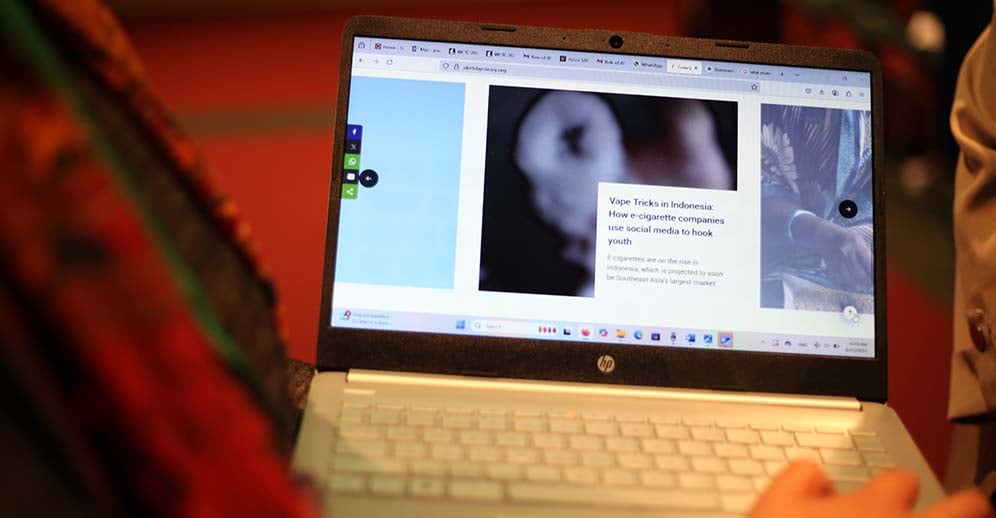
Platforms like Canary are using AI to expose marketing of tobacco to young people online. Copyright: John Musenze / SciDev.Net
Also on the innovation front, mechanical engineers in the US decided to make their exoskeleton design open source, enabling people with severe physical disabilities free access across the globe.
In Latin America we reported on how AI is breaking down barriers for youth and transgender communities, including through a sexual health chatbot in the Quechua language of the Peruvian Andes.
However, the AI surge comes with frequent calls for an emphasis on homegrown solutions and fully representative data for all countries to gain maximum benefit in the future.
This piece was produced by SciDev.Net’s Global desk.