


05/05/26
Malaria vaccine ‘no magic bullet’ for elimination
By: Paul Adepoju
Send to a friend
The details you provide on this page will not be used to send unsolicited email, and will not be sold to a 3rd party. See privacy policy.
[LAGOS/SciDev.Net] Mass rollout of malaria vaccines is beginning to change the landscape of disease control in Africa. But success will depend less on availability and more on how well they are delivered, say disease experts.
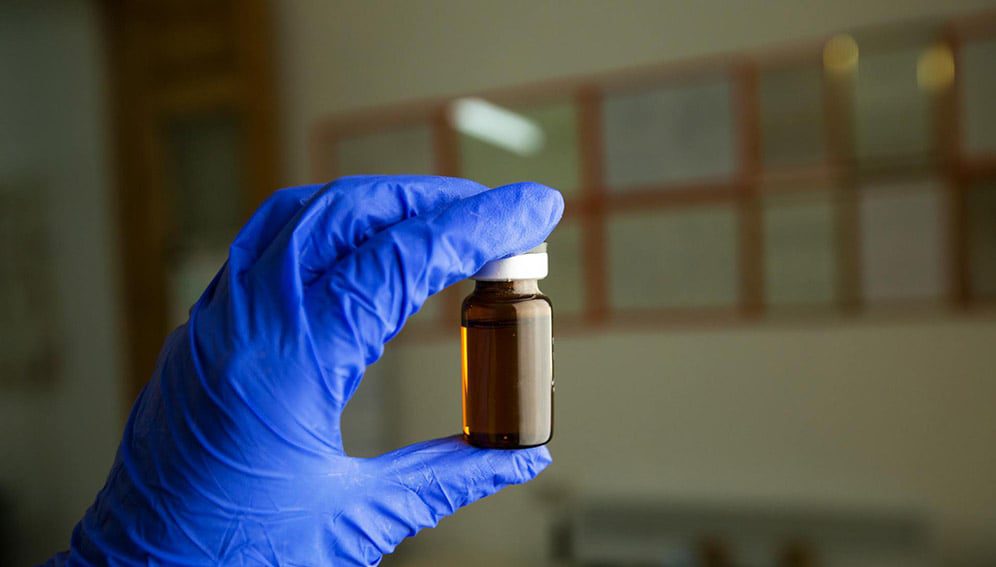
After a decades-long search for an effective malaria vaccine, two malaria vaccines recommended by the World Health Organization—RTS,S/AS01 and R21/Matrix-M—are now offered in 25 countries as part of routine immunisation programmes.
This marks a milestone in the response to a disease in Africa, where 270 million cases and 595,000 deaths were recorded in 2024. Three quarters of these deaths were children under the age of five.
However, the vaccines offer only partial protection and require four doses, placing new demands on already stretched health systems, as international funding cuts bite.
Evidence from large pilot programmes in Ghana, Kenya and Malawi indicates that when combined with existing malaria interventions, RTS,S and R21 can reduce child mortality by 13 per cent.
Researchers say the greatest impact is seen when vaccines are used alongside tools such as insecticide-treated nets and seasonal chemoprevention, emphasising their role as a complement, rather than a replacement, in malaria control.
“We always knew they would not be a magic bullet,” said Photini Sinnis, a specialist at the Johns Hopkins Malaria Research Institute, in the US.
“The thinking is that the vaccine adds to what we already have.”
That shift—from seeking a single breakthrough solution to combining multiple interventions —is now shaping how countries approach rollout. Public health experts say embedding the vaccine within existing malaria control systems is key.
Joint forces
Ghana, one of the early adopters, began piloting RTS,S in 2019 under the Malaria Vaccine Implementation Programme and has since expanded delivery, later introducing R21 as part of its scale-up.
Here, rollout has been driven by coordination between general immunisation and malaria elimination programmes, says Naziru Tanko Mohammed, deputy manager of the Expanded Programme on Immunisation (EPI), Ghana Health Service.

“We had both programmes around the same table from the beginning,” he said.
On the ground, the same healthcare workers deliver both malaria interventions and routine immunisation, making integration a practical necessity. Joint planning has helped define roles, align messaging and ensure the vaccines complement existing tools such as insecticide-treated nets and chemoprevention, says Mohammed.
He says this coordination has also proved critical in responding to misinformation around the vaccine’s safety circulating on social media. “Before the rumours took hold, we already had trained people ready to respond,” Mohammed said.
Early uptake has been strong, with first-dose coverage exceeding 80 per cent. But maintaining coverage across all four doses remains a challenge, with dropout rates of about five per cent as children move through the schedule.
Scaling challenges
In Nigeria, Africa’s most populous country, the scale of these challenges is big.
The RTS,S vaccine, introduced in 2024, is being deployed in phases, starting in selected high-burden states. WHO recommends both vaccines for children living in areas of moderate to high transmission.
According to Nnenna Ogbulafor, director of Nigeria’s National Malaria Elimination Programme, the structure of the country’s health system presents both challenges and opportunities.
“Nigeria’s health system is complex,” she said.
As in Ghana, integration has been central, with the malaria programme embedded within existing immunisation structures. But early implementation has revealed a bottleneck.
“One of the key issues we are seeing is dose completion,” Ogbulafor said.
The four-dose schedule, starting at five months and extending to 15 months, does not align well with routine immunisation contacts, making it difficult for caregivers to complete the full course. In areas with low immunisation coverage, these challenges are even more pronounced, Ogbulafor added.
To address this, Nigeria has begun linking vaccination to existing malaria delivery platforms, including seasonal malaria chemoprevention campaigns, to improve uptake and identify children who had missed earlier doses.
Data-driven models
Health leaders say these experiences point to a broader lesson: malaria vaccination cannot be delivered through a uniform model.
“In Nigeria, every state is different,” said Vivianne Ihekweazu, managing director of Nigeria Health Watch, adding: “The burden, the environment, the context, they all vary.”
Ihekweazu says countries need to use data to determine the most effective mix of interventions in each setting.
“People often assume you can just distribute nets everywhere and solve the problem, but that’s not the case,” she said.
Malaria control requires combining different tools—insecticide-treated nets, seasonal chemoprevention, indoor spraying and vaccines—depending on local transmission patterns. With funding constraints tightening, this approach is becoming more critical.
“With declining funding, we have to make sure we are using limited resources efficiently. And the only way to do that is to use data to guide what interventions are deployed,” Ihekweazu said.
However, data itself also remains a constraint. “We need to improve how data is collected and used at the subnational level,” she added.
As countries work to maximise the impacts of these tools, research into next-generation vaccines continues.
William Moss, deputy director of the Johns Hopkins Malaria Research Institute says the new vaccines have the potential to save tens of thousands of lives, “but there is room to improve”.
“We must continue to invest in the research needed to develop more effective vaccines while ensuring children have access to our current vaccines,” he said.
This piece was produced by SciDev.Net’s Sub-Saharan Africa English desk.