


By: Rituparna Palit
Send to a friend
The details you provide on this page will not be used to send unsolicited email, and will not be sold to a 3rd party. See privacy policy.
[JODHPUR, INDIA, SciDev.Net] A 60-year-old Indian farmer developed two infections—one in his foot following an injury from a cow’s hoof, the other in his buttock after a thorn prick in the fields three years later.
Lab tests at a medical research institute in Kolkata revealed that two different species of soil fungi were responsible, but both led to the same disease: mycetoma.
Mycetoma, also known as Madura Foot, is a Neglected Tropical Disease (NTD) that most commonly affects agricultural workers and herders in low- and middle-income countries. People become infected when bacteria or fungi from the environment enter the tissue below the skin after a puncture or cut. Often beginning with a small injury, the disease gradually destroys the tissue and bone.
The unusual case of simultaneous mycetomas in the same patient, recorded in a study in 2021, offers a glimpse into a puzzle that scientists are still trying to solve: what happens between an encounter with these organisms in the environment and the development of disease?
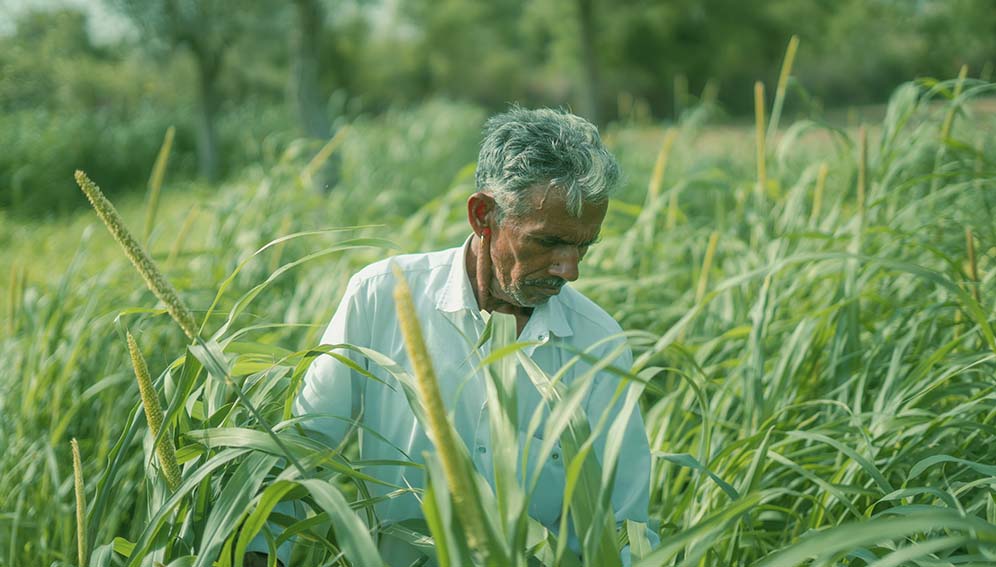
In Rajasthan, 65-year-old farmer Baburam Bishnoi has tilled his bajra (pearl millet) and wheat fields barefoot in Khetasar village for decades, exposing his skin to soil-dwelling bacteria and fungi. At some point, he contracted mycetoma.
What began years ago as minor granules on his right foot gradually turned into deep swelling and discharge, worsening every rainy season.
“During the rains, the skin starts peeling off,” Bishnoi told SciDev.Net, also recalling how rainwater routinely inflamed his right foot as he worked.
One Health Mission
Cases like these are coming into sharper focus as India develops its National One Health Mission (NOHM), which aims to integrate disease surveillance across human, animal and environmental sectors.
India already has experience bringing environmental and animal risks into disease surveillance. Leptospirosis has a dedicated control programme that combines surveillance with collaboration across veterinary and agriculture departments. The NOHM has also included it among the diseases for which surveillance is being strengthened.

Mycetoma, however, does not currently have a comparable national surveillance mechanism and the World Health Organization (WHO) says surveillance systems for it do not exist.
For a disease caused by organisms found in plant thorns and soil, that leaves a basic question: how can India’s One Health strategy address the risks facing its agricultural workforce without mapping the ecology where the pathogens thrive?
Arunaloke Chakrabarti, former president of the International Society for Human and Animal Mycology, told SciDev.Net: “Mycetoma is essentially an environmental disease with factors like dryness, temperature, and population behaviour affecting disease prevalence.
“Mycetoma agents seem to thrive at higher temperatures. With changes in environmental conditions, we need to understand whether that could influence where the disease occurs.”
Knowledge gaps
Despite being recorded in India as early as 1842 and declared an NTD by the WHO in 2016, significant knowledge gaps around mycetoma remain.
“There are many questions on the route of mycetoma transmission but little clarity,” Ahmed Fahal, founder and head of the Mycetoma Research Centre, in Sudan, told SciDev.Net. Located in Soba University Hospital, in Khartoum, the research hub is the WHO collaborating centre on mycetoma.
Fahal added: “Why doesn’t everyone exposed to the causative organisms develop mycetoma? Why is there no history of trauma (pricks, cuts) in many patients? How exactly does the infection take place?”
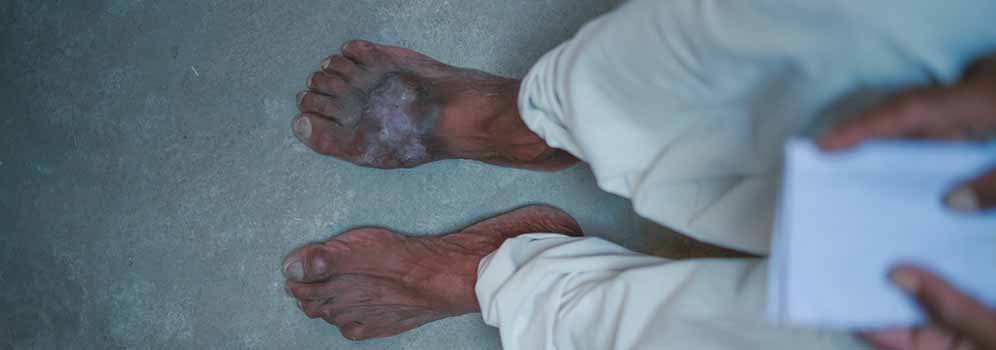
Bishnoi pushed through months of worsening pain before he was diagnosed with eumycetoma in his right foot. Photo credit: DNDi/ Mayank Agrawal
Experts believe a One Health approach, bringing together human, animal and environmental health, could help address the broader ecological and social factors shaping mycetoma and support sustainable control strategies.
“From soil, thorny vegetation and animal dung to changing environmental conditions, mycetoma is one of the strongest examples of why a One Health approach is urgently needed for better addressing it,” said Fahal.
Priority fungus
Mycetoma is caused when bacteria (leading to actinomycetoma) or fungi (eumycetoma) enter the body through breaks in the skin, often following thorn pricks or minor injuries. The lower limb is affected in 77 per cent of cases.
Among over 80 mycetoma causing organisms, 69 are fungi. In 2022, the WHO added eumycetoma-causing fungi as high-priority pathogens to its fungal priority list.
Both mycetoma types present with the classic triad of tissue swelling, weeping sinuses and a grainy discharge or pus, while pain may develop as the disease progresses. Eumycetoma is difficult to treat as antifungals penetrate poorly into the dense masses of fungal grains.
Advanced stages of the disease commonly lead to recurring infections and amputation and, in severe cases, death. Actinomycetoma is treated with prolonged combination antibiotics and is often curable if diagnosed early.
Climate factors
The fungal mycetoma is more prevalent in arid regions such as in Sudan and north India, while the bacterial type is common in humid, tropical areas, such as in Mexico.
India reflects this divide further, with studies showing that Rajasthan predominantly reports fungal infections, while several wetter states, such as including Andhra Pradesh, Madhya Pradesh, Tamil Nadu, and West Bengal, reported more bacterial cases.
Even within Rajasthan, which has the highest number of cases in India, the infection types shift with climate.
“In western Rajasthan, particularly Jodhpur, we find more eumycetoma cases. In eastern Rajasthan, such as Bharatpur, which is more humid, actinomycetoma is common,” said Chakrabarti.
For decades, these soil and rainfall dynamics kept the disease locked into predictable, separate regions. Today, researchers say those lines are becoming blurred.
Changing disease patterns
“For the longest time, fungal mycetoma was associated with arid areas and bacterial mycetoma with greener areas. But with climate change and human interventions like irrigation, we are beginning to see these patterns change,” said Kenya-based Borna Nyaoke-Anoke, head of the mycetoma programme at Drugs for Neglected Diseases initiative (DNDi).
However, at this stage, evidence on climate change-linked epidemiological change is “mostly anecdotal information from investigators,” added Anoke. She believes these links could be better assessed if mycetoma was declared a notifiable disease by the Indian government, meaning cases must be reported to health authorities.
Without official surveillance networks, researchers are relying on published regional studies and hospital records to piece together how these environmental changes are playing out on the ground across the country.
Rajasthan’s Thar Desert has long provided favourable conditions for eumycetoma, with its hot, dry climate, low rainfall and widespread thorny vegetation.
As irrigation from the Indira Gandhi canal transformed parts of the arid desert into greener, more humid farmland, local researchers documented a shift in the relative case numbers of two forms of mycetoma. The ratio of fungal to bacterial mycetoma fell sharply from 4:1 in 2001 to less than 2:1 in 2005.
Chakrabarti, however, cautioned that the results for this study were inconclusive as it was based only on mycetoma patients who reached tertiary care centres.
Rise in fungal infections
Yogi Raj Joshi, additional principal at S.N. Medical College, Jodhpur, says the balance of fungal to bacterial infections has now likely shifted to 3:2 from 3:1 before 2010, based on cases reported at the college. The state-run college has ten attached hospitals and serves as the nodal centre for mycetoma care in west Rajasthan, reporting two to three cases per month.
Joshi explained: “The likely reason is the changing climate patterns in west Rajasthan, which is turning humid by the day. However, this can be ascertained only after an empirical survey.”
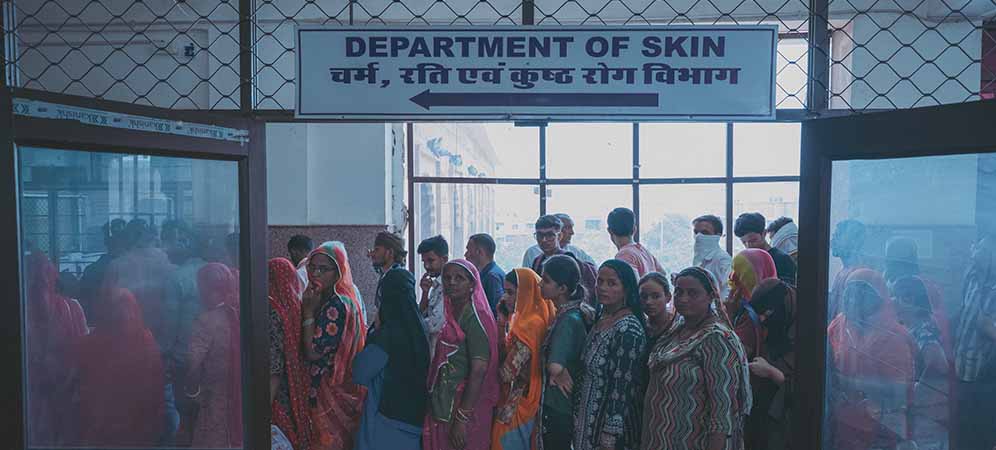
India’s understanding of mycetoma pathogens remains limited, with little field research on how they behave beyond hospital walls. Photo credit: DNDi/ Mayank Agrawal
Similarly, a spatial modeling study by Fahal and his team involving more than 7,800 patients found that proximity to water bodies, soil wetness, and aridity influenced whether residents of central and southeastern Sudan and along the Nile developed fungal or bacterial mycetoma.
Unlike other endemic countries such as Sudan and Mexico, India’s understanding of mycetoma pathogens remains limited, with the Rajasthan study the only field research studying the pathogen beyond hospital walls.
India’s NOHM, approved in February 2024, brings together over 16 ministries or departments to coordinate on human, animal and environmental health. However, NTDs do not appear to be a major operational component of this One Health framework.
The National Centre for Disease Control’s current One Health programmes focus primarily on zoonoses such as rabies and leptospirosis, while dedicated programmes for NTDs such as lymphatic filariasis and leprosy operate separately. Mycetoma, meanwhile, remains outside both frameworks.
A literature review of case reports and series from 1876 to 2019 analysed 19,494 cases globally and found the highest numbers from Sudan (10,608), followed by Mexico (4,155), and India (1,116).
Moreover, India’s actual caseload is unknown due to limited country-level or regional surveillance, Chakrabarti flagged in a joint analysis on NTDs in Southeast Asia.
Daily exposure in fields
While Bishnoi contracted mycetoma in his bajra and wheat fields, he says others around him did not.
To explain why certain individuals in endemic regions develop a skin NTD while others remain healthy, researchers are turning toward a broader concept: the exposome—the sum of a person’s environmental and lifestyle exposures over a lifetime, and how those factors affect health.
When Bishnoi’s infection flared up in 2024, a rural pharmacist in nearby Bikampur dismissed the swelling with a handful of generic pills. The farmer pushed through months of worsening pain and discharge, continuing to till his fields until he finally reached MDM Hospital in Jodhpur. He was diagnosed with eumycetoma and had to be admitted for treatment, disrupting his farming activities.
“Mycetoma-causing organisms are remarkably resilient,” said Joshi, who also heads the pathology department at his college.
“They can survive harsh environmental conditions like extreme heat and remain dormant for long periods before becoming active, after entering a host’s body.”
Hoof and horn wounds
Direct injuries from livestock—such as hoof kicks, horn grazes, or scratches—can provide pathways for soil-bound pathogens to enter the body.
When DNA sequencing was performed in endemic villages of Sudan, Madurella mycetomatis was found in all patients’ households and was especially common in soil, dung and mud house walls, suggesting that contaminated soil, animal dung and houses built with these materials may contribute to mycetoma exposure, while thorns could act as transmission vectors.
Fahal said animal dung acts as a “rich medium for these organisms to grow”. He said the contamination is probably from the soil and not from the animal’s intestines passed out in the dung.
Meanwhile, several countries are starting to report eumycetoma infections in animals such as horses, tigers, cattle, dogs, and cats.
Some of the fungal species infecting animals are the same organisms responsible for the disease in humans. Researchers, therefore, call for greater veterinary surveillance to understand their transmission and host range.
Natural disasters
Natural disasters are one of the factors that can influence transmission, according to Fahal.
“During disasters, there can be a breakdown of the health system and people can be exposed to many factors associated with mycetoma, including pathogens and injuries,” he explained.
A 2025 case report from the University of California describes a kidney transplant recipient who developed mycetoma. It was caused by Raghukumaria, a fungus previously found in mangrove wood and never been known to infect humans.
Using next-generation sequencing, researchers traced the infection back to the patient’s previous disaster relief work in Caribbean mangroves over a decade earlier. The authors warned that more frequent floods could expand the habitats of marine fungi. This shift increases exposure risks, particularly for people with weakened immune systems.
Making mycetoma visible
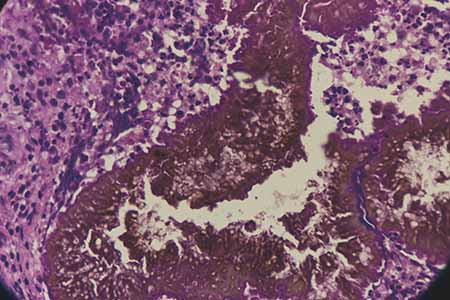
Histopathological examination of mycetoma showing fungal grains surrounded by inflammatory tissue. Samples collected and identified by Yogi Raj Joshi at his lab at Sampurnanand Medical College. Photo credit: DNDi/Mayank Agrawal
Calling for a multi-sectoral approach, Fahal said, “We need a comprehensive system involving clinicians, epidemiologists, statisticians and environmental experts to work together for a One Health surveillance system dedicated to mycetoma.”
In India, Gujarat’s experience with other infectious diseases shows that such coordination is possible. At an NOHM workshop in June 2025, the state noted that cases of leptospirosis, a bacterial infection spreading through the urine of infected animals, declined over time from 916 in 2011 to 22 in 2024 as departments began working together on preventive medication, blood testing to track infection, and data sharing. The related death count dropped from 177 in 2011 to five in 2024.
Chakrabarti, who also heads the PGI Chandigarh-based Fungal Infection Study Forum, said to better address mycetoma through advanced science, the Indian healthcare system needs to stop treating mycetoma as a marginalised disease receiving attention mainly at specialist centres.
“Without funds, voluntary work cannot go on for long. This disease affects marginalised populations, and until the government decides to make it a priority, its real impact will remain invisible. Like Sudan, we need a laboratory dedicated to mycetoma here.”
Reporting for this story was supported by the MSF-DNDi Grant on Neglected Tropical Diseases as part of MSF’s Without Borders Media Fellowship. The fellowship encourages independent, impartial and neutral reporting on health and humanitarian crises.
This piece was produced by SciDev.Net’s Global desk.