


Send to a friend
The details you provide on this page will not be used to send unsolicited email, and will not be sold to a 3rd party. See privacy policy.
The plague might be most commonly associated with the devastating European pandemic of the 1300s known as the “Black Death”.
But today the disease remains endemic in a number of countries, notably Madagascar, the Democratic Republic of Congo, and Peru.
Caused by the bacterium Y. pestis, the plague has affected more than 13,000 people in Madagascar in the last 25 years, with a fatality rate of 27 per cent.
The disease is often found in rural areas, but can be encountered in cities, usually transmitted via the bite of infected fleas carried by rodents. Taking two forms – bubonic and the more severe pneumonic – its symptoms include fever, chills and vomiting.
“Addressing environmental conditions, such as replacing dirt floors with concrete and housing livestock separately, can mitigate flea infestations.”
Adelaide Miarinjara, medical entomologist
A species known as Pulex irritans, the so-called “human flea”, was found to be a culprit in plague outbreaks in the last decade.
Adelaide Miarinjara is a medical entomologist who led a study to understand the role of the human flea in plague endemic areas and figure out a solution.
“My research seeks to understand the importance of the human flea P. irritans during plague epidemics,” Miarinjara told SciDev.Net.
Plague prevention
Miarinjara joined Emory University, in Atlanta, US, as a postdoctoral fellow while investigating the plague bacterium at the Pasteur Institute in Madagascar. She says she and her team wanted to know if affected communities could prevent flea infestations.
“Previous studies demonstrated that households are not equally infested with P. irritans and thus not equally exposed to flea bites and plague risk,” she explains.
“We wanted to know why and, if there is something that can be done by the community to prevent high flea infestation, we wanted to find out.”
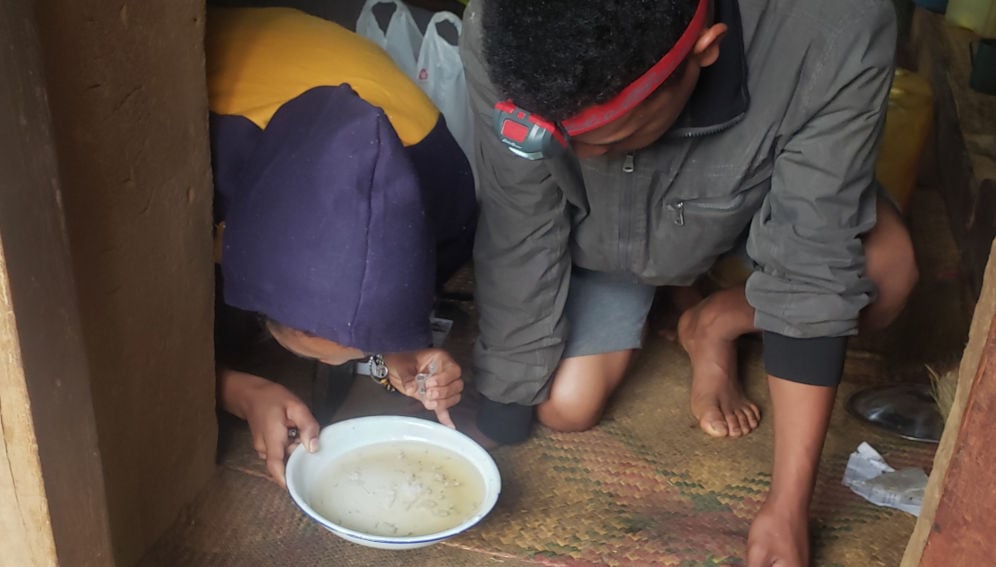
Miarinjara and her team examined data from cross-sectional surveys and household flea sampling in four rural villages within the plague-endemic southeastern part of the Central Highlands of Madagascar.

Adelaide Miarinjara checking on the list of households she is going to visit for interviews. Credit: Abdulrahman Olagunju.
They focused on variables that may influence the number of fleas found in households, such as demographics, sleeping arrangements, presence of animals, behaviours related to home hygiene, and attitudes towards rodents and fleas.
The researchers linked high rates of flea infestation in rural Madagascar to seasonal patterns and household habits.
“We found that household characteristics, particularly in large families residing in traditional homes and keeping livestock indoors at night, are linked to flea infestation,” says Miarinjara.
She says dirt floors covered with plant fibre mats create optimal conditions for fleas.
Miarinja said unlike rodents’ fleas, the human flea density in homes remained consistent in the sampled villages between seasons.
Insecticide resistance
The researchers observed that household flea infestations led to excessive insecticide use, which could be causing insecticide resistance among these species.
Insecticide resistance is a threat to the success of plague vector control and relying exclusively on insecticide treatment is not ideal in the long-term, says Miarinjara.
“We advocate for safer pesticide commercialisation and community education on the health risks associated with insecticide misuse,” she adds.
“Addressing environmental conditions, such as replacing dirt floors with concrete and housing livestock separately, can mitigate flea infestations, which are common issues prone to reoccur.”
The researchers noted the need to develop a more accurate model to study P. irritan’s ability to transmit the plague bacterium among fleas in Madagascar instead of using the American model used in their study.
Flea control measures
Nicholas Aderinto, a global and public health expert at Ladoke Akintola University of Technology, Nigeria, believes public education campaigns and collaboration of healthcare professionals is crucial.
“We don’t need to reinvent the wheel,” Aderinto told SciDev.Net.
“What we really need is consistent implementation of basic public health control measures for fleas.
“When veterinarians, public health officials, and community leaders work together, they can develop targeted educational materials, ensure access to affordable flea treatments, and promote community-wide participation.”
This piece was produced by SciDev.Net’s Sub-Saharan Africa English desk.