

By: Xie Lai
Send to a friend
The details you provide on this page will not be used to send unsolicited email, and will not be sold to a 3rd party. See privacy policy.
[BEIJING] Scientists are calling for more thorough risk assessments for genetically modified crops after they discovered a surge in pests in a region planted with Bt cotton.
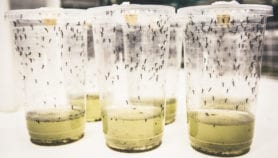
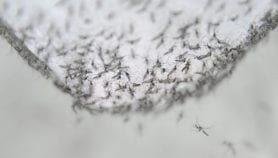
Their fifteen-year study surveyed a region of northern China where ten million small-scale farmers grow nearly three million hectares of Bt cotton, and 26 million hectares of other crops. It revealed widespread infestation with mirid bug (Heteroptera Miridae), which is destroying fruit, vegetable, cotton and cereal crops. And the rise of this pest correlated directly with Bt cotton planting.
Bt cotton is a genetically engineered strain, produced by the biotechnology company Monsanto. It makes its own insecticide which kills bollworm (Helicoverpa armigera), a common cotton pest that eats the crop’s product — the bolls.
Planting Bt cotton slashes farmers’ pesticide requirements and increases cotton yield. It has been adopted worldwide, with about 16 million hectares — about 50 per cent of world cotton cultivation — now Bt cotton.
In northern China 95 per cent of cotton is the Bt variety.
The scientists, from the Chinese Academy of Agricultural Sciences, and the China National Agro-Technical Extension and Service Center, monitored insecticide use on cotton farms for 15 years. After the first five years, they also monitored mirid bug numbers at 38 locations.
They watched the farms gradually become a source of mirid bug infestations, in parallel with the rise of Bt cotton. The bugs, initially regarded as occasional or minor pests, spread out to surrounding areas, "acquiring pest status" and infesting Chinese date, grape, apple peach and pear crops.
Before Bt cotton, the pesticides used to kill bollworm also controlled mirid bugs. Now, farmers are using more sprays to fight mirid bugs, said the scientists.
"Our work shows that a drop in insecticide use in Bt cotton fields leads to a reversal of the ecological role of cotton; from being a sink for mirid bugs in conventional systems to an actual source for these pests in Bt cotton growing systems," the authors wrote in their paper, published yesterday in the journal Science (13 May).
Although Bt cotton is well-researched, few studies examine the knock-on effect on other pests, said the scientists.
"This study is the first report of a landscape-level emergence of non-target pests," said co-author, Kongming Wu, adding that the study highlights a "critical need" to explore the complex ecological impacts of Bt crops.
"Crops are the first level in the food chain," he told SciDev.Net. "When people make it uneatable to certain insects, we need to understand how it might affect the whole ecosystem."
The team concluded that more comprehensive risk management "may be crucial to help advance integrated pest management and ensure sustainability of transgenic technologies".
 [980kB]
References
Science 321, 1676 – 1678 (2010)
More on Biotechnology