


Send to a friend
The details you provide on this page will not be used to send unsolicited email, and will not be sold to a 3rd party. See privacy policy.
This article was supported by One Health Hub.
Climate shocks are reshaping ecosystems, creating new pathways for disease across Africa, writes Albert Ansah.
[ACCRA, SciDevNet] When Martin Ariku walks through what remains of his once-productive fields in Bazua, in northern Ghana’s Upper East region, he does so with a mix of disbelief and resignation.
For more than two decades, he has supplied improved seeds to thousands of smallholder farmers, a role built on predictability—seasons that arrive on time, crops that mature reliably and weather conditions that, while imperfect, fall within familiar bounds.
This year, none of those assumptions held.
“I have lost more than half of our fields,” says Ariku.
“When rains come too late, not at all or too intensely, harvests fail. Hunger rises. Prolonged hunger leads to malnutrition … making people more vulnerable to infectious and non-communicable diseases.”
Shauna Richards, One Health and epidemiology scientist, International Livestock Research Institute
“For maize, rice, cowpea, soybean and sorghum, I harvested as low as five 100-kilogram bags per acre compared with the usual 15.”
The year brought an unforgiving sequence of extreme events. Drought arrived early, killing young crops before they could take root. Then intense, short-lived rainstorms came, drowning what had survived.
Even the new sorghum variety introduced by the non-profit organisation SNV Ghana, designed to cope with tougher conditions, could not withstand the rapid swings.
“Just when the crop was fruiting, the rains stopped again,” Ariku says. “We recovered nothing.”

The losses extend beyond Ariku’s fields. Grains that fail to fully mature cannot be used as seed, meaning the next season’s production across the region is already under threat.
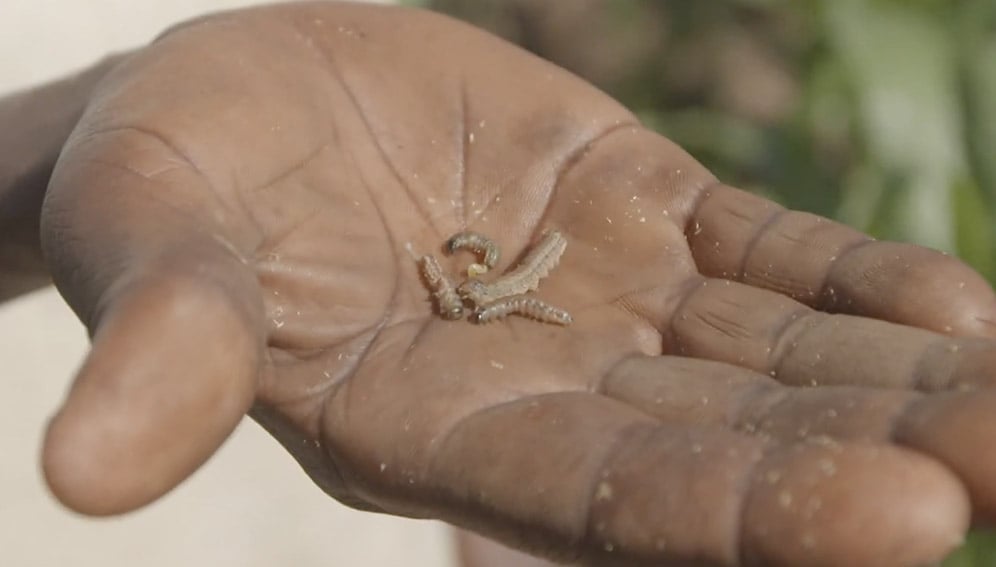
As well as the direct impact of extreme weather, environmental disruption is fuelling the spread of destructive pests such as Fall Armyworm, once limited by cooler temperatures.
As nights warm and rainfall patterns shift, the Fall Armyworm is surviving longer and spreading faster. Ariku describes spraying pesticide repeatedly on his crops, only to watch the pest persist.
Pest invasions
His experience matches findings from a major survey by the agricultural research organisation CABI (the parent organisation of SciDev.Net), in which 98 per cent of farmers questioned in Ghana and Zambia said their maize crops had been infected with Fall Armyworm.
In Ghana, farmers reported losing an average of 26.6 per cent of their maize harvest, while in Zambia losses reached 35 per cent. Based on this, CABI researchers estimate that US$177 million worth of maize crops are lost each year in Ghana and US$159 million in Zambia.
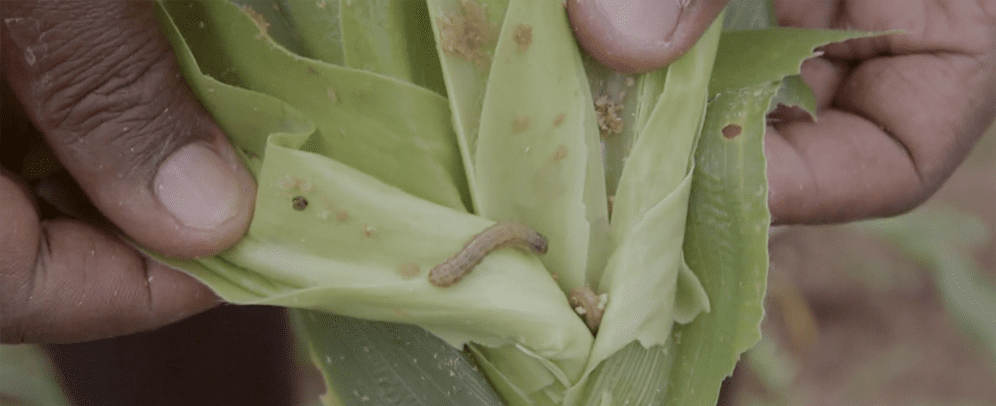
Armyworms feeding on maize. Copyright: Albert Oppong-Ansah/SciDev.Net
Scientists warn that rising temperatures accelerate the pest’s metabolism and reproduction, making its expansion across Africa increasingly likely.
Copperfield Banini, former head of the Plant Protection Regulatory Services Division at Ghana’s Ministry of Food and Agriculture and technical lead on plant health and marketing at Ghana Chemicals Limited, tells SciDev.Net the science is clear: climate change is fuelling pest outbreaks.
“Our increasingly warm conditions fuel Fall Armyworm populations. As cold-blooded organisms, their metabolic and developmental rates accelerate in warm weather. They grow faster, live longer and reproduce more,” he explains.
“Cold temperatures slow them down or kill them, but as it gets warmer, their range will only expand.”
Global projections show that as temperatures continue to rise over the coming decades, the Fall Armyworm’s habitat will expand across the African continent.
Public health threat
This surge in pest pressure is not only an agricultural problem—it is a public-health threat. When families lose food and income, diets shrink and malnutrition rises, weakening immunity and increasing vulnerability to infections.
Shauna Richards, a One Health and epidemiology scientist at the International Livestock Research Institute in Nairobi, says the link between climate and disease becomes clearer when we examine vectors, mosquitoes, flies, tsetse flies, and the pathogens they transmit.
“Mosquitoes flourish in damp conditions,” she tells SciDev.Net. “Regions that were once hot and dry and rarely had flooding are now experiencing higher rainfall. These new pools of stagnant water provide ideal hatching grounds for mosquitoes.”
As well as creating breeding sites, floods often mix sewage with drinking water sources, increasing the risk of outbreaks such as cholera, Richards adds.
Climate change is also altering vegetation, says Richards. “Increased rainfall in areas that once experienced little moisture is causing unusually dense vegetation growth, creating new habitats for disease-carrying insects,” she explains.
“Communities that never dealt with certain vectors now face new health threats brought about by shifting weather patterns”.
Food production is increasingly disrupted by these shifts, with unpredictable rainfall making it difficult for farmers to know when to plant.
“When rains come too late, not at all or too intensely, harvests fail,” explains Richards.
“Hunger rises. Prolonged hunger leads to malnutrition, weakening the immune system and making people more vulnerable to infectious and non-communicable diseases.”
Malaria on the rise
In the Ashanti region of southern Ghana, the Krampah family is experiencing a different, but equally troubling, climate-related transformation.
It is 9 pm in Bekwai, and the heat hangs heavily in the air. Nights that once offered a cooling reprieve now feel as punishing as the day.
“The level of heat is biting,” says Eric Krampah. “Even a standing fan is unable to provide some comfort.”
The prolonged heat is more than a physical discomfort. It is shifting the behaviour and survival patterns of mosquitoes, which flourish in warm, stagnant conditions.
The Krampahs have seen malaria infections become more frequent, a trend echoed across many parts of Ghana.
Warmer night-time temperatures accelerate mosquito breeding and speed up the development of malaria parasites, increasing the likelihood of transmission.
“Because the [health] insurance is not very efficient, we have had to pay out of pocket from our dwindling income,” Krampah says of the mounting medical costs.
Testimonies from households across Ghana match scientific data from the World Meteorological Organization and the Intergovernmental Panel on Climate Change, which show the correlation of a warming climate with rising malaria cases and other vector borne diseases in Ghana and the rest of Africa.
Warming nights, once an abstract metric in climate reports, have become a direct driver of disease.
Yet mosquitoes are only one part of the landscape of shifting disease threats.
Climate change is redrawing the ecological boundaries that once kept certain vectors and pathogens in check, says Richards.
“Increased rainfall in areas that once experienced little moisture is causing unusually dense vegetation growth, creating new habitats for disease-carrying insects,” she adds.
“Communities that never dealt with certain vectors now face new health threats brought about by shifting weather patterns.”
In East Africa, the mosquito species Anopheles stephensi—traditionally found in South Asia—has begun appearing in cities such as Nairobi, says Patience Kiyuka, malaria coordinator at the East Africa Consortium for Clinical Research.
“Areas that never had malaria will begin experiencing transmission,” she tells SciDev.Net.
“Mosquitoes are shifting their biting patterns,” she adds, prompting health authorities to rethink interventions such as bed-nets and insecticide spraying, primarily designed for night-time and indoors.
The spread of Anopheles stephensi threatens to introduce urban malaria transmission in places that previously had none, altering the epidemiology of the disease in ways that health systems are unprepared for, Kiyuka says
Zoonotic spillover
The expanding disease landscape also includes zoonotic spillovers—diseases that jump from animals to humans.
One of the clearest climate-linked examples is Rift Valley fever, a viral infection transmitted from livestock to people. In East Africa, outbreaks have repeatedly followed years of unusually heavy rainfall and flooding.
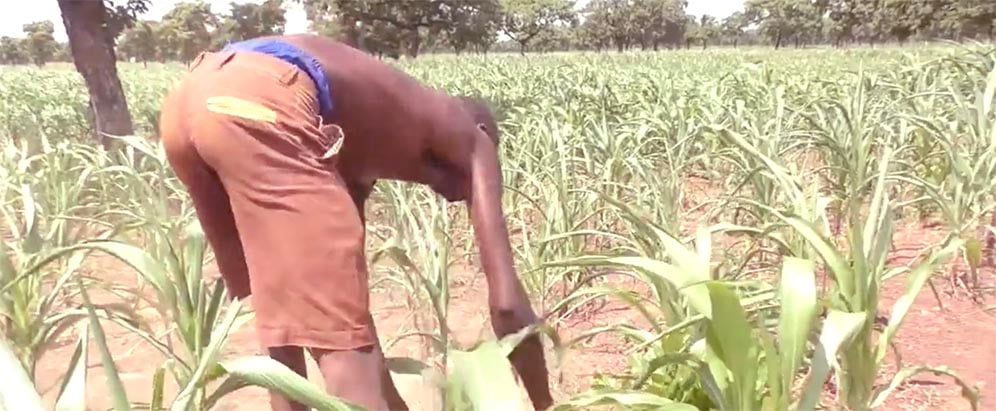
A farmer tending to maize crops during a dry spell in Ghana. Climate extremes are impacting food security and increasing disease risks. Copyright: Albert Oppong-Ansah/SciDev.Net
Wetter environments allow mosquito populations that transmit the virus among cattle, goats and sheep to explode, and human infections rise soon after. As rainfall patterns become more erratic, the ecological conditions that trigger such outbreaks are expected to occur more frequently, making zoonotic spillover a growing continental concern.
These patterns align with evidence emerging from the One Health Horizon Scanning research, which highlights how disruptions in plant systems, animal health and the wider environment are reshaping Africa’s disease landscape.
Under this lens, the continent’s changing climate is not producing isolated crises, but interconnected ones: crop losses deepen malnutrition, stressed livestock become more vulnerable to infection, and shifting ecosystems create new habitats for vectors that spill into human settlements.
Ama Essel, a public-health physician and climate negotiator for Ghana, says the impacts of climate change add pressure to already fragile health systems.
She says many clinics lack strong buildings, reliable electricity, functional cold chain systems for vaccines and even basic medical supplies.
“In Ghana, storms have ripped roofs off health facilities, leaving them unusable just when communities need them most,” she says.
“Floods cut off entire villages from the nearest clinic because poor road networks become impassable.
“Pregnant women in labour sometimes travel by motorbike or are carried on makeshift stretchers simply because there is no other way to reach help.”
One Health investment
These converging pressures reflect what the One Health Horizon Scanning report has been warning: that Africa’s health risks can no longer be separated into human, animal or environmental categories.
Essel warns that health systems will struggle to prepare for rising disease outbreaks, emerging infections and future climate-driven pandemics.
Already, countries are seeing unusual patterns, such as increasing Mpox cases in Ghana and spikes in meningitis during the dusty, dry Harmattan season. Beyond physical illness, communities facing repeated floods, displacement and loss of livelihoods are experiencing a surge in mental-health challenges.
Essel believes African leaders must take swift action by strengthening infrastructure, investing in vaccine development and improving transport and energy systems to withstand future disease risks.
“We need sufficient funding to deal with this additional burden resulting from weather changes,” she says.
“The climate crisis is not waiting, and neither should we.”
This article was produced by SciDev.Net’s Sub-Saharan Africa English desk.
The article was supported by the One Health Hub is managed by CABI with funding from UK International Development; however, the views expressed do not necessarily reflect the UK government’s official policies.