


02/04/26
Q&A: Kerala taps microbe for health, farming gains
By: Ranjit Devraj
Send to a friend
The details you provide on this page will not be used to send unsolicited email, and will not be sold to a 3rd party. See privacy policy.
[NEW DELHI, SciDev.Net] It’s not often that microbes receive recognition for their contribution to human health and ecosystems.
But in Kerala, India, the multiple benefits of Bacillus subtilis, from improving human and animal nutrition to sealing cracks in concrete and raising agriculture productivity, has led to it being accorded the status of “state microbe”.
The initiative, which is the first of its kind in India, is intended to focus attention on the unrealised potential of microorganisms in resolving issues around sustainable health care, food security and environmental protection, as well as building climate-resilience.
B. subtilis is a common microorganism which can be safely deployed in multiple roles to improve the human, plant, animal, aquatic and environmental microbiomes. Its elevated status in Kerala reflects the pioneering work of the new Centre of Excellence in Microbiome, its director, Sabu Thomas, tells SciDev.Net in interview.
There is new interest in microorganisms in diverse areas such as health, nutrition, agriculture, industry and waste management. Would Bacillus subtilis rate highly in these fields?
B. subtilis is a Gram-positive, spore-forming soil bacterium that is widely regarded as safe and has been extensively studied for decades. It is highly versatile and its ability to form highly resistant endospores allows it to survive harsh environmental conditions, making it exceptionally valuable in health, agriculture, industry, and environmental applications.
In health, it is increasingly used as a probiotic due to its spore-forming ability, which allows survival through gastric acidity and supports gut microbiota modulation [improved gut health], immune enhancement, and antimicrobial production.
In nutrition and functional foods, it contributes digestive enzymes […] and improves nutrient bioavailability. Certain strains produce vitamin K2, enhancing its value in food industry.
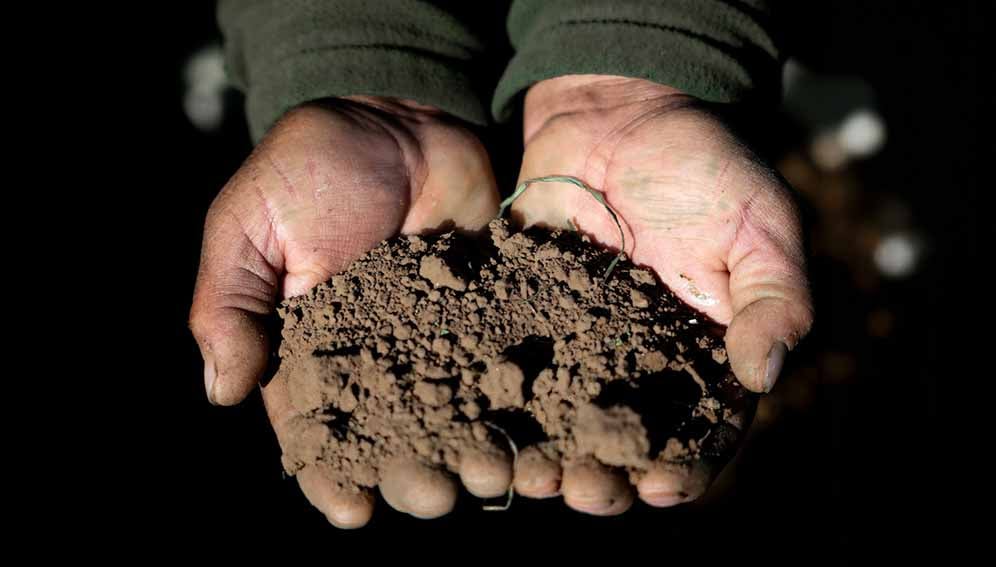
In agriculture, it is one of the most effective plant growth–promoting rhizobacteria, supporting crop productivity by producing phytohormones that regulate growth, by improving phosphate absorption and by suppressing pathogens. In environmental applications it contributes to biodegradation of waste, composting, production of biosurfactants that replace chemicals used in detergents, paints, cosmetics and agricultural inputs and wastewater treatment.
Overall, its safety profile, functional diversity, and ecological importance make it one of the most strategically important microorganisms.
What prompted the Kerala government to adopt Bacillus subtilis as a state microbe? How will this step be of use to the public?
The Government of Kerala declared B. subtilis as its official State Microbe as part of a science-led policy initiative aimed at highlighting the essential roles that beneficial microorganisms play in human health, agriculture, environment and economy and hence to build awareness among the general public. In practical terms, this designation supports Kerala’s strategy to boost research, innovation and economic development in microbiome-based technologies.
B. subtilis is one of the most extensively studied microbial species in Kerala due to its safe history of use and probiotic potential. It naturally occurs in soil, fermented foods and the human gut, is non-pathogenic and has a long history of safe use in food and health applications.
The global market for B. subtilis -based products is witnessing significant growth, valued at approximately US$87.66 million in 2024 and expected to climb to US$165.9 million by 2033. In India, the market for B.subtilis is also expanding rapidly, driven by government support. It is now widely applied in biofertilisers, biocontrol agents, and as a probiotic additive in poultry farming and aquaculture. Research institutes and emerging regional agri-biotech companies are actively developing and commercialising B. subtilis-based microbial products.
What other microbes have been identified by your centre for research projects with potential for useful applications, current and future?
The Centre of Excellence in Microbiome is actively working on a broad spectrum of beneficial microorganisms across human, animal, aquatic, agricultural, and environmental domains. The team is characterising functional strains of Lactobacillus, Bifidobacterium, diverse Bacillus species, and beneficial yeasts such as Saccharomyces cerevisiae for various applications including human and animal probiotics, aquaculture health, starter cultures for fermented foods, plant growth–promoting microbial consortia for sustainable agriculture, and microbial solutions for waste management and bioremediation. The centre supports startups and entrepreneurship in this field.
What are the main goals of the Centre of Excellence in Microbiome?
Microbiome research has earned tremendous worldwide acclaim in the recent past owing to its significant contributions to good health and well-being as a sustainable developmental goal from the One Health perspective. In the post-Covid era it is important to build a world-class hub to advance research, innovation, and entrepreneurship in the microbial sciences. The centre aims to identify and characterise beneficial microbes, develop microbiome-based products and technologies, build regional microbiome databases, reduce dependence on chemicals and antibiotics through microbial alternatives, and translate scientific findings into scalable solutions that benefit society.
In addition to research, the centre has prioritised skill development through training programmes and capacity-building initiatives in microbiome science and biotechnology. It is currently incubating three microbiome-focused startups and mentoring student-led startup initiatives.
How is the centre looking to strengthen its global research network to tackle common challenges in health and agriculture?
The centre has initiated discussions with international academic institutions, research laboratories, and industry partners in the areas of microbial genomics, probiotics, agricultural microbiology, and environmental biotechnology. These engagements, which are at an early stage, are aimed at establishing joint research programmes, big data analysis and bioinformatics collaboration, and joint grant applications. The centre is in the process of formalising these partnerships and progressively strengthening its global research network.
How can low- and middle-income countries (LMICs) benefit from the centre’s research?
Translational research at the centre that transforms basic scientific discoveries into practical applications for health and environment aims by developing affordable microbiome-based solutions using beneficial bacteria are of universal application, but will certainly benefit the LMICs. These include probiotic and functional food interventions to improve gut health and nutrition, standardised starter cultures for safe fermented foods, and promoting microbes that enhance soil fertility and productivity and reduce dependence on chemical inputs. Such microbiome-based approaches can strengthen public health, support sustainable agriculture, and improve food security through locally adaptable and cost-effective biological solutions.
The Centre is also working toward developing a microbiome policy to guide regulation in this emerging sector and ensure the safety, quality, and efficacy of microbiome-based products everywhere.
This piece was produced by SciDev.Net’s Global desk.