


04/02/26
One Health strong on paper, weak where outbreaks begin
Send to a friend
The details you provide on this page will not be used to send unsolicited email, and will not be sold to a 3rd party. See privacy policy.
This article was supported by One Health Hub.
Across Africa, One Health is endorsed at the top but often breaks down where outbreaks start, writes Albert Ansah.
[NAIROBI, SciDev.Net] Despite political endorsements and global frameworks, Africa’s One Health approach continues to falter at the local level, where weak coordination, limited resources and poor governance often delay outbreak detection and response.
On paper, the world agrees that human health, animal health and the environment are interconnected. Presidents endorse the idea, ministers sign communiqués, global agencies promote it as One Health, built on multisectoral coordination.
But when outbreaks emerge in real communities, that coordination often breaks down, according to animal and human health specialists.
“Africa does not lack collaborative traditions or technical expertise. What is missing are governance systems that reward transdisciplinary or multisectoral collaboration and translating evidence into sustained action.”
Rudolf Abugnaba-Abanga, research fellow, University of Business and Integrated Development Studies, Ghana
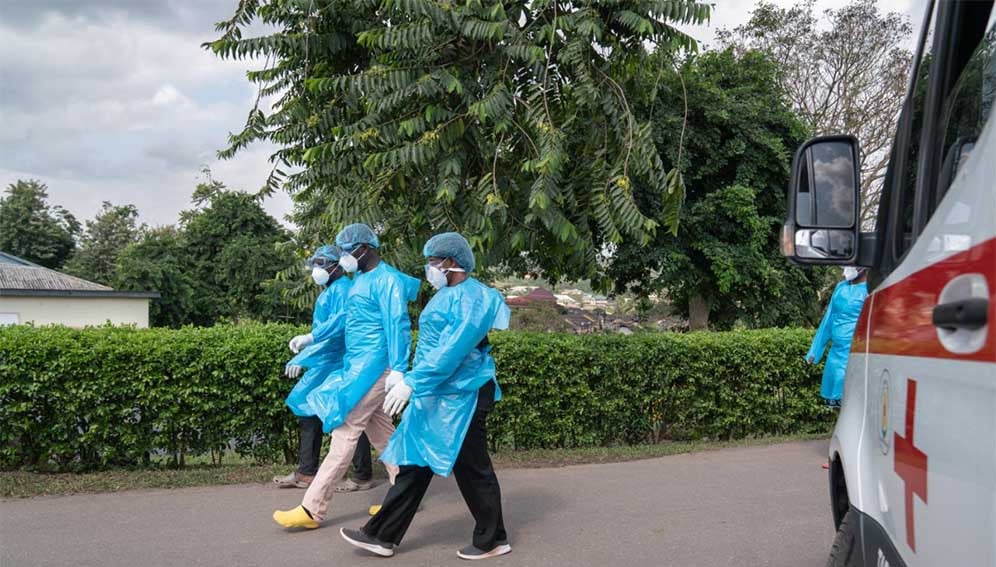
When an unfamiliar illness struck Jelinkon, a farming community near Ghana’s Mole National Park, the One Health framework faltered. A resident died before Marburg virus disease was confirmed and contained. Nearly 30 community members who had been in contact with the deceased were later traced, isolated and monitored. All had symptoms such as high fever, severe headaches and bleeding.
According to the World Health Organization, Marburg is a severe viral haemorrhagic fever caused by the Marburg or Ravn virus and transmitted to humans from fruit bats. It kills up to 88 per cent of people infected and there is no approved vaccine or treatment.
By the time a veterinary officer arrived in Jelinkon, critical time had already been lost.
“It has been two years now since the incident, and the community has still not been told the cause of death so they can take precautions,” says Stephen Dormateiha Bazilma, the veterinary officer responsible for Damongo. “Once authorities are tight-lipped, we at the local level cannot act.”
Weak systems
After receiving reports, Bazilma and his team travelled to Jelinkon, in Ghana’s Savannah Region. With limited resources, he collected samples, sealed them in a flask wrapped with plastic, and sent them by public transport to Tamale, and onward to the capital Accra for laboratory testing.
“Sometimes if we collect samples from a farmer for testing, farmers refuse to pay for it. We sometimes have to pay out of pocket,” he says.

“In instances where samples are obtained late due to delayed detection, I am compelled to keep them in my fridge. This is not standard practice.”
The episode exposed a deeper problem—while One Health is widely endorsed at national and global levels, implementation remains weak at community and district levels, where outbreaks often begin.
A continental challenge
Ghana’s experience is not isolated. In Kenya, sporadic anthrax outbreaks linked to the consumption of infected meat have led to hospitalisations in several communities. Across West and East Africa, transboundary animal diseases such as African swine fever have caused significant losses for pig farmers in Côte d’Ivoire, Ghana and Kenya over the past decade.
Such outbreaks spread rapidly due to poor biosecurity, free-range farming systems, panic selling of sick animals and the absence of compensation for farmers who report and cull infected livestock.
Rudolf Abugnaba-Abanga, a planetary health expert and research fellow at the University of Business and Integrated Development Studies, Ghana, told SciDev.Net that as pathogens continue to spill over from wildlife to humans, no single authority is consistently empowered to act fast enough.
At continental level, the Africa Centres for Disease Control and Prevention has tried to close this gap by developing policies, standards and regulatory frameworks to align human, animal and environmental health systems.
Yewande Alimi, One Health unit lead at Africa CDC, says the agency has produced multiple continental One Health frameworks, including guidance for national public health institutes and the African Union Framework for Antimicrobial Resistance Control.
Last year, Africa CDC and the African Union also launched a new continental strategy on zoonotic disease prevention and control, and one for climate change and health.
“These strategies aim to move countries away from ad hoc inter-ministerial meetings towards legally backed, financed multisectoral coordination mechanisms,” Alimi says.
But she adds that implementation challenges remain across African countries, including weak political leadership, fragmented institutional mandates, poor data-sharing, limited sustainable financing and insufficient community engagement.
Local governance gaps
Abugnaba-Abanga, says the problem is not a lack of evidence or technical knowledge.
Intersectoral collaboration, he says, has long worked in Ghana through community-based primary healthcare systems. What undermines progress, he believes, is a low perception of risk among policymakers and implementers.
When climate, environmental and One Health risks are viewed as distant or abstract, they fail to trigger coordinated action, he explains. Abugnaba-Abanga says ministries and decentralised departments in Africa continue to work in silos despite increasingly interconnected threats.
At district level, local assemblies often hold authority over multiple sectors but remain disconnected from community realities. Limited participatory and accountability processes, Abugnaba-Abanga argues, widen the gap between policy and everyday risks faced by communities.
“Africa does not lack collaborative traditions or technical expertise,” he says. “What is missing are governance systems that reward transdisciplinary or multisectoral collaboration and translating evidence into sustained action.”
He proposes “mainstreaming” One Health and climate priorities into sectoral policies, budgets and performance indicators, to make implementation unavoidable rather than optional.
Lessons from Kenya
Kenya offers examples of both progress and persistent gaps. Patrick Muinde, research manager at World Animal Protection, says the country adopted the One Health approach more than a decade ago, leading to the creation of the Zoonotic Disease Unit.
However, only a small number of Kenya’s 47 counties currently have functional One Health units. Muinde points to unclear roles and accountability across ministries, weak communication, and inconsistent public messaging, which delay outbreak response.
Surveillance also remains fragmented, he says, because human, animal and environmental health sectors rely on different data collection systems.
“About 60 per cent of known infectious diseases are zoonotic, and up to 75 per cent of emerging diseases originate from animals,” Muinde says.
Prevention before spillover
For Mohammed Shamsuddin, senior animal production and health officer at the UN Food and Agriculture Organization’s regional office for Africa, prevention must start at the source.
He says once a disease reaches humans, treatment options are often limited or non-existent, citing rabies as an example.

Baboons feeding on food left over by visitors at Mole National Park in Ghana.
Surveillance, Shamsuddin argues, remains overly centralised in many African countries, leading to delays in sample transport and laboratory testing. He recommends decentralised diagnostic capacity, including mobile laboratories linked to central reference labs, alongside trained response teams.
“Surveillance without rapid response is useless […] detecting a disease is only the first step,” Shamsuddin says.
“When farmers are part of the solution, adoption increases,” he adds.
From policy to practice
Experiences from countries such as Ghana, Kenya and Uganda show that One Health works when it is intentional, well coordinated, and grounded in communities.
One Health experts agree that preventing the next pandemic will depend on translating policy into practice through clear governance and accountability, functional surveillance systems, sustained financing and local ownership.
This piece was produced by SciDev.Net’s Sub-Saharan Africa English desk.
The article was supported by One Health Hub. One Health Hub is managed by CABI with funding from UK International Development; however, the views expressed do not necessarily reflect the UK government’s official policies.