


04/03/26
Last-mile surveillance can end neglected diseases—study
By: Esther Nakkazi
Send to a friend
The details you provide on this page will not be used to send unsolicited email, and will not be sold to a 3rd party. See privacy policy.
[KAMPALA, SciDev.Net] High-precision mapping tools can pinpoint where schistosomiasis persists down to the household level, potentially transforming efforts to eliminate the disease affecting 250 million people, a 13-year study has found.
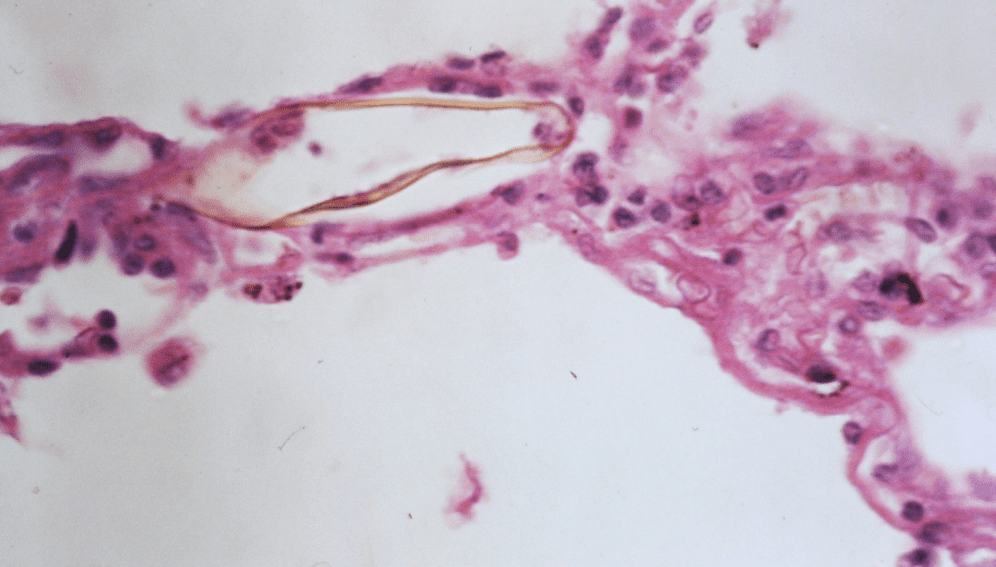
Schistosomiasis is a parasitic infection affecting more than 250 million people worldwide, according to the World Health Organization, and is especially prevalent in poor communities lacking access to clean water and sanitation. It is caused by tiny worms, called blood flukes, released by freshwater snails in rivers, ponds and lakes.
The study findings, published in PLOS Neglected Tropical Diseases on 23 February, provide a new data-driven roadmap for global health programmes struggling to eliminate NTDs, particularly in low-income rural communities where the disease remains entrenched despite years of mass drug administration.

The researchers tracked schistosomiasis between 2013 and 2026 in parts of rural southwest China where it has persisted despite control efforts.
“The most important finding in this study is that it is possible to identify locations where schistosomiasis may still be present down to the household and even the village level,” lead author Elizabeth Carlton, chair of Environmental and Occupational Health at the Colorado School of Public Health, told SciDev.Net.
“It’s a piece of evidence that can help us improve infectious disease elimination efforts,” says Carlton explaining that the “final push” is often the hardest because the parasite persists in small pockets.
The study was a collaboration between the Colorado School of Public Health and the Sichuan Center for Disease Control and Prevention in China, with support from the US National Institutes of Health.
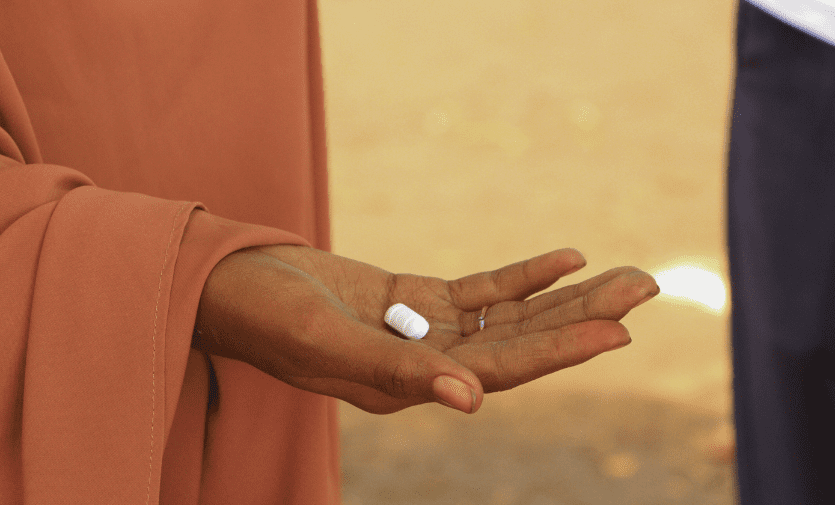
Elimination of neglected diseases requires targeted interventions, not just mass medication, study suggests. Image credit: MSF
It found that as the region approached elimination, the disease retreated into highly localised “hotspots”, where transmission is driven by specific household practices rather than village-wide factors.
To understand how this happened, the study followed villages in southwest China for 13 years to understand how infection risk changed over time. Researchers from both China and the US then combined field-based data collection or traditional “shoe-leather” investigations with artificial intelligence (AI) algorithms to analyse data.
Carlton said the findings build on a body of knowledge by her team. A few years ago, they compared two methods: surveys that searched for the snails that spread schistosomiasis and a risk-mapping approach that analysed road networks and land use patterns, including the distance of households from roads, water sources, and other environmental features.
“Both of these studies show it’s possible to identify where infections might be with fine precision,” she added.
“We think this high precision approach to identifying potential pockets of disease can help health officials identify where the disease might be spreading. That can allow them to deploy strategies to interrupt transmission in these areas.”
Although the findings in the studies are feasible for use in low-resource settings as many countries already have excellent census and health survey data, Carlton says the challenge is obtaining good infection and complementary data that can be used to tailor risk maps to a specific region.
She added: “We studied Schistosoma japonicum, the species found in China, Indonesia and the Philippines. But there are other, similar schistosoma species in the Americas, the Middle East, and Africa. While these parasites are similar, ideally we would test whether we find similar results in other regions.”
Christopher Zziwa a schistosomiasis research officer at the Medical Research Council/Uganda Virus Research Institute and London School of Hygiene & Tropical Medicine Uganda Research Unit, who was not involved in the study, agrees that the study is relevant for countries aiming at disease elimination, especially LMICs. However, he cautions that “results should always be adapted carefully to local contexts”.
The findings are significant for countries nearing elimination, but countries like Uganda are far from achieving this, Zziwa told SciDev.Net.
“While fine-scale surveillance may look difficult in low-resource settings, it can be made realistic by using Village Health Teams, targeted mapping, and simple digital tools rather than expensive systems and processes,” he said.
He said the study findings, which show that as overall infection rates decline, transmission becomes highly localised at the household level, mean mass treatment alone is not enough to achieve elimination. Sanitation, farming practices, and environmental exposure must also be addressed.
To prevent resurgence, policymakers should prioritise sustained surveillance even after prevalence declines, strengthen sanitation such as the use of pit latrines, and focus on high-risk groups such as those living near lake shores, Zziwa advises.
“Overall, the study reinforces that elimination requires precision, persistence, and long-term commitment, and not just mass drug administration alone,” added Zziwa.
Carlton says her team are applying some of the methods developed in the schistosomiasis study to infectious diseases in the United States, from seasonal flu and bird flu to West Nile Virus.
“Infectious disease rarely respects geopolitical borders,” she added.
“Scientific collaboration across borders can help us improve our infectious disease response tools.”
This piece was produced by SciDev.Net’s Global desk.