


09/04/26
Indian wastewater rife with drug resistance genes
Send to a friend
The details you provide on this page will not be used to send unsolicited email, and will not be sold to a 3rd party. See privacy policy.
[Thiruvananthapuram, SciDev.Net] Wider adoption of wastewater surveillance systems is critical to address the growing public health challenge in India posed by resistance to antimicrobial medicines, say researchers who found urban waste samples teeming with resistance genes.
By 2050, antimicrobial resistance (AMR)—the process whereby medicines used to fight bacterial infections become ineffective—could lead to an estimated 10 million deaths a year globally, with up to two million of those in India.
An integrated observation and monitoring system could help combat the problem by tracking the spread of drug-resistant pathogens and detecting microbial outbreaks early, Indian researchers stress.
“Integrating such surveillance into public health systems could improve early detection and inform strategies to curb the global AMR threat,” the study authors write.
Their study published in the journal Nature Communications found an abundance of resistance genes in wastewater from four major Indian cities: Delhi, Mumbai, Kolkata, and Chennai. Resistance genes are specific DNA sequences that enable bacteria to withstand the effects of antibiotics or other antimicrobial agents. They can spread rapidly between bacteria, causing widespread drug resistance.

The researchers analysed 447 wastewater samples from 19 sites across the four cities between 2022 and 2024, using shotgun metagenomic sequencing to map microbial communities, resistance genes, and the mobile genetic elements that enable the spread of resistance.
Karthik Bharadwaj, one of the study’s authors and a scientist at the Centre for Cellular and Molecular Biology, Hyderabad, says that while bacterial populations varied across cities, the genes responsible for antibiotic resistance were largely similar, suggesting common mechanisms of resistance.
He told SciDev.Net: “The study observed certain bacteria such as Klebsiella pneumoniae were more prevalent in Chennai and Mumbai, while Pseudomonas aeruginosa dominated in Kolkata, though resistance patterns remained consistent.”
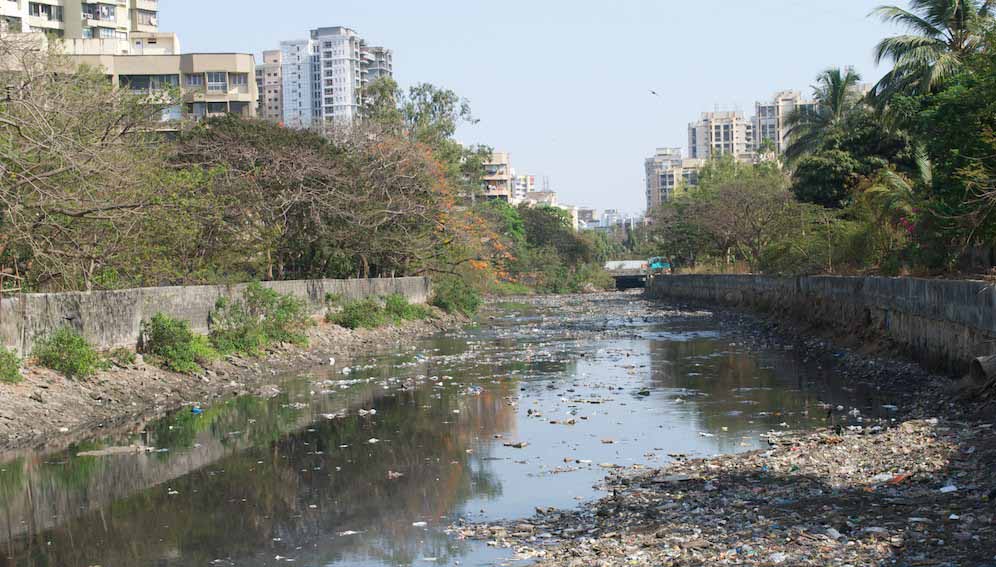
The researchers say the study highlights wastewater as a critical interface where microbial diversity, human activity and antibiotic use converge, perpetuating AMR.
Antibiotic-resistance bacteria are a serious health threat in poorer countries that lack proper sanitation and previous studies have supported routine sewage surveillance to combat the problem.
Rakesh Mishra, director of Tata Institute for Genetics and Society, Bengaluru, says the consumption of antibiotics is very high and practically unregulated in India. As a result, antibiotic resistance genes are abundant in the environment, including in wastewater treatment plants.
“The surge of AMR in the environment is poised to become a major health threat in the country,” Mishra told SciDev.Net.
“Among various factors, the major driver could be untreated wastewater and poor sanitation. Bacteria are highly adaptable and can develop AMR when exposed to antibiotics for a prolonged period.”
Sewage is a “major hotspot” for the generation and multiplication of drug-resistant bacteria, say Indian researchers in a 2023 study, explaining that “interaction with surface water enables resistant bacteria to be transmitted to humans and animals”.
Wastewater surveillance is part of a broader One Health approach that integrates expertise from public health, ecology, urban planning, and virology, recognising the interconnectedness of human, animal, and environmental health.
Action plan
In 2025, India launched the second version of its National Action Plan (NAP)-AMR, which emphasised wastewater surveillance as a critical, cost-effective and non-invasive tool to map community-wide AMR trends. The aim is to provide early warning signals and identify environmental hotspots including hospitals and farms often missed by clinical data.
The Indian Council of Medical Research (ICMR) now plans to expand wastewater surveillance to 50 cities for early outbreak alerts.
The ICMR says surveillance is currently being conducted in the wastewater of five cities as an initial pilot with the aim of strengthening response mechanisms in case of any outbreak.
The NAP outlines goals across six strategic priorities, including improving awareness, strengthening surveillance, and optimising antimicrobial use.
However, some experts say the plan’s framework is more aspirational than operational.
Critics say it often fails to account for the complex, pluralistic nature of India’s healthcare system and places too much emphasis on individual behaviour change rather than addressing the structural and socio-ecological drivers of antibiotic misuse.
Mohit Nair, clinical assistant professor at the University of Washington’s School of Public Health, in the US, believes that implementation gaps at the state level, surveillance limitations, ineffective behavior change strategies, and sectoral silos are the main constraints.
“Progress has been stalled because most states have not provided dedicated financial budgets for AMR initiatives, leaving the national plan without the resources necessary for local implementation,” he told SciDev.Net.
“Furthermore, while legislative policies exist to restrict over-the-counter antibiotic sales, they are poorly enforced due to a lack of regulatory capacity and drug inspectors.”
He says AMR is not yet effectively integrated into existing health programmes for diseases such as tuberculosis or HIV, resulting in fragmented efforts across different government sectors.
“The success of future action depends on emulating localised models, such as the Kerala State Action Plan, which has successfully coordinated public-private partnerships and state-wide task forces,” Nair added.
A 2021 study by Nair and others said that “lack of state financial allocation, poor enforcement and inadequate multisectral coordination have hampered progress of NAP-AMR”.
This piece was produced by SciDev.Net’s Global desk.