


19/01/26
Africa pushes back on US health deals over data, power
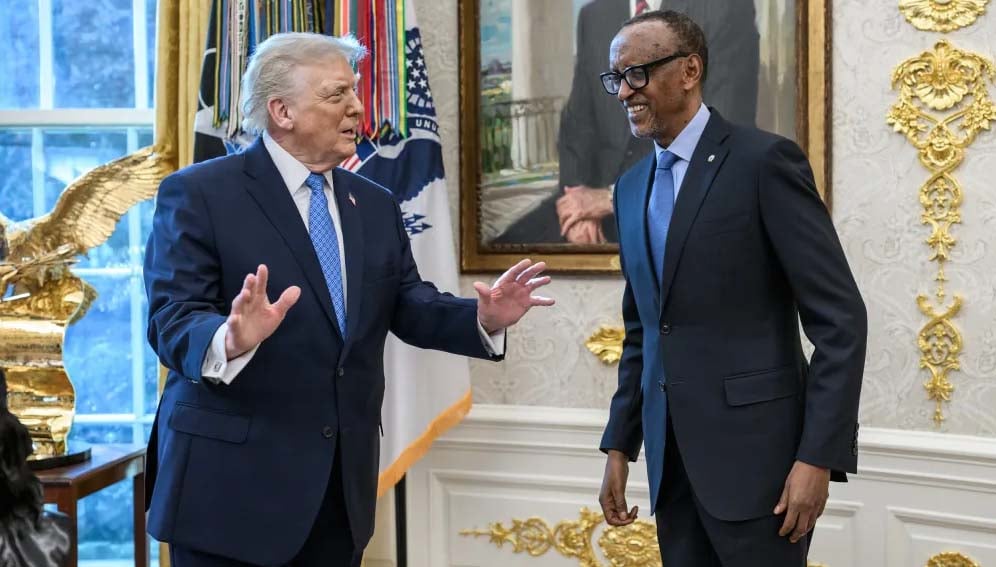
By: John Musenze
Send to a friend
The details you provide on this page will not be used to send unsolicited email, and will not be sold to a 3rd party. See privacy policy.
[KAMPALA, SciDev.Net] A new wave of bilateral health deals with the United States is facing growing resistance across Africa, as courts, civil society groups and public-health experts question how the deals reconfigure control over health data, pathogen samples and national priorities.
Fourteen African countries have signed agreements with Washington under the United States’ America First Global Health approach, according to the US State Department.
The countries were named as Uganda, with a deal worth US$2.3 billion, Kenya ($2.5 billion), Rwanda ($228 million), Nigeria ($5.1 billion), Eswatini ($242 million), Ethiopia $1.466billion), Mozambique ($1.8 billion), Ivory Coast ($937 million), Cameroon ($850 million), Lesotho ($364 million), Madagascar ($175 million), Sierra Leone ($173 million), Liberia ($176 million) and Botswana ($486 million).
The agreements combine US funding with domestic government financing, requiring African states to increase health spending, report outbreaks rapidly and expand disease surveillance, while tying continued support to timelines and performance benchmarks.
The US government says funding will support the scale-up of partner governments’ health data systems to track data on HIV/AIDS, TB, malaria, polio, and infectious disease outbreaks.
However, African critics say the model raises governance concerns about who sets priorities, who holds authority, and who ultimately benefits.
Kenya court case
Questions over process and oversight came into sharp focus in Kenya, the first African country to sign a Memorandum of Understanding (MOU) last year (4 December). The US deal includes support to accelerate the national rollout of Kenya’s electronic medical record systems.
The High Court has since issued an order halting aspects of the framework involving the transfer and sharing of sensitive health data, pending a hearing scheduled for 16 February.
The case centres on provisions that require the rapid sharing of health data and outbreak surveillance information, raising concerns about how such data is governed once it is transferred and whether adequate safeguards have been put in place.

Allan Maleche, executive director of Justice for Health in Kenya, said the ruling had far-reaching implications.
“Health data is a strategic public asset,” he said. “How it is governed now will shape Africa’s control over public-health policy for decades.”
He said Kenya’s case highlighted that international health cooperation agreements were not just “technical arrangements”.
“They have constitutional, public finance and human-rights implications, especially where they involve surveillance systems, digital health infrastructure and sensitive data,” he told SciDev.Net.
And international cooperation should not “dilute state responsibility”, according to Maleche. He added: “Governments remain accountable for rights protection and health outcomes, even when donors fund or design the systems.”
He warned that where agreements governing sensitive health data are concluded without legislative review, countries lose control over how data systems are designed, governed and used.
“[This] weakens public trust in surveillance and data systems which are essential for disease outbreaks response,” said Maleche.
“It also opens doors for rights of violations particularly for the disadvantaged communities where health surveillance can turn into profiling without strong safeguards.”
‘Conditional’ financing
More broadly, public health experts in Africa say the agreements risk constraining national decision-making by tying governments to rigid, externally defined frameworks.
US financial support will be linked to countries’ ability to “meet or exceed key health metrics”, with financial incentives for countries who exceed them, according to the State Department.
“Most of this funding is performance based and highly conditional,” said Peter Waiswa, associate professor at Makerere University School of Public Health, in Uganda.
“Governments are expected to commit hundreds of billions to meet annual targets and share data […] and yet [Uganda’s parliament] has not seen this agreement.
“That raises serious governance questions.”
Waiswa sees the sharing of health data and pathogens as the most sensitive issue, while acknowledging the need for stronger disease surveillance.
“Without transparency, safeguards and regional coordination, Africa risks financing systems it doesn’t have control over,” he said.
He warned that locking large portions of national budgets into externally defined priorities could limit governments’ ability to address emerging health challenges, such as neglected tropical diseases and non-communicable diseases.
“These agreements may constrain future policy choices and even affect how countries engage with other partners,” Waiswa said.
Pathogen sharing
Central to the debate is how the agreements govern African health data and pathogen samples—assets increasingly recognised as strategic in global health security and biomedical research.
Under several MOUs, governments are required to notify the US of outbreaks within short timeframes and share pathogen specimens for analysis.
While early reporting and surveillance are standard public-health practices, African experts say the structure of these arrangements creates unequal obligations, with reciprocal benefits unclear.
Aggrey Aluso, executive director of the Resilience Action Network Africa, sees this as “the most contentious part of the agreements”.
“Pathogen specimens are among the most valuable resources in the pharmaceutical ecosystem,” she explained.
“Once they leave a country, there are few enforceable guarantees about how they will be used or whether originating countries will benefit from resulting products.”
Africa already reports outbreaks through multilateral channels. Direct reporting to a foreign government, alongside specimen-sharing requirements, critics argue, risks shifting authority away from continental systems that African states helped build.
Aluso told SciDev.Net: “Now countries are being asked to report directly to another state within days or even hours. That alters the balance of global health governance and sidelines institutions meant to protect collective African interests.”
Waiswa said Africa had “missed an opportunity for a regional approach”.
“Diseases do not respect borders,” he added. “Negotiating country by country instead of investing in cross-border surveillance systems is inefficient and weakens Africa’s collective bargaining power.”
Keeping control
Beyond data and pathogen sharing, the US State Department says the bilateral agreements will facilitate “long-term sustainability”, transitioning procurement of commodities and employment of frontline health workers to partner governments.
But critics fear the balance of control lies squarely with the US.
“Most developed countries do not run their health systems indefinitely through third parties,” added Waiswa.
“These agreements risk recreating project-style management of national systems, rather than building flexible institutions accountable to citizens.”
He acknowledges that increased national funding commitments under the deals is a win but warns it could affect wider foreign assistance: “We have had countries like the UK, China giving Africa a lot of money and support. Are we sure these are comfortable still doing the same with the kind of terms in these agreements?”
Aluso stressed the need for democratic oversight, enforceable safeguards and regional coordination.
“There is a real opportunity here,” he added.
“Disease surveillance and laboratory capacity are investments Africa needs. But cooperation must strengthen African institutions, not reconfigure control away from them.”
This piece was produced by SciDev.Net’s Sub-Saharan Africa English desk.