


22/07/26
New blood test speeds childhood cancer diagnosis
By: Gilbert Nakweya
Send to a friend
The details you provide on this page will not be used to send unsolicited email, and will not be sold to a 3rd party. See privacy policy.
This article is supported by SIDA
Liquid biopsy test for Burkitt lymphoma proved quick and accurate in East African studies, writes Gilbert Nakweya.
[NAIROBI, SciDev.Net] East African researchers are exploring how a rapid blood test for Burkitt lymphoma could be integrated into routine clinical care after studies showed it significantly reduced diagnosis times for children with the aggressive cancer.
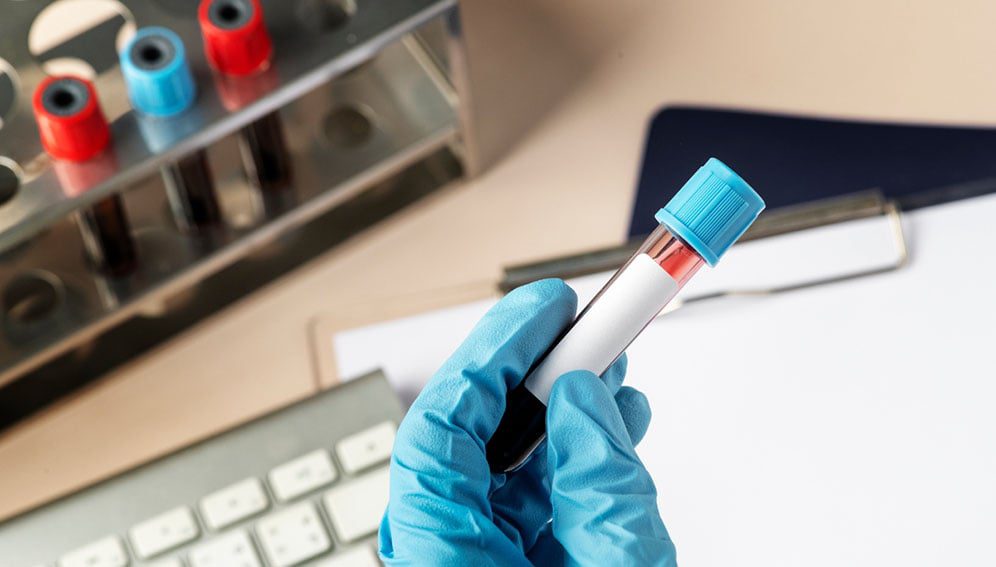
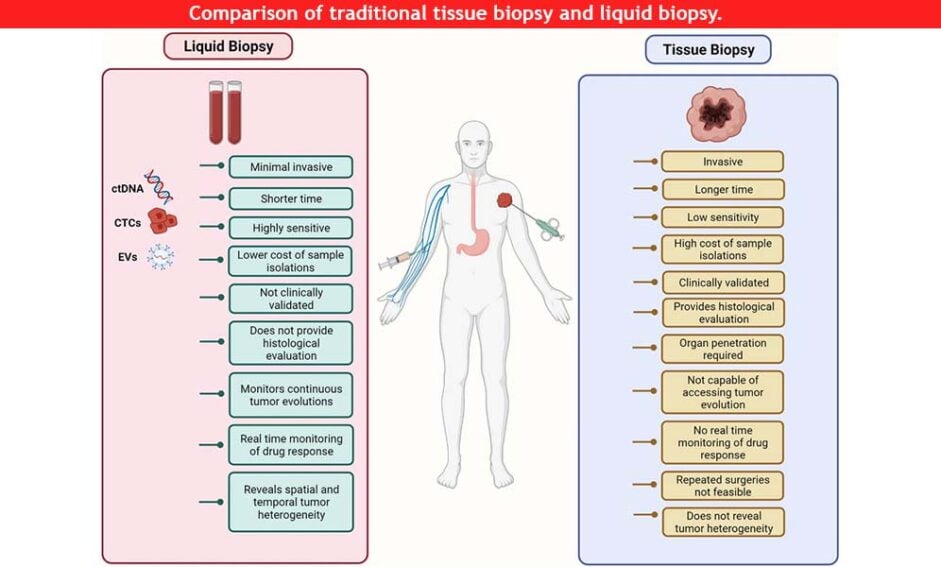
The minimally invasive liquid biopsy test uses a blood sample to detect tumour DNA linked to Burkitt lymphoma, one of the most common childhood cancers in Sub-Saharan Africa.
Researchers say the approach could help children begin treatment earlier in regions where access to conventional tissue biopsy services remains limited.
Their findings were published in March in Nature Medicine in a paper titled “Liquid biopsy for the diagnosis of EBV-positive Burkitt’s lymphoma in endemic areas”.
The study, conducted in Tanzania and Uganda, involved researchers from the University of Oxford and Muhimbili University of Health and Allied Sciences (MUHAS), in Dar es Salaam.

“Burkitt lymphoma is actually one of the most common childhood cancers in this region, and the paradox is that it is highly curable, if diagnosed early,” said Clara Chamba, head of haematology at MUHAS and co-author of the study.
“The challenge is that many children present late or face delays in diagnosis due to limited pathology services, long referral pathways, and overlapping symptoms with common infections.
“As a result, outcomes are still much poorer than they should be. So it’s not just the biology of the disease but also the health system context that makes it so serious.”
This context led the researchers to explore liquid biopsy, which is minimally invasive and uses a simple blood sample rather than relying entirely on tissue biopsies, says Chamba.
“We wanted to explore whether this approach could realistically work within our setting for the diagnosis of Burkitt Lymphoma,” she added.
The researchers evaluated the test among children and young adults aged between three and 25 years suspected of having lymphoma, at four hospitals in Tanzania and Uganda between August 2019 and July 2023.
According to the study, liquid biopsy reduced median diagnostic turnaround time from 46.8 days to 6.5 days and enabled 93.3 per cent of Burkitt lymphoma cases to be diagnosed within one week, compared with 40 per cent using tissue biopsy alone.
The researchers say the findings demonstrate that liquid biopsy can be integrated into routine clinical practices in under-resourced African hospitals using a multidisciplinary team approach.
“In our study, the test showed high accuracy and, importantly, it can be integrated into real clinical workflows,” Chamba said.
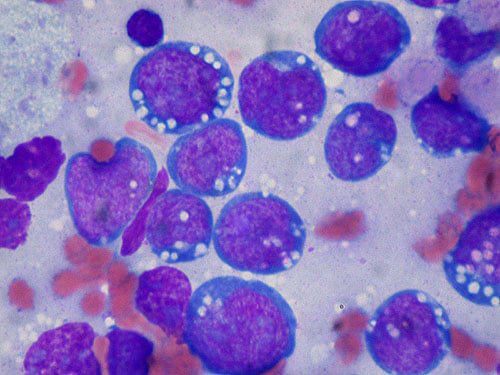
A photomicrograph of Burkitt lymphoma. Copyright: Ed Uthman.
“That means it could support earlier treatment decisions, especially in settings where access to full pathology services is limited.”
She added that the idea is not to replace traditional diagnosis entirely, but to provide a faster, complementary tool that helps clinicians act sooner.
Researchers say they are now focusing on implementation and evaluating the test’s impact in routine healthcare settings through planned clinical trials.
Chamba and colleagues are also engaging ministries of health and other stakeholders to explore how the technology could be scaled sustainably across the region, including addressing infrastructure, laboratory capacity and policy requirements.
The project forms part of the National Institute for Health and Care Research (NIHR)-funded AI-REAL consortium—Aggressive Infection-Related East Africa Lymphoma—which focuses on improving lymphoma diagnosis and treatment in East Africa.
The researchers say blood-based testing offers important advantages because blood samples are easier and safer to collect and transport than tissue biopsies, particularly in children.
However, researchers caution that the technology still requires specialised sequencing infrastructure, reliable supply chains and trained personnel.
“A key part of our work has therefore been to build and demonstrate local capacity, showing that these technologies can be implemented within the region, rather than relying entirely on external laboratories,” Chamba said.
Bruno Sunguya, professor of public health nutrition and deputy vice chancellor for research and consultancy at MUHAS, who was not involved in the study, said the work demonstrates that precision medicine research can be led from within low- and middle-income countries.


“Beyond lymphoma, this work opens new opportunities to apply genomic and liquid biopsy technologies to strengthen cancer diagnosis and improve outcomes more broadly across the region,” he said.
Adedayo Joseph, a clinical radiation oncologist at Nigeria’s Lagos University Teaching Hospital, an independent expert not involved in the study, believes the findings’ greatest significance lies in the potential to reach those in need. She says many innovations improve outcomes but are only accessible to a limited sector of the population.
“One of the most important things about this study is that it’s not just about the innovation, but about making sure it’s accessible to people on the African continent […] in terms of geography, cost, and the expertise required to conduct the test,” she told SciDev.Net.
“If it’s cheap and readily available, but there’s no pathologist who can run it, and training a pathologist takes three years, you still don’t have access.”
She noted that the study’s reduction in diagnostic turnaround, from 46 days to six, was also an important development.
“The next thing is going to be affordability, and the ease of conducting the test,” she added.
“Putting all those things together is what will ultimately make it as impactful as possible.”
This piece was produced by SciDev.Net’s Sub-Saharan Africa English desk.