

GM mosquitoes were released on the islands last year — but only publicised last month
Flickr/lyng883
Experts in the safety of genetically modified (GM) organisms have expressed concern over the release of GM mosquitoes into the wild on the Cayman Islands, which was publicised internationally only last month — a year after their initial release.
The trial of the OX513A strain of the dengue-carrying Aedes aegypti mosquito, developed by UK biotechnology company Oxitec, was carried out on Grand Cayman island by the Cayman Islands' Mosquito Research and Control Unit (MRCU) in 2009, followed by a bigger release between May and October this year. Together they represent the first known release of GM mosquitoes anywhere in the world.
Unpublished results of the trials, showing that the GM male mosquitoes competed with wild males, were presented at the American Society of Tropical Medicine and Hygiene annual meeting in the United States, last week (4 November).
The male GM mosquitoes mate with normal females to produce larvae that die unless the antibiotic tetracycline is present. In tetracycline's absence an enzyme accumulates to a toxic level, killing the larvae. The developers hope the strategy could be combined with other mosquito control methods to reduce transmission in dengue-prone areas.
Ricarda Steinbrecher, a geneticist and co-director of EcoNexus — a UK-based non-profit research organisation — expressed surprise that the trials had occurred, saying that they had not been mentioned at the fifth meeting of the Parties to the Cartagena Protocol onBiosafety — which addresses international safety issues relating to GM organisms — in Nagoya, Japan, last month.
She described the lack of publicity surrounding the trials as "worrying, both from the scientific perspective as well as public participation perspective".
Steinbrecher said that until a full, long-term environmental assessment of the Cayman trials has been carried out, the recently announced Malaysian trials of the same strain should not go ahead.
Just over three million male mosquitoes were released in the Cayman Islands this year. Oxitec sent the GM eggs to the islands, which are a British overseas territory, and they were hatched and grown at the MRCU.
Angela Harris, senior researcher at MRCU, told SciDev.Net that her unit consulted with several Cayman Islands' government departments beforehand.
"Currently there is a draft biosafety bill, and despite the fact that this bill has not yet been implemented we carried out a risk analysis and review of the trial as if this bill was already in place."
She said that there had been a newspaper article and public consultation within the Cayman Islands.
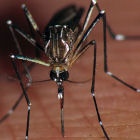
Aedes aegypti mosquitoes transmit dengue fever
Flickr/Marco Gaiani
Luke Alphey, research director at Oxitec, said an extensive risk analysis was carried out and "we did lots of engagement work in Cayman, but no special effort either to spread the word internationally or not to [do so]". On the sidelines of a press conference in London today he said that he had not wanted to publicise the trial until the results were known. He did not know what the Nagoya meeting was, he said. An environmental assessment of the trial site is now being carried out.
Alphey said that the experiment complied with the Cartagena Protocol because prior informed consent was obtained from the Cayman government.
The wild mosquito population in a 16-hectare urban area is believed to have been reduced by about 80 per cent. The next step for Oxitec, said Alphey, is to test the strategy in conjunction with other mosquito control methods.
Kathy Jo Wetter, a researcher with the ETC Group (Action Group on Erosion, Technology and Cooperation), a Canada-based organisation that promotes the socially responsible development of technologies, said ETC was unaware of the release.
"Oxitec considers its trial 'successful' just days after the experiment has ended," she said. "But unintended impacts on the environment cannot be known, and Oxitec's unproven technology could make things worse in the long term. There is no possibility of recall if something goes wrong — who takes responsibility in that case?"
"Extreme techno-fixes require extreme precaution," she added.
Alphey said they are waiting for approval for the release of GM mosquitoes in Brazil, Panama and the United States.
See below for a video of rearing and release of Oxitec's GM mosquitoes in the Cayman islands by the Mosquito Research and Control Unit (Grand Cayman):
Great article. Please send several millions to Honduras, we will appreciate that very much. Francisco Gomez
LalithKuruppu
(
Sri Lanka
)
16 November 2010
I have read the series of articles related to the introduction of GM mosquitoes and the positive outcomes with regard to the control of vector borne diseases such as dengue and malaria with much concern. The only solution for dengue seems to be vector control at present. Similar surveys may be conducted in developing countries such as ours as the 'wild forms' of Aedes varieties are abound and the devastation is massive. Public resistance will be less as the advantages are more than the disadvantages.It is pathetic to observe the people particularly young children dying from dengue fever. Hope similar initiatives will help to solve this major health problem in not too distant future. Prof.K.A.L.A.Kuruppuarachchi MD,FRCPsych(UK) Professor of Psychiatry Faculty of Medicine University of Kelaniya Ragama Sri Lanka.
gardenstart
(
Garden Start Chico |
United States of America
)
16 November 2010
What about the 'transgenic' nature of GMO's? Will these modified genes be transfered to humans when bitten by these GM mosquitos, and consequently modify our OWN genes? That's what I've learned is true about GM food, anyways. What is going on here????
john miller
(
United States of America
)
16 November 2010
Here in Hawaii there are lots of animals and vegetation that was let loose by scientists and people who thought it was a brilliant idea. Every time its been a disaster.
In the article a representative says the mosquito won't get to other countries. How does he know that? The mosquito did not exist in Hawaii until the Europeans brought it in their ships by accident.
The GM companies are using islands as laboratories because they know its dangerous to let loose their experiments. They believe an island is cut off from the rest of the world. It is a lot like the thinking of scientists in Jurassic park.
Its very possible that this EXPERIMENT could be a complete success. Monsanto, etc. wants a string of successes. Unfortunately that will lead to everyone dropping their guard then something will eventually be created that is something these biotech creators thought was impossible. Something awful will occur and their apologies won't do much to pay for the loss of a species, a food group or a portion of mankind.
I hate mosquitoes but I totally agree with the woman who says that "Extreme techno-fixes require extreme precaution,". There is no way to recall these mistakes.
hsolo
(
United States of America
)
16 November 2010
And we are wiping out a level of the food chain for what reason again? Let's kill everything. All pests, babies, etc. Then everything can be owned by the rich until they die and then mankind is extinct. What a plan.
FaerieSight
(
United States of America
)
16 November 2010
I think people are forgetting that these pests also feed many species of bird, amphibian, fish, and even a few carnivorous plants, as well as being the #2 pollinator, just behind bees. What will happen to our food supply as a result of not having these pollinators? Will this cause the deaths of other animals, possibly even wiping out other species? Think about it.
V. McCrady
(
Canada
)
17 November 2010
For info on what role mosquitos play in ecosystems and what could happen should they be eradicated check out the following article http://www.nature.com/news/2010/100721/full/466432a.html
Tolouse
(
Greencore |
United States of America
)
17 November 2010
Remember that: "... in Africa and Asia, DENV have been reported in sylvatic (enzootic) cycle involving non-human primates and various species of Aedes mosquito (such as Ae. furcifer, Ae. luteocephalus and Ae. taylori)" http://dx.doi.org/10.1186/1743-422X-7-152 We need to be sure that we are actually preventing all of the vectors. Assuming, we are then, as for the role of this species in the food web and other eco-functions? Very simple. You just need to keep introducing millions every year all over the world (become a permanent factory of sterile mosquitos).
m Dr Prudence Hamade
(
United Kingdom
)
18 November 2010
Is not the release of GM mosquitoes which terminate after 21 days( a mosquitoes life) as the larvae die also so the genes are not passed on preferable to widespread use of so called safe insecticides with their unknown long term effects on human health and the decline of the transmssion of Dengue with its high rate of morbidity and mortality. The only problem might be the lack of food for fish and insect eating birds which would also result from the reduction of mosquito numbers using traditional methods.
Angie
(
United States of America
)
19 November 2010
This is one of the most irresponsible things done. Mosquitos, though annoying, are such an important part of the food chain. Only careless, criminal companies like profit-greedy big pharma would dare to mess around with nature.
MontyQ
(
Canada
)
21 November 2010
Yes....the depopulation agenda is afoot. These Caymaners have just been 'assaulted' with god only knows what virus. And this is acceptable? The 'elite' cleaning off the chess board, so only their kind survives. I do not care what some rich philanthropist thinks is 'best' for the world.....this is assault with intent to do harm....and Bill Gates needs to be brought up on charges. NOW!
gercelticw
(
Japan
)
21 November 2010
There must have been something wrong with the Judeo-Christian "god", who created the species "humans" in the first place on the sixth day of creation...in his image. Just imagine the Chinese polluted skies and the acceleration of polluted oceans and rivers around the globe and tell me what kind of bozo would create that kind of species, who does everything for "profit"! Unmodified mosquitos are as important as everything else and it is like opening a Pandora box by messing around with the delicately balanced life on earth. There is one place in the judeo-christian bible where their dubious "god" commands people to submit the creation instead of being humbly living with and in nature.
wildman
(
United States of America
)
21 November 2010
Why not make a mosquito to spread a disease and kill off people? Oh yeah, that's already on the table. Ask Bill Gates Next time you buy a computer, think seriously about buying an Apple.
humanfoodfactor
(
United States of America
)
22 November 2010
These creepy nuts need a gag and a bag filled with their GM products, so that we can all see how it affects them first.
SteveK
(
United States of America
)
3 December 2010
Give a small boy a hammer, and everything he sees will need hammering. This is madness. Evolution happens. Your genetically modified organism is not immune to it, and will eventually change to escape control.
Debra
(
United States of America
)
5 December 2010
This is insane - another disaster in the making. Lab created ticks with Lyme disease "escaped" from an island....LEAVE THINGS ALONE! For gods sake just leave things alone. You are messing with a fragile eco-system. It's exhausting.
Danlagpat
(
Philippines
)
7 December 2010
Most of what scientists have done have shortcomings. Just consider the use of hormones to fast track the development of livestock i.e. in 30 days we got a kilo of dressed chicken, more milk from cows, faster growth of fish, now it's being used to grow vegetables fast. But the consequence is cancer-which the scientist didn't expected. According to US FDA study, hormone is the number one significant contributory to the cancer disease. On the other hand, scientist tampered the traditional varieties of plants including papaya, bitter gourd, rice and other crops...and they called them hybrids which they claimed have higher productivity. But the alarming consequence is that the seeds of hybrid crops cannot be replanted anymore...their perennial character was lost. You can plant the seeds but the plant will not bear fruit anymore. And they call this 'increasing the biodiversity'. I think they are killing biodiversity.
Max
(
France
)
10 December 2010
Poor world... Let say to people who are dying of Malaria or Dengue fever: "sorry, we don't want to find a solution to your problem any more!" For people who say "what happen if they bite me?" I can answer that they will not bite you because, first, they release only males and, second, the progeny will not emerge so, they will not bite you! For people who say "what happens for the ecosystems?" -> Aedes aegypti is an "urban-mosquito" and larvae live in garbage or flower cups... it's not really an useful aquatic ecosystem... For the adult, research already proved that most of insect-feeders (as bats) prefer moths. But I'm nearly sure that people who criticize this project criticize also the use of insecticide to kill mosquitoes... And, for sure, killing mosquitoes with insecticide kills also other animals. The use of SIT or GM Mosquitoes are specific pest control techniques and I think that the research on this is necessary...
orion
(
France
)
31 December 2010
Thanks to Maurice for explaining clearly the advantages of this experiment (in particular enabling to avoid the current massive use of costly pesticides) explaining the care taken for avoiding any significant inconvenient. Let us hope that the careful evaluation of observed advantages and inconvenients in the island, will open a new era against the
terrible plague.
Add your comment
This is your network: share your views on any of our articles by adding your comments.
Please wait
20 June 2013
Thank you for your comment. Your comment has been sent for moderation.
All comments are subject to approval and we reserve the right to edit comments containing inappropriate/unsuitable language. SciDev.Net holds copyright for all material posted on the website. Please see terms of use for further details.
All SciDev.Net material is free to reproduce providing that the source and author are appropriately credited. For further details see Creative Commons.
20 June 2013