


18/09/26
Maldives meets UN goal to cut deaths from chronic diseases
By: Neena Bhandari
Send to a friend
The details you provide on this page will not be used to send unsolicited email, and will not be sold to a 3rd party. See privacy policy.
[SYDNEY, SciDev.Net]: The Maldives has become the only country in Southeast Asia to meet the UN target for reducing premature deaths from non-communicable diseases (NCDs), such as cardiovascular and chronic respiratory diseases, cancers and diabetes.
Globally, NCDs account for roughly 74 per cent of all deaths, with millions of people dying prematurely before the age of 70. Over 80 per cent of these premature deaths occur in low- and middle-income countries.
Strengthening digital connectivity and health workforce capacity, and investing in preventive health, has been central to the Maldives’ achievement, according to public health experts who say the approach could help other small island developing states (SIDS) get on track.
Some SIDS, especially in the Pacific and Caribbean regions, have among the highest rates of obesity and NCDs in the world because of increasingly sedentary lifestyles and consumption of imported processed foods.
Many are far from meeting the United Nations’ Sustainable Development Goal (SDG) target of reducing premature deaths from the four key NCDs by one-third among people aged 30 to 70 by 2030.
For the Maldives, a digital-focused primary health care model has played a key part in achieving this goal four years early, according to the WHO. The WHO-supported model was first piloted out on Faafu Atoll, a tiny atoll comprising 23 islands and islets, only five of which are inhabited.
5G internet connectivity
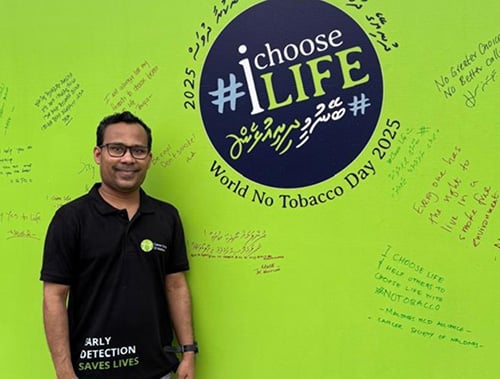
Abdul Malik, co-founder and president of the Maldives NCD Alliance. Photo Courtesy Abdul Malik
Shuaib Ismail, community health coordinator at Faafu Atoll Hospital, run by the Maldives Ministry of Health, Family and Welfare, told SciDev.Net: “The advantage of this programme is that it focuses on the preventive aspect of NCDs.
“We can screen the registered population and detect NCDs early and provide treatment before the disease progresses to comorbidities and mortality stage.”
The pilot scheme used an Integrated Health Information System already established for vaccination and reproductive health to register adults and screen them for NCD risk factors, explained Abdul Malik, co-founder and president of the Maldives NCD Alliance.
The digitalised system also supports follow-up, provides preventive interventions, and enables digital referrals and access to medical records across the islands, he said.
“There was over 93 plus per cent registration,” Malik told SciDev.Net.
“It was a success because Maldives has almost 100 per cent 5G internet connectivity in almost every island.”
He added that involving civil society and the island community to promote healthy lifestyle choices was also critical.
Healthier lifestyles
Abdulla Ahmed, principal of Faafu Atoll Education Centre, a secondary school in Faafu’s capital, Nilandhoo, said the pilot programme improved NCD awareness, screening, prevention and healthy-lifestyle practices among students, their parents and school staff.
“Some staff, following screening, have discovered they were on the borderline for hypertension or cholesterol or diabetes,” he told SciDev.Net.
“Since becoming aware, they have become proactive in exercising and conscious of what and how much they eat to manage weight. Others have stopped eating areca nuts, which increase the risk of certain cancers, after cancer screening and awareness.”
Areca, or betel, nut products are used daily by many people in the Maldives. WHO scientists have confirmed they cause cancer in humans.
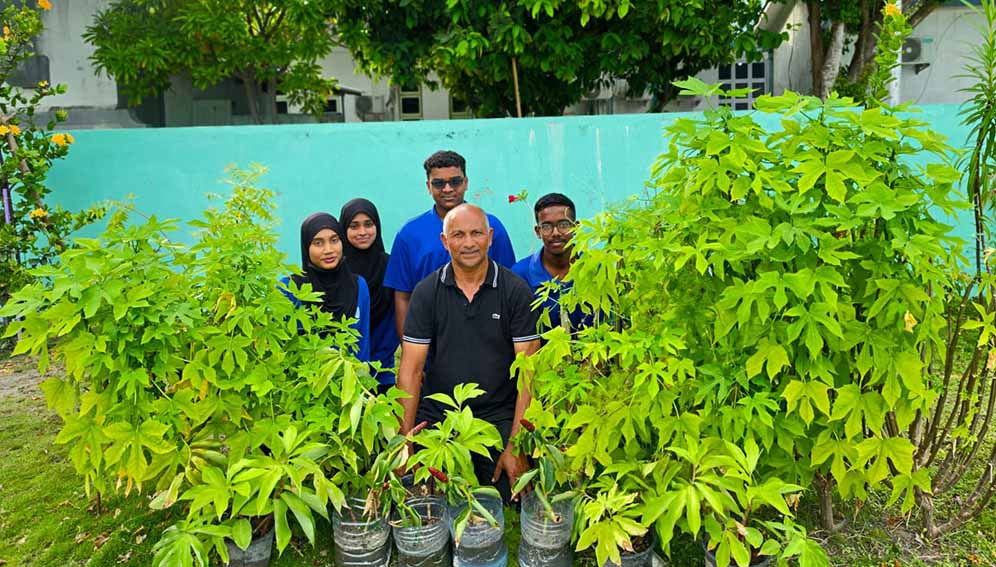
Students at the school are learning about healthy diet and disease prevention in a hands-on way by growing coconut palms, breadfruit and insulin plants, and using hydroponics to grow herbs, Ahmed added.
Following its success in Faafu, the model is now being scaled up to include other atolls, backed by government investment in the health workforce and infrastructure.
According to the WHO Western Pacific region, the model could serve as a template for other SIDS facing similar healthcare challenges, but approaches would need to be customised and fine-tuned for different contexts.
Island communities in the region are often isolated, with limited transport facilities and medical and health workforce shortages due to high expatriate turnover, and underfunded preventive care. Many SIDS are also facing growing pressures from climate change and food insecurity.
Geographical barriers
Rohina Joshi, who leads the global health research team in the School of Population Health at the University of New South Wales, in Sydney, told SciDev.Net: “Digital health can strengthen health systems for early detection and management of chronic diseases, patient-centred continuity of care, monitoring of treatment adherence and ensuring that patients receive timely care despite geographical barriers. These are vital for prevention, control, and long-term management of NCDs.”
However, she cautioned, for digital health to help reduce premature mortality, health systems need an adequate, trained workforce, access to essential medical supplies, and infrastructure including transport, electricity and internet.
“It is essential to have clear referral networks linking islands with regional and tertiary services, supported by digital records of cause of death and specialist outreach, because in many resource-poor settings, more than 60 per cent of people die outside health facilities,” Joshi added.
The available WHO data from the eight Pacific Island countries suggest that progress towards the one-third reduction in premature deaths target remains limited.
Papua New Guinea showed the largest decline from 30.9 per cent in 2015 to 28.5 per cent in 2021 in the probability of dying between ages 30 and 70 from the four major NCD groups. Fiji declined from 39.7 per cent to 37.9 per cent, and Vanuatu from 37.6 per cent to 36.8 per cent.
Earlier this month, Southeast Asian health ministers adopted the Dili Declaration, pledging to strengthen family medicine and access to quality specialised health care for rural and remote populations.
Investing in prevention
Investment in preventive health is essential to reduce the burden of NCDs, public health experts stress.
Achieving the SDG target for NCDs worldwide would need US$140 billion in new spending over 2023–30, an average of US$18 billion a year, according to a Lancet paper. But this could avert 39 million deaths and generate US$2·7 trillion in net economic benefits, with benefits outweighing costs 19-to-one, the authors said.
Even though the Maldives has reached SDG target 3.4 and premature mortality numbers have been reduced by one-third, the country can’t be complacent. NCDs are still the leading causes of morbidity and mortality, contributing to about 84 per cent of all deaths, according to the WHO.
“Over the coming decades, NCDs-related mortality will further increase with an ageing population,” said Malik.
Globally, stronger primary health care integration and risk factor reduction, such as tobacco and alcohol control, are needed to meet the 2030 NCDs reduction target, says the WHO.
This piece was produced by SciDev.Net’s Global desk.