

23/02/22
Q&A: Women need to be leaders in internet governance
By: Halima Athumani
Send to a friend
The details you provide on this page will not be used to send unsolicited email, and will not be sold to a 3rd party. See privacy policy.
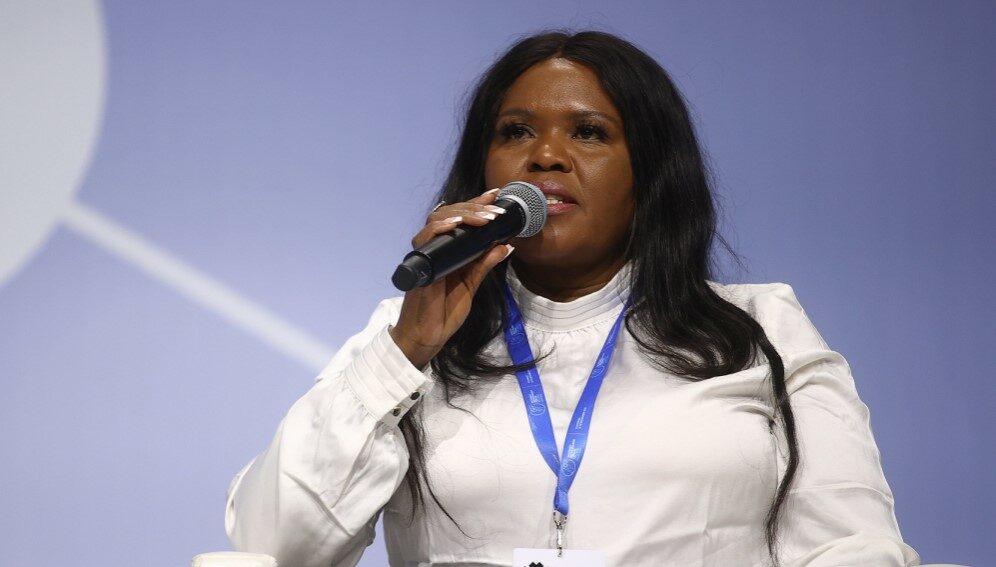
Learning how to code changed Baratang Miya’s life.
Miya is the founder and head of GirlHype, a non-profit that empowers disadvantaged young women and girls to connect to the digital world, learn how to write code and build a career in tech.
Miya tells SciDev.Net that her message to the United Nations Internet Governance Forum in December was that women must be included in internet governance to ensure that girls and women are not left behind.
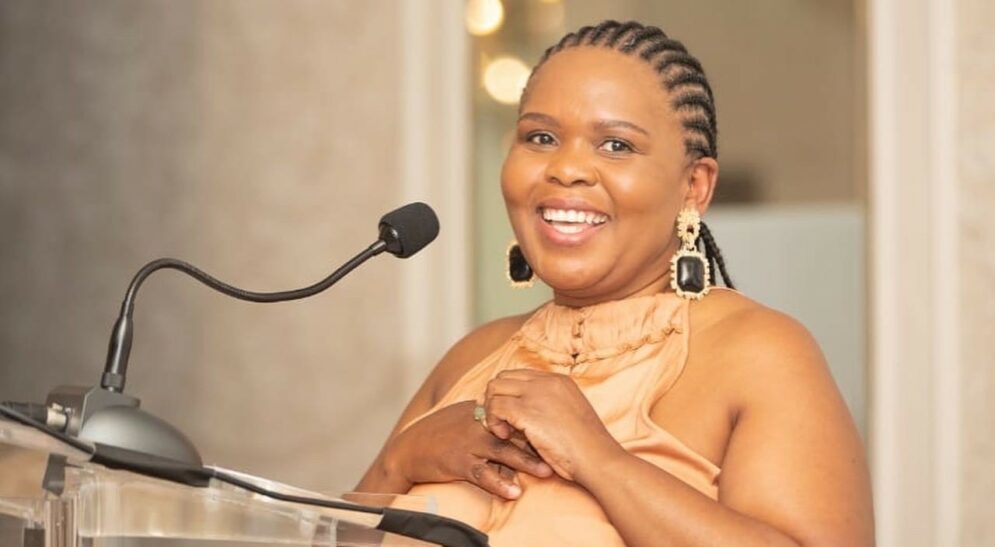
Baratang Miya, founder and head of GirlHype. Photo credit: Baratang Miya
Why focus on technology? What can coding offer girls and women that other fields can’t?
You learn problem solving … and it builds girls’ tenacity and resilience. They learn how to programme and set content, you can’t get that anywhere else. They live in these environments where the problems exist, and problems create opportunities. Somebody’s looking out and says ‘there’s a lot of issues in Africa’. I’m looking at it and feeling like, ‘wow, so many opportunities in Africa and they need to be solved’.
One graduate who stands out for me is a girl from Khayelitsha, a little town in South Africa. She came from poverty. She learnt HTML, CSS, went on to Python, and Java became her best language. She went straight from high school at age 18 to work for Microsoft as an intern. Within two years, she was living in one of the high suburbs of South Africa. Seeing her changing her whole family’s life was mind-blowing.
Listen as Baratang Miya tells Africa Science Focus what it was like to be a woman in the male-dominated emerging tech world.
You choose girls from underrepresented communities to take part in your programmes. What is special about these girls? And what can girls – especially those from diverse backgrounds – give to tech?
Coding is a language spoken by a computer. I think President Mandela said, ‘If you want someone to connect with you, speak in their mother tongue’. These girls, what they bring into technology, especially artificial intelligence, is the human element of AI. These girls are bringing a different mindset to the table.

At the moment, it’s mainly men in Silicon Valley deciding how AI is going to be – imagine if an African girl was to decide what issues are going to be covered. African women are going to be part of that technology.
How did you get into coding? And where has it taken you in your career?
I was sitting at an internet shop and someone just decided, ‘I’m going to teach you how to code for an hour’. Why? Because I was teaching girls how to use computers. GirlHype is 20 years old next year … I started this programme because I couldn’t use a computer when I got to university.
It has changed my life to the level I could never have dreamed of. It has taken me to the policy level to speak at platforms like the United Nations. I’ve just come back from the UN, in December, speaking as one of the high-level panel members at the Internet Governance Forum. I’ve been going up and down, talking at the African Union, advocating for women and girls. I’ve been chosen as one of the awardees of the US State Department TechWomen programme and spent time in Silicon Valley for six weeks being mentored by women there. These things that I’ve got, it was just learning how to code. It has been amazing.
What are your big visions and goals? And what’s next for women in tech in Africa?
I love internet governance with all my heart. Speaking at policy level is what I enjoy, and advocating for women and girls’ rights. Internet governance should be bottom up, the stakeholders – which is all of us, including women and girls – should be part of that decision making. We need more women to take part.

Countries should be left alone to do what’s right for them in their context, but the internet should not be used by countries to oppress other people and leave women behind. It’s high time that the UN take the lead in terms of making sure that no one is left behind, especially women and girls.
This interview has been edited for clarity and brevity.
This piece was produced by SciDev.Net’s Sub-Saharan Africa desk.
More on Gender