

Send to a friend
The details you provide on this page will not be used to send unsolicited email, and will not be sold to a 3rd party. See privacy policy.
Scientists have developed a model for a genetically modified (GM) mosquito, which produces malaria-eliminating antibodies and is unable to transmit the parasite to humans by biting, potentially making it a viable alternative to a malaria vaccine.
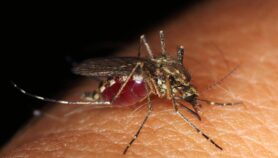
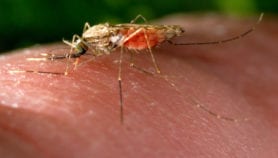
The modified Anopheles stephensi mosquito — one of 30–40 mosquito species that commonly transmit malaria — releases antibodies that either kill or stall the development of Plasmodium falciparum, the parasite which causes the most severe form of malaria in humans.
"This is the first model of a malaria vector with a genetic modification that can potentially exist in wild populations and be transferred through generations without affecting their fitness," Anthony James, lead author on the study and professor of microbiology and molecular genetics at the University of California Irvine (UCI) in the United States, told Wired magazine.
The study, which has been published in Proceedings of the National Academy of Sciences (PNAS), was carried out by researchers at UCI and the Pasteur Institute in Paris, France.
It demonstrates how a gene found in mice inspired the mosquito model. When infected with the P. falciparum parasite, the mice released antibodies which killed the parasite. After modifying the molecular make-up of mouse immune response systems, scientists engineered genes in the mosquitoes that would replicate the same response.
Malaria remains one of the world’s biggest killers. According to the WHO, there were around 216 million cases of the disease in 2010 and an estimated 655,000 deaths, mostly among children in Africa. To date, scientists have been unable to develop a preventive vaccine and prevention mechanisms such as bednets are not always affordable or available.
The UCI research follows similar work earlier this year at the Johns Hopkins Malaria Research Institute, United States, where scientists genetically modified mosquitoes so that their immune systems would attack Plasmodium parasites.
This latest study differs in that no new genes are introduced into the mosquitoes; instead their own genes are modified to improve their parasite-fighting abilities.
The UCI scientists say their parasite-blocking technique could be used in other mosquito species, making it a viable option for tackling malaria worldwide.
"This blocking process within the insect that carries malaria can help significantly reduce human sickness and death," said James.
However, there are significant challenges to overcome first.
"It will take another year or so to make something eligible for field trials," James said.
"All ethical, social and legal concerns over the use of a genetically-engineered mosquito in a country willing to give it a trial will have to be satisfied."
More on Malaria