

By: Linda Bach
Send to a friend
The details you provide on this page will not be used to send unsolicited email, and will not be sold to a 3rd party. See privacy policy.
[CAIRNS, AUSTRALIA] Terrorist attacks and the kidnapping of foreigners could cause a serious blow to Kenyan marine research, forcing scientists to cancel projects in fear for their lives, SciDev.Net has heard from participants at the 12th International Coral Reef Symposium in Cairns, Australia (9–13th July).
Scientists have expressed concerns that armed terrorist groups linked to the Somalia-based Al-Shabaab terrorist group are making it difficult to conduct marine research and conservation in the area.
Tim McClanahan, a senior conservation zoologist at the Wildlife Conservation Society (WCS), told SciDev.Net that the activities of pirates have made the management of marine ecosystems in Kenya’s coastal region challenging, with some scientists cancelling their work in certain areas or withdrawing altogether.
"I had to cancel research work in Lamu due to safety concerns, and, to date, that work has not been done," said McClanahan, who has lived in Mombasa, Kenya, for 25 years.
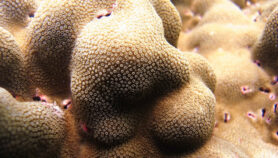
Kenya’s coastal marine ecosystems range from mangroves and coastal wetlands to lagoons, coral reefs and open ocean. The country has six national reserves designed specifically to protect its marine environments.
McClanahan explained that due to the region’s proximity to the Somali border and the lawlessness it was experiencing, it was difficult to enforce management schemes, carry out patrols, undertake research, or ensure the community appreciated sustainable resource exploitation.
Al-Shabaab militants are suspected to be behind the surge in violence and kidnappings that have made the coastal area and other parts of Kenya insecure over the past few years.
Innocent Wanyonyi, marine researcher at the Mombasa-based Coastal Oceans Research and Development in the Indian Ocean (CORDIO) said that the incidents have created a fear of further attacks, forcing scientists to factor in terrorism as a key risk when planning new research or coastal development projects.
"Researchers are as affected as anyone else, and we have to take precautionary measures in our daily activities, in the light of increased terror attacks on the home front," he said.
Melita Samoilys, director of CORDIO, also had to cancel her research on the Indian Ocean, after an encounter with pirates, another armed group that has been affecting research in the area.
Last year, Nature reported that a surge of piracy off the coast of Somalia was preventing oceanographers and meteorologists from collecting data vital to understanding rainfall patterns and the Indian monsoon.
More on Biodiversity