

By: Catherine Brahic
Send to a friend
The details you provide on this page will not be used to send unsolicited email, and will not be sold to a 3rd party. See privacy policy.
Researchers have developed a new candidate vaccine against Lassa fever, a disease related to Ebola and Marburg, which infects 200,000 people in West Africa each year.
There is currently no vaccine against the disease.
Previous promising candidates were shown to be unsuitable for use in areas where HIV/AIDS is common, as they could cause serious skin lesions.
Thomas Geisberg, of the US Army Medical Research Institute of infectious Diseases, and his colleagues describe the potential new vaccine this week in PLoS Medicine.
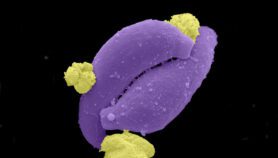
To make their vaccine, the researchers used a virus that causes a skin disease in cattle. They weakened this virus so that it would not cause the disease, then altered it to produce a Lassa virus protein.
In this way, the team was able to create a harmless virus that would still expose those who received it to a key component of the Lassa virus, allowing recipients’ immune systems to develop protection against it.
The researchers gave the test vaccine to four macaque monkeys, then exposed them to live Lassa virus.
Although the monkeys initially showed signs of the virus replicating in their blood, they were entirely protected within ten days of being exposed to it.
Two ‘control’ monkeys were given the weakened cattle virus without any Lassa virus protein, then exposed to Lassa virus. Blood tests showed that Lassa virus continued to replicate in these monkeys.
Although it is early days, the results are significant because of the lack, until recently, of funds for research into Lassa fever.
The disease occurs mostly in West Africa — in Guinea, Liberia, Nigeria, and Sierra Leone — where it is thought to infect more than 200,000 people each year, many more than other related viruses, including Ebola and Marburg, do.
But recently the virus has been imported to the United States and Europe. This, combined with concerns about bioterrorism, has brought new funds to research into the disease.
The virus causes no or mild symptoms in 80 per cent of infected patients, but 20 per cent get very ill and one to two per cent die from it.
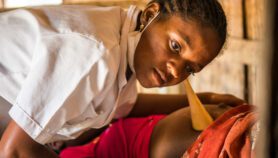
Pregnant women are particularly at risk. Nearly all children die in the womb if their mother becomes infected.
Link to full paper by Thomas Geisberg et al.More on Disease