

By: Hichem Boum
Send to a friend
The details you provide on this page will not be used to send unsolicited email, and will not be sold to a 3rd party. See privacy policy.
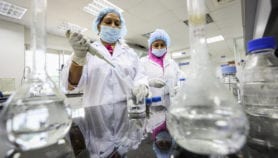
Agricultural researchers in Algeria, Egypt and Tunisia have teamed up to create drought-resistant and salt-tolerant varieties of barley better suited to the North African region.
The project, funded by the Canadian International Development Research Centre and overseen by the New Partnership for Africa’s Development North Africa Biosciences Network, will see thirty scientists from five organisations spending the next two years developing the barley varieties.
Barley is traditionally used as animal feed in much of North Africa, but lack of alternative food sources is leading to human consumption.
Algeria’s National Institute of Agricultural Research (INRAA), Egypt’s National Research Centre and Agricultural Genetic Engineering Research Institute, and Tunisia’s Centre of Biotechnology and National Institute of Agriculture Research will be involved in the project.
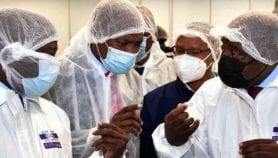
The researchers met in Borj Essedria in southern Tunisia last month (10–11 February) to discuss genetic techniques — including genetic modification — that could be used to increase barley’s nutritional quality, as well as make it drought- and saltwater-tolerant.
"We want to develop two varieties of barley in each country, making a total of six varieties expected to be resistant to drought and high salinity," says Hussein Irikti, coordinator of scientific activities and research for INRAA, which is overseeing Algeria’s role in the project.
"If we succeed in achieving the goal, we will launch another programme bigger and broader than this," he adds.
Irikti says they are focusing on barley because it is "exceptional, very adaptable to different climates, resisting drought and high temperature compared to other cereals — in addition to containing vitamins that are not found in other grains. It is a strategic challenge for North Africa, which suffers from drought and high degree of salinity."
Skander Mekersi, deputy director of INRAA, said researchers would share skills and equipment, adding that INRAA has invested equipment worth US$20,000 into the project.
More on Biotechnology