

By: Abiodun Raufu
Send to a friend
The details you provide on this page will not be used to send unsolicited email, and will not be sold to a 3rd party. See privacy policy.
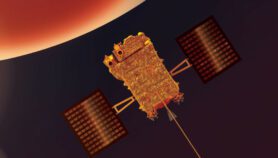
[LAGOS] Nigerians have given a mixed reception to the launch of the country’s first ever satellite on Saturday.
Government officials, as well as many in the scientific and technical community, are hailing the launch of the satellite, known as Nigersat 1, not only for its potential practical contributions to the country’s development objectives, but also as a symbol of its progress in science and technology
However others have criticised the government for investing between US$15 million and US$20 million in a ‘grandiose project’, which, they claim, will do little to address poverty.
Turner Isoun, Nigeria’s science and technology minister, says the satellite, which was built by the British company Surrey Satellite Technology Ltd (SSTL), will benefit Nigeria by improving the monitoring of boundaries and pipelines, ground water investigation, and environmental observation.
Many welcome what they see as the long-term impact of the satellite launch. Dupe Olubanjo, a doctoral student at the University of Ibadan in Nigeria, for example, says that it is "myopic" to see investment in space technology as a waste just because it will not have a direct impact on the lives of most Nigerians. "It’s a worthy investment which will help Nigeria in agriculture, monitoring of the environment and border surveillance," she says.
In contrast, critics argue that the government has misplaced its priorities in investing in such a satellite at a time when most Nigerians lack basic necessities such as clean water, electricity, good roads and modern health care.
"We always get our priorities wrong in Nigeria," says Niyi Adebimpe, a journalist. "I think what we need to be paying attention to right now is how to stem the tide of infrastructural decay in the country. Our government does not seem to care that people are hungry, that they lack the basic necessities of life. But it is happy to launch a satellite as if that would put food on our tables."
The satellite was launched from Plesetsk Cosmodrome in Russia after a 24-hour delay. It forms part of a ‘Disaster Monitoring Constellation’ that includes satellites owned by the United Kingdom, Turkey and Algeria. In the event of a natural or manmade disaster such as a hurricane or earthquake, information from the satellites will be made freely available to aid agencies to allow them to better plan disaster relief.
More on Technology