

By: Colin Stuart
Send to a friend
The details you provide on this page will not be used to send unsolicited email, and will not be sold to a 3rd party. See privacy policy.
The world is on the brink of a nuclear power renaissance, and developing countries may also benefit, according to researchers.
In a study published in Science this month (12 August) British researchers outlined a vision for flexible and more user-friendly nuclear technologies, as worries over climate change, energy supply security, and depletion of fossil fuels, are overturning decades of hesitancy over the safety of nuclear power plants.
Robin Grimes, materials researcher at Imperial College London and William Nuttall, senior lecturer in technology policy at the University of Cambridge, believe nuclear power will become viable for energy production in developing countries post-2030. "Outside currently established nuclear countries, flexible nuclear technologies will be especially attractive, reducing the need for grid infrastructure," Grimes told SciDev.Net.
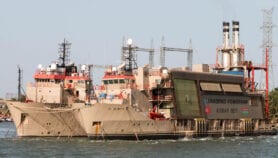
The authors envisage ship-borne power plants providing energy to big cities, requiring less grid infrastructure and making it easier to invest in cost-effective nuclear energy from scratch.
Grimes also suggested ‘fuelled-for-life core reactors’ — fully sealed modular reactors that could last 40 years and remove fuel handling from the energy production process. These would also reduce workers’ exposure to radiation, reducing the need for expensive monitoring.
Another idea is to develop reactors with replaceable parts to extend their 40–50 year life span, so that investment in reactors was more cost effective.
Technologies now under development could mean ‘fast reactors’ using uranium 15 times more efficiently than at present. They could become available by 2030, reducing the cost of raw materials.
But any country, developing or not, must show both an "economic need for nuclear energy" and "a clearly independent nuclear regulatory body that has access to the necessary facilities and the people to carry out its work," Grimes told SciDev.Net.
Safety and nuclear proliferation criteria as laid down by the Nuclear Non-proliferation Treaty would need to be met, as well as compliance with the International Atomic Energy Agency, standards.
If these criteria are met, reducing reliance on grid infrastructure is a key point for developing countries wishing to join the predicted renaissance, as it keeps costs low, Grimes said.
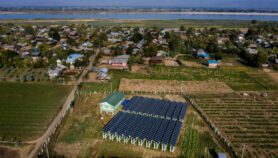
But some experts are doubtful. Referring to solar energy, John Finney, chair of the British Pugwash Group but speaking in a personal capacity, said that other options such as solar power might also suit developing countries.
Bob van der Zwaan, senior scientist at the Energy Research Centre of the Netherlands said that nuclear energy was not a silver bullet, but could address climate change, pollution, and energy dependency problems "along with other options such as renewable".
More on Energy