

By: Sharon Davis
Send to a friend
The details you provide on this page will not be used to send unsolicited email, and will not be sold to a 3rd party. See privacy policy.
North–South agricultural research partnerships will gain another source of funding thanks to a new partnership in which the United States’ National Science Foundation (NSF) can get involved in collaboration with developing-country scientists.
The NSF is mandated only to provide funding for research conducted within the United States but under the Basic Research to Enable Agricultural Development (BREAD) programme it will join forces with the Bill & Melinda Gates Foundation to provide US$48 million for international collaboration projects over five years.
Each will provide half the funds, with the NSF’s portion allocated to US researchers and the Gates Foundation providing sub-awards for research in other countries to scientists collaborating with the NSF scientists — though funds will be applied for by the US scientists.
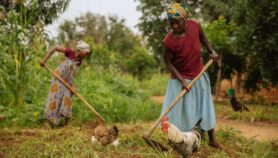
The money is intended to support collaboration for innovative agricultural research to support small-scale farmers in the developing world, addressing problems such as drought, pests and disease.
Deborah Delmar, NSF’s programme director for BREAD, told SciDev.Net that the initiative provides a unique opportunity to fund scientific collaboration to improve agricultural output in the developing world.
BREAD forms part of a US$1.2 billion initiative by the Gates Foundation to support smallholder farmers.
Kathy Kahn, programme officer for the Agricultural Development Initiative at the Gates Foundation says that BREAD is their most "upstream" — involving innovative and cutting-edge research — initiative and it represents an "opportunity to work with scientists on the ground in Sub-Saharan Africa".
Collaborative research partnerships form a critical part of BREAD and funding proposals will be sought from early June. BREAD will host webcast workshops and an interactive workshop from 18–22 June to help connect US scientists with scientists in the developing world so they can form the research partnerships.
Proposals will go through a rigorous peer review process says Delmar, and successful programmes need to be relevant to the developing world.
More on Farming