

By: Eva Aguilar
Send to a friend
The details you provide on this page will not be used to send unsolicited email, and will not be sold to a 3rd party. See privacy policy.
An initiative to put thousands of botanical specimens from Latin America into a single online database is underway.
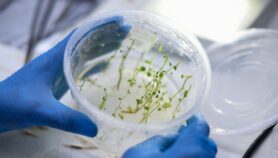
The Latin American Plant Initiative (LAPI) will scan botanical ‘type’ specimens — the original specimen on which the description of a new species is based — with a view to improving plant science research and teaching.
LAPI’s first meeting took place at the Panama-based Smithsonian Tropical Research Institute (STRI) last month (23–25 October).
There were 140 specialists from 70 herbaria housing collections of Latin American plants, who negotiated terms for making digital images and information available.
Type specimens, collected over centuries from Latin America, are spread over several herbaria in Europe, Latin America and the United States. LAPI aims to gather them together in a single digital network.
Mireya Correa, herbarium director at STRI and the University of Panama, explained that scanners today can take high-resolution images of both sides of a specimen.
"This is much better than seeing the plants in a microscope," Correa told SciDev.Net. "And you don’t have to travel to herbaria in other countries and spend a lot of money to see a
type specimen. All the information will be in the digital database."
Correa says the database should be fully functional by mid-2008.
The new initiative is sponsored by the Andrew W. Mellon Foundation, also supporter of the African Plant Initiative, which so far has resulted in a network of 60 partners and more than 300,000 scanned items.
LAPI is already recruiting new staff to Latin American herbaria, said STRI. According to Correa Argentina, Brazil, and Colombia already have high-resolution scanners, and Panama and other small nations are in the process of acquiring theirs.
Staff from the Smithsonian’s US National Herbarium, the UK Royal Botanical Gardens at Kew, and the Missouri and New York Botanical Gardens will scan their Latin American plant collections and offer technical advice to the other institutions.
More on Biodiversity