

By: Pratchaya W.
Send to a friend
The details you provide on this page will not be used to send unsolicited email, and will not be sold to a 3rd party. See privacy policy.
[BANGKOK] Thai farmers keen to exploit high rice prices have made an outbreak of a devastating pest worse by overplanting and using too much pesticide, according to ecologists.
An outbreak of brown planthoppers has destroyed 368,000 hectares — about four per cent of Thailand’s rice paddies — since August last year.
The pests have periodically plagued Asian rice farming for decades, eating their way through rice crops and spreading viral diseases that can stunt growth and prevent rice grain formation.
Prasert Golsalvitra, director-general of Thailand’s Rice Department, said non-stop, dense rice planting has contributed to the problem.
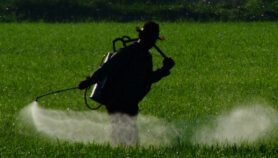
To ensure good yields, farmers overuse fertilisers — thought to increase the planthopper’s fertility — and pesticides such as synthetic pyrethroids, which have no effect on planthoppers but kill many of their natural enemies such as spiders.
Golsalvitra said the problem remains unabated despite state efforts to control the situation and the pest is migrating south to the Central Plains — the country’s rice bowl, which is preparing for the next rice season in May.
The department has attempted a "lock and seal" method, he said, which identifies affected rice paddies and sprays pesticides such as ethion that are deadly to adult planthoppers.
He said the department is now considering the more radical measure of convincing farmers to destroy their current rice crop and leave their paddies empty for at least 30 days to cut the pest’s life cycle by removing its food source.
Farmers will be given state compensation of up to 2,200 Thai baht (US$67) per rai (around one-sixth of a hectare), said Golsalvitra.
"Last year, high rice prices motivated Thai farmers to grow rice continuously," said K. L. Heong, an insect ecologist at the International Rice Research Institute (IRRI). "Farmers need to put their paddies to rest and allow natural balance to return."
He said the outbreaks are preventable and that the best way to deal with them is to restore biodiversity rather than destroy it.
The Rice Planthopper Project, which Heong coordinates, is developing rice varieties resistant to the invading hoppers.
The team has also identified plants that farmers can grow on ‘bunds’ — or raised areas of paddy, in which the pest’s predators can thrive — as well as developing ways to communicate to farmers the importance of biodiversity, natural control services and the need to use pesticides only as the last resort.
A farmer in the rice bowl province of Ayutthaya said he agreed with using natural techniques because of the cost of pesticides. But he said the compensation for destroying the rice crop was less than farmers could earn from the rice.
More on Farming