

By: Humphrey Nkonde
Send to a friend
The details you provide on this page will not be used to send unsolicited email, and will not be sold to a 3rd party. See privacy policy.
Scientists from 17 countries in sub-Saharan Africa have come up with a plan of action for applying satellite technology to a wide range of development issues.
Among the applications is telemedicine, in which large hospitals are connected via satellite to remote clinics where terrestrial communication systems are non-existent or damaged.
The scientists drafted the plan at a workshop held on 26-30 June in Lusaka, Zambia and sponsored by the UN and the European Space Agency.
Alice Lee, head of the UN Programme on Space Applications, told SciDev.Net that telemedicine would benefit patients at clinics that do not have adequate or specialised staff, are remote or do not offer specialised health services.
Doctors in remote clinics could send digital images and blood test results to a larger hospital, which could make a diagnosis and relay the results back to the clinic.
A telemedicine project at Tygerberg Children’s Hospital near Cape Town, South Africa has been running since 1996 but most other African nations have none.
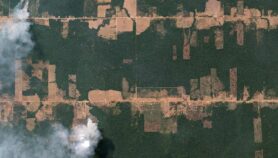
Global Navigation Satellite Systems (GNSS) — such as the United States’ Global Positioning System or Russia’s GLONASS — can also be used to improve mapping relevant to issues such as deforestation, disease control, agriculture, climate and conservation.
Opening the meeting, Zambia’s vice president Lupando Mwape said the technology could help reduce agricultural production costs and maximise crop yields and farmers’ incomes.
The action plan stresses the need for international, regional and national cooperation in setting up the technology and assessing how to use it to meet the needs of the region.
The plan also calls on scientists to explain to policymakers in their countries how GNSS technologies can be applied.
Alexandre Steciw, senior advisor to the Galileo Joint Undertaking (the GNSS for Europe that will be operational in 2008) told the workshop that the European Development Fund was ready to fund the plans if African economic blocs — such as the Southern African Development Community and the Economic Community of West African States — submit coordinated proposals.
More on Forestry