

01/08/19
Nanotechnology: a blessing or a curse for developing nations?
By: Mićo Tatalović
Send to a friend
The details you provide on this page will not be used to send unsolicited email, and will not be sold to a 3rd party. See privacy policy.
Nanoparticles are increasingly being explored for boosting crops and nutrition, but doubts remain over their long-term safety, writes Mićo Tatalović.
Proponents of nanotechnology say it will revolutionise farming and global food systems, with applications being explored that could cut waste, make food safer and help create ‘super crops’ that escape the controversial label of genetically modified organisms (GMOs).
If successful, it could help to overcome poor yields, malnutrition and opposition to GMOs – all of which are still large challenges in the global South.
The science of nanotech is cutting-edge but simple enough to be affordable globally. And the development prospect is huge. So it’s no surprise that many developing countries have already embarked on commercialising the technology.
But the blossoming of this relatively new technology also raises concerns about its long-term safety to human health and the environment, with many scientists calling for better and more internationally coordinated regulation and oversight of the proliferating uses of nanoparticles.
Developing nations have been left out of conversations about nanotech regulation, and there is still a need for better regulation of the technology at a national and global level to ensure the technology meets the needs of the poor with minimum risk to people.
So, what are the latest ideas in using nanotech in food security, what can it do, and what are the safety fears surrounding it?
The term nanotechnology generally refers to any use of nano-scale particles (between 1 and 100 nanometres). Their tiny size gives them unusual properties that can affect texture, appearance and flavour of foods – and they are already used as food additives.
New products containing these particles are also being explored to make biodegradable packaging, improve shelf life and prevent food poisoning and waste. For example, nano sensors in food packaging could soon tell you if food was exposed to sunlight and therefore degraded in quality.
Some scientists are planning to use it to improve nutrition. They are studying the use of nano emulsions — oil in water mixtures with tiny droplets — as excipients (foods that improve the bioactivity of foods ingested with them). These could increase our intake of nutrients from fruit and veg — a use that is especially promising in tackling malnutrition and micronutrient deficiency.
“Unfortunately, we don’t have proper standards yet for regulating nanoparticles. There is no one single method to analyse a nanoparticle. There is no common ground or a dialogue.”
Kiruba Krishnaswamy, University of Missouri, US
The idea is to spray these on food to allow us to extract more nutrients. Similar nano emulsions are being explored for their antimicrobial activity to protect crops and foods from going off.
“Nanotechnology will be pretty ubiquitous in the coming decades in all sorts of products,” says Markita del Carpio Landry, physicist at the University of California, Berkeley, in the United States.
Boosting crop resilience
Scientists are even investigating use of nanomaterials to improve delivery of fertilisers and pesticides, and to create transgenic crops that would not be considered GM. Sonia Trigueros, a researcher at Britain’s University of Oxford believes its “applications are limitless”.
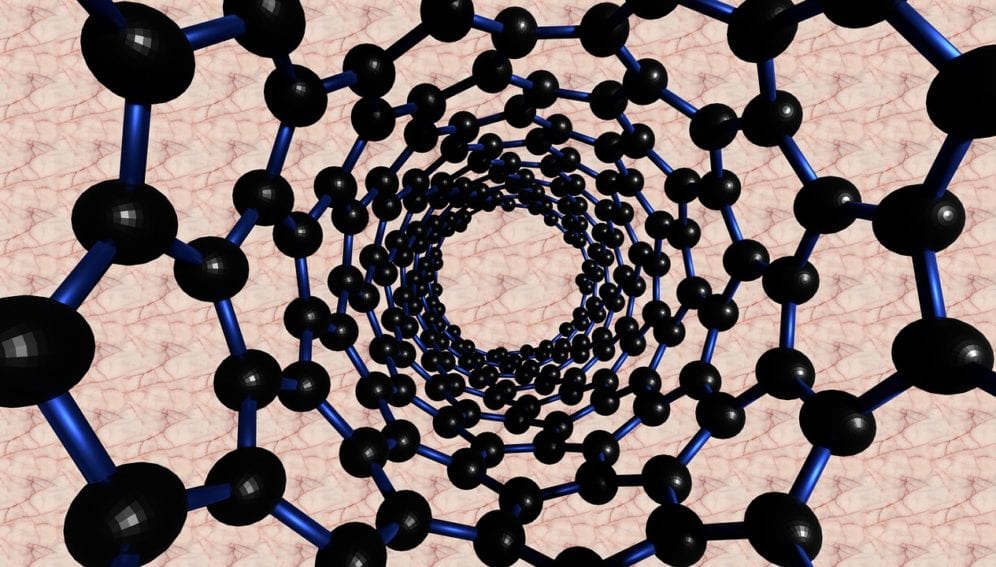
Landry’s team is exploring the use of carbon nanotubes — long, narrow, stiff tubes of carbon — to alter plant genes without foreign DNA being inserted into the plant genome itself, which would lead to gene-edited crops that would not be considered genetically modified. Given the large and ongoing public opposition to genetically modified crops in developing nations, this approach could be a more palatable way to deliver benefits such as drought or flood resistance.
The team recently showed that carbon nanotubes can be used to deliver gene-editing machinery known as CRISPR/Cas9 inside plant cells — through the cell wall and the membrane — something that is otherwise tricky to do.
Gene editing then allows precise genetic enhancement to create crops that are resistant to herbicides, insects, diseases and drought. It has the potential to make better crops without the kind of public fears surrounding genetic modification.
Landry says that the approach would actually be cheaper than current methods used for genetic modification of crops, such as the gene gun – a device for delivering DNA to cells, or Agrobacterium bacteria used for gene transfer between cells.
“We calculated the cost of nanoparticle-based transformations over gene gun or Agrobacterium,” she says. “The costs are less for nanoparticles because they can be synthesised on a bulk scale.”
“Additionally,” she says, “the nanoparticles do not require refrigeration, as does Agrobacterium, or advanced-tech laboratory equipment for use, as would a gene gun, so their use is possible in limited-resource environments.”
Health and safety fears
But against this march of technology, some people have been increasingly worried about the lack of long-term studies on the impact of nanomaterials on human health — and the environment.
“The transparency and vigilance against the risk are too limited,” says Mathilde Detcheverry, head of information at Avicenn, a French NGO campaigning for open information on nanotechnology. “We’re still in the dark.”
No one knows if, and how, safe they are in the long term since most safety research has been done in the lab, on cells or mice, and in unrealistic settings. “We cannot say ‘oh, we’re totally safe’ – we need to work on that: we need to do better protocols to see toxicity,” says Trigueros.
Zahra Rattray, fellow at Scotland’s University of Strathclyde, says: “I’ve worked on projects where there was definite harm, and I’ve also reviewed some recent publications that have not been published yet and there was clear evidence from their work that there was a toxic effect of these particles.”
A 2017 review of the safety of nanoparticles in food concluded that some of them could have a “harmful effect” and that better tests of these effects were “urgently needed”.
Potential harmful effects include the leaching of silver nanoparticles used in packaging into foods, which could kill off good bacteria in the gut.
Another example is titanium dioxide, TiO2, also known as E171 and used as food whitener, which has been shown to accumulate in tissues of rats and to have toxic effects at certain doses. However, other studies have found it is not toxic and the industry that makes the material claims it is safe.
Uncertainty remains, partly because the effects of nanoparticles depend on a wide range of complex and intertwined factors, including their size, structure, coating, dose, as well as what they are consumed with.
“There is no doubt more research into the toxicity of these things should be carried out,” says Sowmya Purushothaman, researcher at University of California, Merced.
Regulatory vacuum
The absence of sound scientific protocols is a problem for policymakers and regulators. “There’s a total lack of regulation,” Rattray says.
Uncertainty and lack of data means it is difficult to regulate – or even know whether to regulate nanoparticles specifically, beyond the existing food safety and regulation laws. Such laws are generally more stringent in the developed world, so developing nations are especially exposed.
“Unfortunately, we don’t have proper standards yet for regulating nanoparticles,” says Kiruba Krishnaswamy, bioengineer at the University of Missouri, US. “There is no one single method to analyse a nanoparticle. There is no common ground or a dialogue.”
Experts say the issue calls for an international perspective, including developing nations.
“There should be an international harmonisation of all that is happening, all the data that is being collected, where we are and what are the steps that we need to make sure it is safe for the next 20 to 30 years,” says Krishnaswamy.
In addition to the concerns over safety of food additives, there are also emerging concerns about environmental impacts.
Marie Simonin, researcher at the Institute of Research for Development, in Montpellier, France, says that some metal nanoparticles were assumed to be stable and non-toxic based on lab tests, but later found to be dissolved by microbes in natural systems, leading to toxic effects.
Simonin adds: “I think this is a global problem and that developing countries are also concerned.”
Countries such as China or Brazil are already using nano-pesticides or are investing heavily in the development of this new generation of agrochemicals.
She says that because nano-pesticides are directly applied into the environment on a large scale, they can potentially also affect human health on a large scale as they will end up in water, air and food.
“Pesticide registration is very strict in Europe and in the US, but this is not necessarily true in the rest of the world and these nanotechnologies may develop even faster in emerging countries with important agriculture production,” she adds.
No alarmism
Despite concerns, though, scientists say there is no need for alarmism.
“The good news is nothing is immediately toxic, no one is going to instantly be poisoned with contamination of nanoparticles,” says Christine Ogilvie Hendren, a research scientist at Duke University, US.
Some scientists say the community is rising up to face the challenges around nanotechnology and getting policymakers on board for a smart, nuanced approach to regulation.
“I’m confident that we are on the right path, but we still have a lot work to do,” says Trigueros. “It’s a very young technology, so we need to have a positive view.”
More on Technology