

By: Archita Bhatta
Send to a friend
The details you provide on this page will not be used to send unsolicited email, and will not be sold to a 3rd party. See privacy policy.
[NEW DELHI] The impact of climate change on key food crops in Africa and South Asia may be much worse than previously estimated — with reductions of up to 40 per cent by the 2080s — according to a study, which synthesised results from related studies published over the last 20 years.
It also identified "major gaps in climate change impact knowledge" for certain crops and regions, such as central Africa. Such lack of knowledge could hamper effective adaptation policy decisions, it warns.
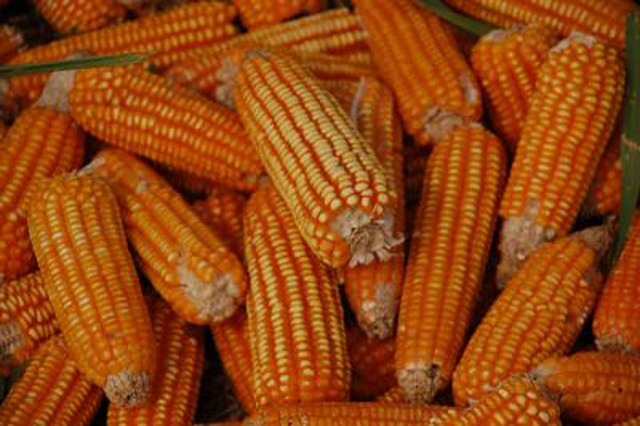
The study projects an eight per cent average decrease for all crop yields — and this figure increases to 40 per cent in worst-case scenarios. In Africa, the most significant yield reductions are predicted for maize, millet, sorghum and wheat, while in South Asia, maize and sorghum will be hardest hit.
The study looked at more than 1,140 publications that have projected the impact of climate change on eight key food and commodity crops (rice, wheat, maize, sorghum, millet, cassava, yam, and sugarcane) that together account for more than 80 per cent of total crop production in the two regions, and then analysed 52 of those studies in depth.
In Africa, just six out of 162 observations from the scientific publications analysed were about rice, yam and sugarcane, despite these accounting for almost a third of Africa's cropped area.
The study says that that the development of new crop varieties and uptake of new technologies — the most costly adaptation options — are likely to bring the most benefits.
But since these will require substantial investment from farmers, governments and development agencies, "it is vital that any policy decisions to support their implementation, particularly aid investments, are informed by a synthesis of best available evidence and not distorted by single studies".
"We need to ensure as much evidence as possible is gathered on the impact of climate change before making decisions on how to move forward," said Jerry Knox, lead author of the study and a researcher at Cranfield University, United Kingdom, in a press release.
The findings have led some Indian researchers to question whether India's National Mission on Sustainable Agriculture (NMSA) will be sufficient to cope with the predicted impacts of climate change.
"The whole agenda [of NMSA] is dictated by production enhancement for national food security which is likely to push agriculture practices against the environment and create more complex problems," said Rajeshwari Raina, a scientist at the National Institute of Science Technology and Developmental Studies.
She added that greater priority should be given to help small farmers adjust to such conditions and to neglected areas like coastal agriculture.
But Pramod Aggarwal, regional programme leader for the CGIAR research programme on Climate Change, Agriculture and Food Security, said that most climate impact projections do not account for the steps scientists and governments are taking to combat the effects of climate change, such as breeding new crop breeds.
He added that projections which do not account for interventions will always project incorrect scenarios.
References
Environmental Research Letters doi:10.1088/1748-9326/7/3/034032 (2012)
More on Farming