

By: Mercy Adhiambo
Send to a friend
The details you provide on this page will not be used to send unsolicited email, and will not be sold to a 3rd party. See privacy policy.
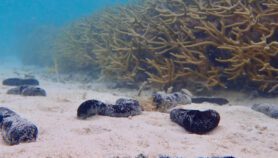
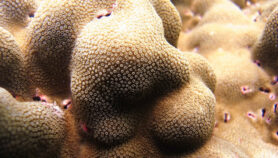
[NAIROBI] Human activities like agriculture and urbanisation can lead to the destruction of coral reefs and make their recovery and management difficult, according to research undertaken along the Kenyan coast.
These activities increase the rate at which microbes — microscopic plants and animals such as bacteria, fungi, and algae, as well as some animals like sponges and worms — erode the reefs.
Overfishing and drainage from land — such as the one that occurs in Kenya’s marine parks — were significant contributors to coral reef degradation, according to a study by the New York-based Wildlife Conservation Society and the University of Azores in Portugal, published in Marine Ecology Progress Series.
The study was motivated by the devastation wrought by the 1998 El Niño, when warm water killed around half of Indian Ocean corals, said Tim McClanahan, senior conservation zoologist at the Wildlife Conservation Society and a co-author of the study.
"We wanted to know how fast the skeletons of these corals would break down and disappear, and if this rate was influenced by the pollution in the reefs," McClanahan said.
"So, we took coral skeletons that had died in 1998 and [studied] them over many years. We measured the level of pollution in the reef and found that the rate at which the corals broke down — or bio-eroded — was directly related to the amount of pollution: the more pollution there was, the faster corals broke down."
"Microbes, sponges and worms break down the reef structure or rock by dissolving the calcium carbonate that makes up the reefs," said McClanahan. "They occupy the small spaces in the rock and erode it. This renders the reefs more vulnerable to damage from waves and other disturbances."
In areas of intensive fishing, worms were also major causes of erosion, while in protected fishing areas, sponges were mainly responsible, according to McClanahan.
According to Jelvas Mwaura, a research scientist at the Kenya Marine and Fisheries Research Institute, nutrient pollution and overfishing that affect coral reefs, particularly in Kenya and other developing countries, are growing. This is particularly the case in shallow coral reefs close to shorelines with high density communities and river runoff areas.
"The reefs are facing threats from expanding agriculture, urbanisation, overfishing, and, now, climate change," Mwaura said. "Global ocean warming is increasingly making conditions for microborers — bacteria and sponges — and macroborers, like worms, favourable for their proliferation and, consequently, their reef-eroding activities."
Mwaura suggests that to control the problem of nutrient pollution and overfishing, reef managers, coastal hoteliers, fishermen and government agencies should work as a team.
"All these stakeholders should play an important role in ensuring that the integrity of the reefs is not compromised, either by fishing, pollution or sewage."
Link to full study  [714kB]
This article has been produced by our Sub-Saharan Africa desk.
References
Marine Ecology Progress Series doi: 10.3354/meps09726 (2012)
More on Biodiversity