

By: Yojana Sharma
Send to a friend
The details you provide on this page will not be used to send unsolicited email, and will not be sold to a 3rd party. See privacy policy.
Major risks to food security have successfully helped to push agriculture and food policy higher up the international development agenda, according to a report by the International Food Policy Research Institute (IFPRI).
However, according to IFPRI’s 2011 Global Food Policy Report — released yesterday (23 April) — although 2011 did not see the food price spikes of 2008, price volatility remains a continuing challenge exacerbated by unrest and conflict; increased biofuel production at the expense of food; land degradation; and extreme weather events.
"Overall, 2011 and the years immediately preceding it have revealed serious weaknesses facing the global food system," the report said. "Chronic, long-term problems such as food and nutrition insecurity also point to areas where the food system can do better".
To address all these issues, agriculture and food security issues must be kept high on the global agenda, the report said, adding that "demand for evidence-based research to inform those policies is higher than ever".
The report says that major events in 2011 can provide valuable lessons to inform policymaking at upcoming events such as the UN Conference on Sustainable Development (Rio+20) in Brazil in June.
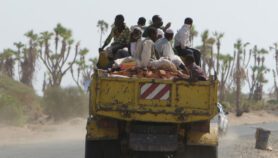
It cites the International Disaster Database’s statistic that more than 200 natural disasters occurred during 2011, including the severe drought brought on by consecutive poor rain seasons in the Horn of Africa.
"Promoting social, economic, and ecological transformation in the region could build up resilience to these shocks and mitigate the slower-moving stresses that also undermine progress in the Horn," said IFPRI’s Derek Headey, who authored the section on disasters.
Achieving that resilience requires "innovation, experimentation, and — not least — political commitment," he added.
Looking ahead, the report said that the world remains vulnerable to food price swings because grain reserves are extremely low and staple grains are exported by just a few countries.
"Without preventive action, several hot spots could erupt in food crisis in 2012," it warned, noting that early warning systems pointed at the time of writing to a risk of drought in the Sahel region of Africa.
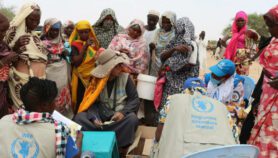
Those predictions have now been realised, with drought conditions causing severe food shortages in eight Sahel countries — Burkina Faso, Chad, Mali, Mauritania, Niger, Nigeria and Senegal, and parts of Cameroon.
IFPRI director-general Shengen Fan said: "We must find new ways to exploit the links between agriculture and other sectors, including health, nutrition, water and energy," and called for the establishment of a global system to measure, track and monitor interactions between these sectors.
"Paying attention to gender equity will [also] help make investments and interventions in these areas more effective," he added.
Opportunities to do this in 2012 will be at the Group of Eight (G8) Summit in the United States in May, the G20 meeting in July in Las Cabos, Mexico, and the Rio+20 summit in June.
 [7.9MB]
More on Food security